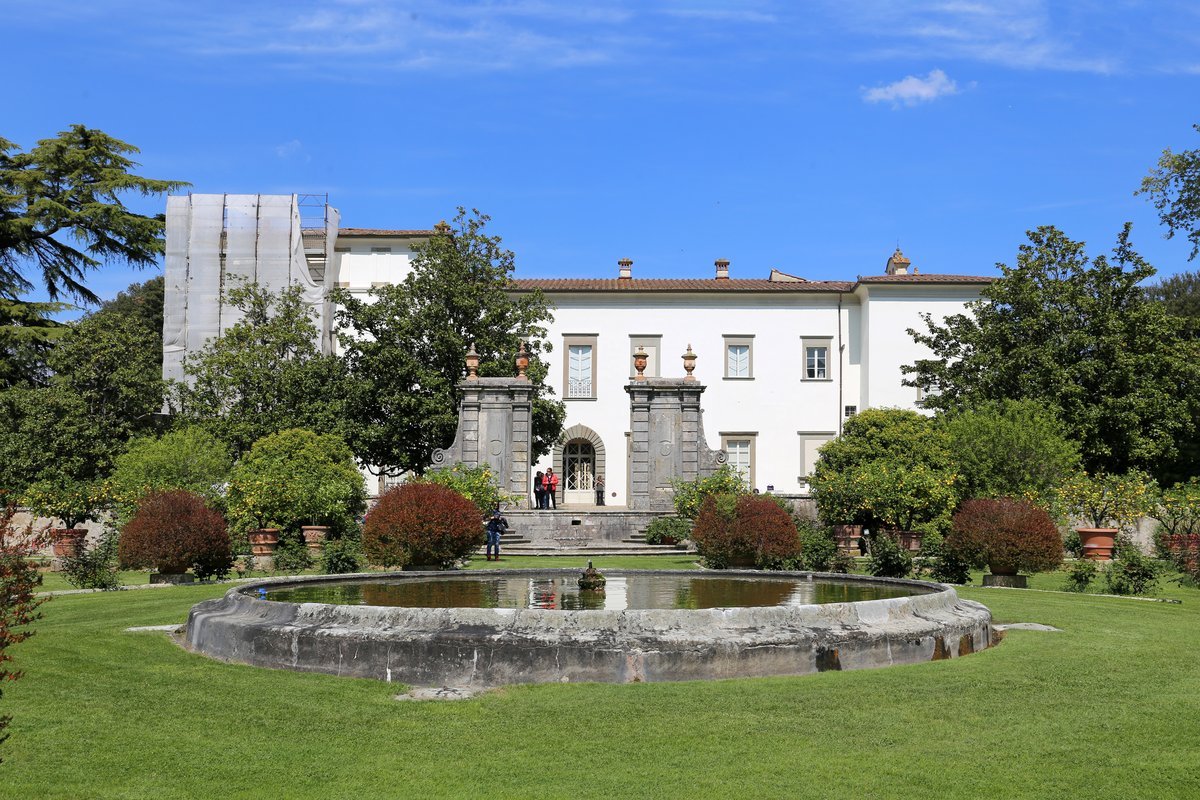
Villa La Màgia, in Quarrata, is a Medici jewel UNESCO World Heritage site that combines history and contemporary art. Built starting from 1335 by the Panciatichi family, it passed to the Medici and then to other noble families. Today, owned by the municipality, it offers a park with installations by international artists and a rich collection of furnishings.
– Guided tours on Sundays at 4:00 PM (max 25 people, reservation required).
– Contemporary art park “Genius Loci” with works by Buren, Nagasawa, and others.
– Permanent collections: Modano embroidery, works by Agenore Fabbri, and historic furnishings.
– Children’s play area and park open every day.
Introduction
When you arrive at Villa La Màgia, the first thing you notice is the silence. Then your gaze drifts beyond the gate, toward the light-colored façade reflected in the artificial lake. Here in Quarrata, in the province of Pistoia, a UNESCO-listed Medici villa slowly reveals itself: not only history, but also contemporary art that plays with light, colors, and landscape. The park is always open, and on Sundays you can visit the interiors with a guide. It’s a place that gets under your skin, unhurriedly.
Historical Notes
The history of Villa La Màgia begins in 1335, when the Panciatichi family bought the land and built a tower-house. In 1583, Grand Duke Francesco I de’ Medici purchased it and commissioned Bernardo Buontalenti for the restoration, who also created the artificial lake. After the Medici, the Attavanti family took over: they added the monumental staircase and the neo-Gothic chapel. Then the Ricasoli and Amati families kept it until 2000, when the Municipality of Quarrata bought and restored it. In 2013, it became a UNESCO heritage site. Today it is a vibrant cultural center.
Contemporary Art in the Park
Strolling through the park, you come across installations that seem born right there. Fabrizio Corneli with his light, Anne and Patrick Poirier with their ‘Factory of Memory’ that looks like a stone brain. Then Nagasawa’s ‘Upside-down Garden’: two stone circles intersecting, with a pomegranate tree at the center. And again Daniel Buren with his hexagonal fountain framing the Montalbano hills. Each work is a dialogue between nature and art. On Sundays, with a guided tour, you also discover hidden details.
Modano Embroidery and the Collections
Inside the villa there is a treasure of craftsmanship: the ‘A Thread Between Art and Craftsmanship’ collection with artifacts made using modano embroidery, an ancient technique that has deep roots here in Quarrata. Photographer Lucia Baldini has interpreted them in a new way. Then there are works by Agenore Fabbri and Alfredo Fabbri, and historical furnishings that tell the story of the villa up to the 1980s. Each room holds a different piece of history: from the wine cellar with works by Gavazzi to the hall frescoed by Ferretti.
Why Visit It
Three practical reasons. First: it’s a Medici villa that is rarely crowded, away from mass tourism. Second: the contemporary art park is among the most interesting in Tuscany, with site-specific works that change with the daylight. Third: on Sundays there is a guided tour lasting 90 minutes that includes the interiors and the historic garden, at an affordable cost (8 euros, reduced to 5). Book at the library, limited to 25 people. Tip: bring cash, they don’t accept cards.
When to go
If you can, choose a Sunday in May or September. The park is beautiful in every season, but in spring the colors are explosive and the outdoor installations come alive with the changing light. Early morning or late afternoon offer magical atmospheres, especially near the lake. In summer, the historic garden is open until 7 PM, but the heat can be intense. In autumn, with the falling leaves, the artworks seem even more integrated into the landscape.
In the Surroundings
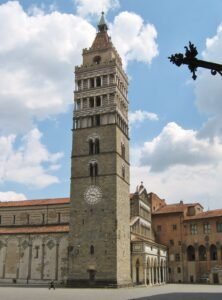
A few kilometers away, the center of Pistoia is worth a stroll: the Piazza del Duomo, the Baptistery, and the church of San Giovanni Fuorcivitas. If you like contemporary art, follow the road toward Montalbano: there are other Medici villas like Villa di Artimino. Or, for a dive into nature, the biotope of the Padule di Fucecchio is a protected wetland perfect for birdwatching. From Quarrata, everything is close, but without haste.