Stargazing from the Pistoia Mountains
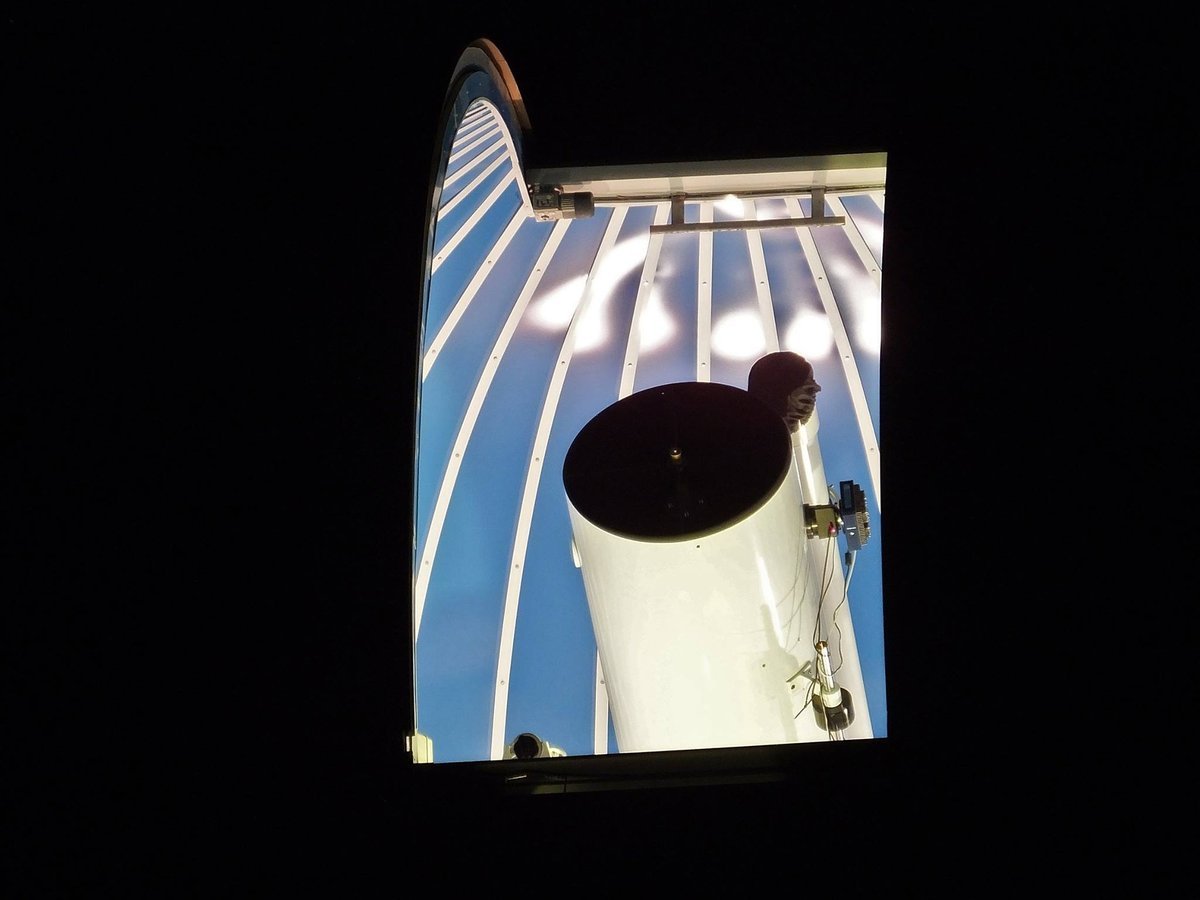
At an altitude of 1000 meters, on a plateau above Gavinana, there is a place where the sky feels closer. The Astronomical Observatory of the Pistoia Mountains is a small gem for star enthusiasts: two white domes peeking out from the woods, with 40 and 60 cm telescopes. When darkness falls and light pollution is almost zero here, the lights go on and the Gruppo Astrofili Montagna Pistoiese (GAMP) takes you on a journey among planets and galaxies. You don’t need to be an expert: the evenings start with a simple lesson, then you go up to the domes and look. It’s a thrilling experience, especially when you find out they’ve discovered asteroids here.
Historical Overview
It all began in the early 1980s when a group of local amateur astronomers founded the GAMP (1981). The idea of a permanent observatory took shape thanks to the Municipality of San Marcello and other institutions. After site surveys, Pian de’ Termini was chosen for its dark and well-ventilated location. The first dome was inaugurated on March 25, 1990 in the presence of astrophysicist Margherita Hack. On August 11, 1994, the first major discovery arrived: a minor planet named Sanmarcello. Then, in 1994, the first Italian NEO asteroid. In 2003, a second dome with a 60 cm telescope was added, inaugurated with Franco Pacini. In 2015, the Parco delle Stelle (Star Park) was established, an educational garden with a planetary walk.
Two Domes, Two Telescopes, a World to Discover
The two hemispherical domes of 5 meters in diameter house the main instruments: a 40 cm Newton-Cassegrain telescope and a 60 cm one. With these, GAMP has observed comets, asteroids, and even the ring of the dwarf planet Haumea. There is also a solar telescope with H-alpha filter to see the Sun’s prominences. During visits, you climb the spiral staircase and find yourself under the dome that rotates gently. The amateur astronomers explain how to use the telescope and what you are looking at. If the sky is cloudy, no worries: in the conference room there are projections and models, and they use METEOSAT to show you the clouds in real time.
Hunting for Asteroids: Scientific Research
The observatory is not just for public outreach—it’s a real research center. The GAMP conducts astrometric studies on comets and asteroids and has discovered numerous celestial bodies. Among these is the first NEO (near-Earth object) asteroid identified in Italy, named Lucianotesi. Other discoveries include main-belt asteroids like 309704 Baruffetti and 364264 Martymartina. The observatory ranks among the top in Italy for number of discoveries cataloged by the Minor Planet Center. They also participate in international campaigns, such as the one for Haumea’s ring. If you visit, you might get to witness a research session: amateur astronomers are always at work.
Why Visit It
First: it’s an active observatory where you can see with your own eyes what amateur astronomers use to do science. Second: the evenings are for everyone, even for those who know nothing about stars. Experts explain in simple terms, and if you have kids, they engage them with enthusiasm. Third: the atmosphere is unique. Being up there, in the dark, with only the starry sky above and the sound of the wind, is a break from everyday life. And if you’re lucky, you might see an asteroid in motion.
When to Go
The most magical time is summer, when the evenings are long and the sky is clear. The observatory is open to the public on Friday and Saturday evenings (in July and August also on Monday). But if you prefer the Sun, from June to September there are solar observations on Tuesday and Thursday mornings at 10. Note: the observatory is closed from September 1 to 15 for maintenance. I recommend a midsummer evening, when the Milky Way is clearly visible. Arrive before sunset to enjoy the mountain panorama.
In the Surroundings
Before or after your visit, take a stroll through Gavinana, a medieval village with a central square and a lovely museum (Museo della Lavorazione del Ferro). Just a stone’s throw from the observatory is Parco delle Stelle, an outdoor educational path with sculptures and astronomical panels—perfect for a sunny walk. If you have time, head up to San Marcello Pistoiese (a few kilometers away) for a coffee or to visit the library where reservations are made.