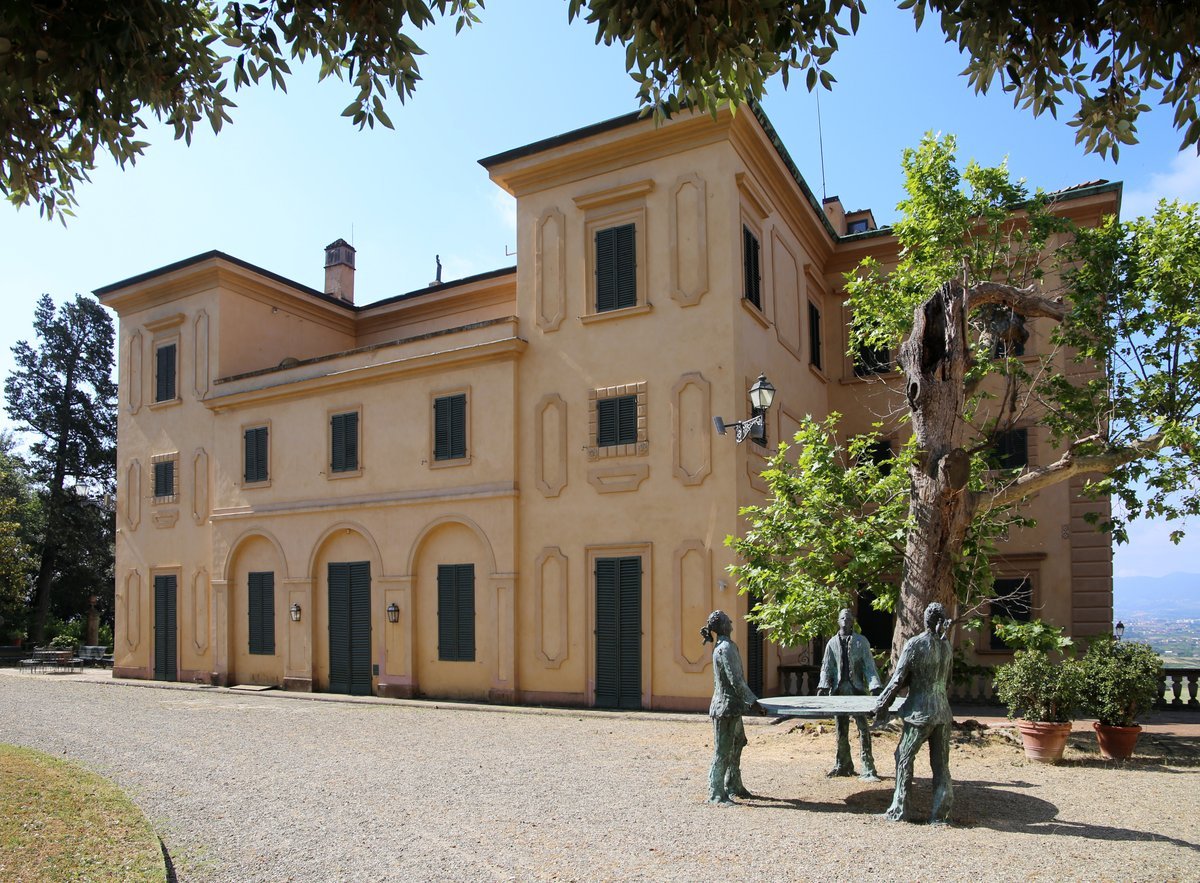
The Gori Collection at the Fattoria di Celle is a unique open-air museum with over 80 works of environmental art by international artists such as Burri, Morris, and Abakanowicz. The 19th-century romantic park and historic farmhouse provide the backdrop for site-specific installations that engage with nature and architecture. A reservation-only visit of about 4 hours takes you through labyrinths, floating sculptures, and iron giants. Reservation required from May to September. Free admission by appointment. 4-hour walking tour suitable for adults. Park with tree species and romantic architecture.
Introduction
Imagine a romantic 19th-century park where giant sculptures, labyrinths, and installations seem to have sprung up naturally among ancient trees and ponds. This is the Gori Collection at Fattoria di Celle, one of the gems of Italian Land Art. In Santomato, Pistoia, over 80 site-specific works dialogue with nature without overpowering it. You can only visit by reservation, from May to September, and you’ll wander for hours in an atmosphere suspended between art and landscape. Needless to say, it’s an experience that stays with you.
Historical Notes
Fattoria di Celle is a historic villa with medieval origins, passing from the Pazzaglia to the Fabbroni family in the 15th century. The park was transformed into an English garden from 1844 based on a design by Giovanni Gambini. In 1950, Prato-born entrepreneur Giuliano Gori and his wife Pina began a contemporary art collection. Dissatisfied with traditional museums, in 1970 they bought the farm and moved the family and artworks there. In 1982, after an ethical regulation for immovable and integrated works, they opened to the public with 18 installations. Today the collection boasts over 50 outdoor works and as many indoors.
Timeline
- 15th century: Villa di Celle is owned by the Pazzaglia family, then the Fabbroni family.
- 1844: Giovanni Gambini designs the romantic park.
- 1950: Giuliano and Pina Gori start the collection in Prato.
- 1970: Transfer of the collection to Fattoria di Celle.
- June 12, 1982: Inauguration of the first works to the public.
- Today: Over 80 site-specific works, open by appointment from May to September.
The Romantic Park and Its Wonders
The park is a true gem. Strolling among the ancient trees leads you to discover architectural features such as the neo-Gothic tea pavilion, a metal aviary, a neo-Egyptian monument, and a pyramid-shaped icehouse. The Brana stream forms a natural lake with a small island and a neoclassical temple. And then, suddenly, the artworks appear: Morris’s Labyrinth playing with perspective, Marta Pan’s Floating Sculpture gliding on the water, and Richard Long’s Circle of Grass. Every corner is a surprise, a dialogue between man and nature.
Unmissable Artists and Works
It’s hard to choose, but some works are iconic. The imposing Grande Ferro by Alberto Burri, a red giant at the entrance, welcomes you. A little further on, Tema e variazioni II by Fausto Melotti makes steel elements dance on water. In the woods, Katarsis by Magdalena Abakanowicz: 33 bronze figures without arms or legs, unsettling and magnetic. And don’t miss La cabane éclatée aux 4 salles by Daniel Buren, a play of mirrors and colors. Sol LeWitt is also present with his Cubo senza cubo. Each artist chose a specific spot, making the visit unique.
Why Visit It
1) An open-air museum without barriers: the works are integrated into the landscape, not in enclosed halls. You can touch them, walk around them, experience them. 2) Exclusivity: it can only be visited by reservation, from May to September, with limited groups. No crowds, no compulsive selfies. 3) Perfect fusion: contemporary art, history, and nature blend in a rare harmony. It’s not an exhibition, it’s an experience that changes with the seasons and the light.
When to Go
The opening period is from May to September, but the best time? May or June, when the park is in full bloom and temperatures are mild. September is also fantastic: the golden light of late afternoon illuminates the sculptures. Avoid the midday hours in summer: the walk lasts about 4 hours and can be tiring in the sun. Come early in the morning or around 3 PM, so you can enjoy the long shadows.
Nearby
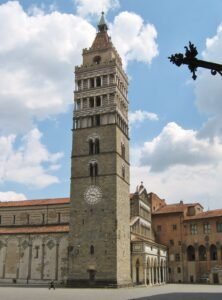
Pistoia is just a few minutes away: its historic center with Piazza del Duomo and the Ospedale del Ceppo is worth a visit. If you love contemporary art, don’t miss the Museo del Novecento in Florence (an hour by car), but to stay in the area, the Giardino di Villa Stonorov in Poggio a Caiano is another gem of Land Art. Alternatively, stop for a wine and food experience at one of the educational farms in the Valdinievole.