
Villa Medicea La Ferdinanda, built by Ferdinando I de’ Medici in the late 16th century, is a Renaissance hunting residence surrounded by vineyards and olive groves. Today, it is open to visitors as a museum, featuring period furnishings and frescoes that recount the history of the Medici family, and is part of the UNESCO site ‘Medici Villas and Gardens in Tuscany’.
- Original frescoes and period furnishings in the villa’s interior rooms
- Underground historic cellars with tastings of DOCG wines such as Carmignano
- Spectacular views over the Val di Bisenzio and the Montalbano hills
- Italian-style park with tree-lined paths and vistas of the Arno Valley
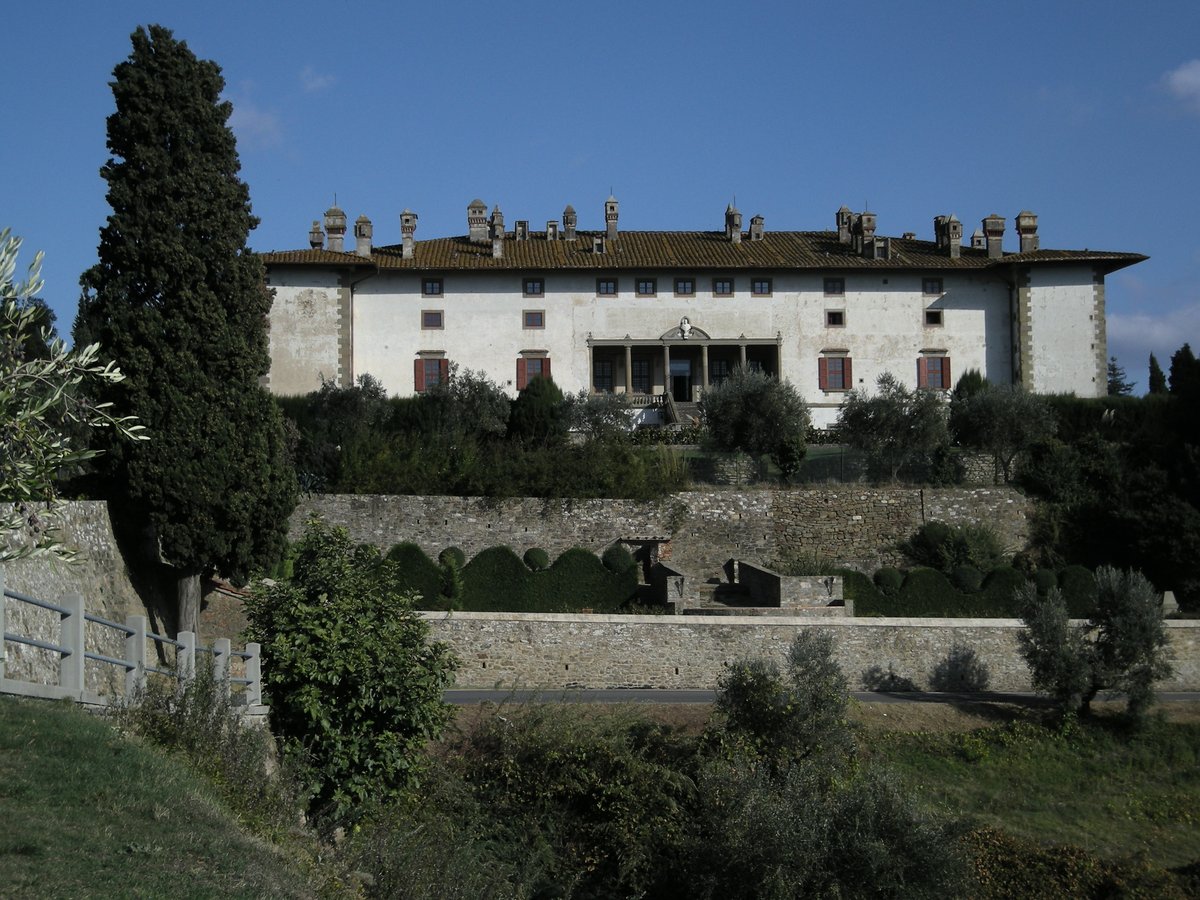
Villa Medicea La Ferdinanda in Carmignano, a UNESCO heritage site, offers interior tours with original frescoes, historic cellars for Carmignano DOCG wine tastings, and views over the Val di Bisenzio.
- https://www.artimino.com/it/
- Via del Palazzone, Prato (PO)
- Open in Google Maps
- View on Google Images Villa Medicea La Ferdinanda a Prato
Good to know
Introduction
As soon as you arrive at Villa Medicea La Ferdinanda, you immediately understand why the Medici chose it as their hunting residence. Perched on a hill in Carmignano, it overlooks a landscape of vineyards and olive groves that seems straight out of a Renaissance painting. Its imposing mass, with that severe façade and corner towers, strikes you with its unadorned elegance. It’s not just a villa: it’s a symbol of Medici power, included in the UNESCO World Heritage site of Medici Villas and Gardens. Walking here means breathing in centuries of history, with the scent of Carmignano wine in the air and views stretching all the way to Florence. A place that uniquely combines art, nature, and tradition.
Historical Overview
The villa was commissioned by Ferdinando I de’ Medici in the late 16th century, between 1596 and 1600, as a hunting residence within the Artimino estate. Designed by architect Bernardo Buontalenti, it quickly became a landmark for the grand ducal court. It hosted lavish parties and diplomatic meetings, while its underground cellars preserved the region’s prized wines. In the 18th century, it passed to the House of Lorraine, then fell into decline before being restored in the 20th century. Today, it operates as a museum open to visitors, featuring period furnishings and frescoes that narrate court life.
- 1596-1600: Construction commissioned by Ferdinando I de’ Medici
- 17th Century: Golden era as a Medici hunting residence
- 18th Century: Transfer to the House of Lorraine
- 20th Century: Restoration and public opening
- 2013: Designation as a UNESCO World Heritage Site
The Secret Cellars
Beneath the villa lie historic cellars that are a gem for wine enthusiasts. These vaulted spaces, once used to store the estate’s wine, now house barrels and bottles that tell the story of Carmignano’s winemaking tradition. The Carmignano DOCG, produced here for centuries, has a history linked to the Medici family, who promoted its cultivation. Visiting the cellars means discovering how Renaissance architecture combined with practicality: the rooms were designed to maintain ideal temperature and humidity. Don’t miss the guided tasting, which lets you sample local wines like Barco Reale, paired with typical Tuscan products.
The Park and the Views
The surrounding park is a prime example of an Italian-style garden, with tree-lined pathways inviting relaxing strolls. From here, the view stretches across the Arno Valley and the hills of Carmignano, dotted with cypress trees and vineyards. It’s the perfect spot for a break after your visit, perhaps with a picnic in the shade of ancient olive trees. The landscape, preserved over time, offers glimpses that have inspired artists like Giusto Utens, who painted the villa in his lunettes. In spring, the colors of wildflowers blend with the green of the vines, creating a picture-perfect atmosphere. An authentic corner of Tuscany, away from the crowds.
Why Visit It
Visiting Villa Medicea La Ferdinanda is worthwhile for three concrete reasons. First, it’s one of the few Medici villas with still-active cellars, where you can taste DOCG wines on-site. Second, Buontalenti’s architecture is a masterpiece of functionality: the towers aren’t decorative but served to spot game during hunts. Third, the entrance ticket often includes temporary exhibitions on local art or history, enriching the experience without extra costs. It’s a place that combines culture, oenology, and nature in one go, perfect for those seeking authenticity without wasting time.
When to Go
The best time to visit the villa is on a sunny autumn day, when the vineyards turn red and gold, and the air is cool but not cold. During this season, the cellars come alive with the grape harvest, and you can witness the wine-making activities. Avoid crowded summer weekends: a Tuesday or Wednesday offers more tranquility to enjoy the spaces. If you prefer spring, the blooming fields add a splash of color, but autumn remains the most evocative period for its intimate atmosphere and the scents of fermenting must.
In the Surroundings
Just a few minutes by car, you reach the village of Artimino, with its Pieve di San Leonardo and perfectly preserved medieval walls. Here, you can visit other local wineries to taste Carmignano DOCG directly from the producers. Another themed experience is the Carmignano Wine Route, a food and wine itinerary connecting wineries and agritourism farms, where you can also sample the local extra virgin olive oil. Both places immerse you in Tuscan tradition, completing your visit with authentic flavors.
💡 Did You Know…?
Legend has it that the villa was equipped with a system of underground tunnels connecting the cellars to nearby buildings, used for transporting wine unseen. Today, in the historic cellars, you can still taste Carmignano DOCG, the wine that has made this area famous since Medici times. A detail that makes the visit a unique experience, blending history and winemaking tradition.