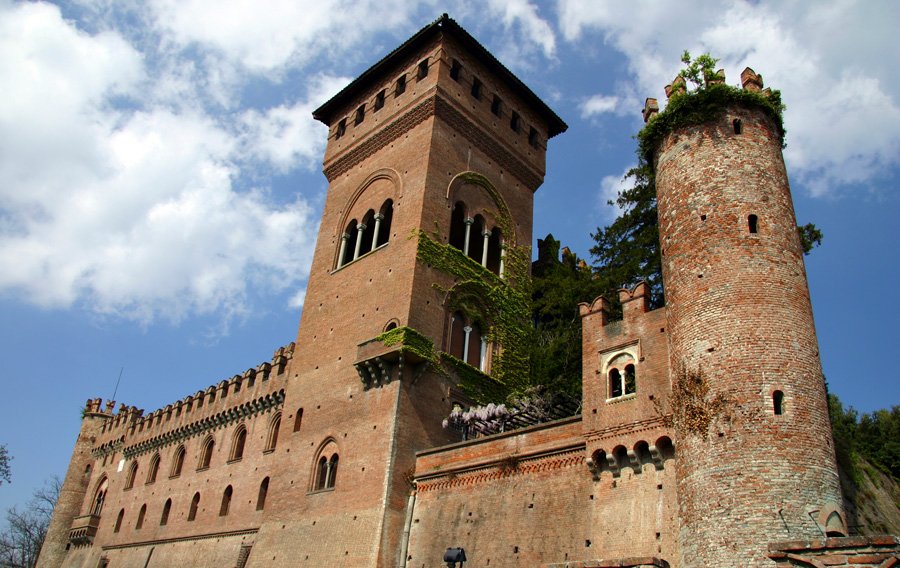
Nestled among the vineyards of Monferrato, Gabiano Castle is one of the oldest historic residences in Piedmont. Here you can stroll through 12th-century cellars, taste DOC wines, and explore the rare boxwood maze. A visit that combines history, food and wine, and relaxation, with the option to stay in suites full of medieval charm.
– Millennia of History: from the 8th century to the present, the castle has witnessed centuries of events, with neo-medieval restorations between 1908 and 1935.
– Boxwood Maze: one of the few surviving examples in Piedmont, created in the 1930s.
– DOC Wines and Tastings: production of Gabiano, Barbera, Grignolino, with the opportunity to taste and purchase at the emporium.
– Hospitality and Dining: themed suites, pool and spa, restaurant ‘3 Orologi’ with traditional zero-kilometer dishes.
Introduction
Perched on a hill overlooking the Po Valley, the Castello di Gabiano is a gem of Monferrato, among the oldest and largest in the region. The estate spans 260 hectares of amphitheater vineyards, with views of the Alps and the river flowing below. What makes it unique is its boxwood labyrinth, one of the few survivors in Piedmont, created in the 1930s. Amid vineyards, a reconstructed medieval village, and a timeless atmosphere, this castle is not just a monument: it’s a 360-degree experience.
Historical Notes
The first traces date back to the 8th century, but it was in 1164 that Frederick Barbarossa gave it to William II of Montferrat. After centuries of disputes, in 1622 it passed to the Durazzo, a Genoese family, who turned it into a stately residence. A 19th-century restoration erased its turreted appearance, but between 1908 and 1935, architect Lamberto Cusani, inspired by Alfredo d’Andrade, restored the castle to its medieval look. Today it is owned by Marquis Giacomo Cattaneo Adorno, who continues to restore it and produce wine.
The boxwood labyrinth and the park
In the heart of the romantic park lies a hidden boxwood labyrinth, designed by Lamberto Cusani in the 1930s. It is one of the very few historic labyrinths in Piedmont, with dense hedges that create a surprising path. Around it, Italian-style gardens and pathways that disappear among the trees. The park opens up to a spectacular view: the Po River, the vineyards, and on clear days, the Alps. A perfect place to get lost—literally.
DOC Wine Cellars
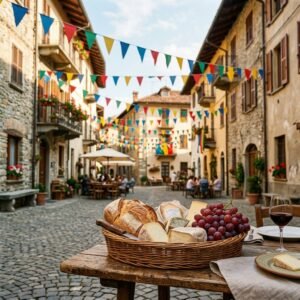
Under the castle lie the 12th-century cellars, where barrels and barriques rest. Here DOC labels such as Gabiano (gold medal in Paris 1937), Rubino, Barbera, and Grignolino are produced. The estate, on 20 hectares of vineyards, focuses on low yields and quality. The Tasting Room overlooking the vineyards offers tastings, while the Wine Shop under the arcades of the village sells wines and local products. A must-stop for wine lovers.
Why Visit
1. Stay in a historic suite: 12 rooms with evocative names (La Torre, Il Tartufo…) in a resort that blends luxury and history. 2. Dine at the “3 Orologi” restaurant: traditional dishes with zero-kilometer ingredients, from truffle to honey from the estate. 3. Events and relaxation: summer pool, SPA, cooking classes, and guided tours. The castle is also a venue for weddings and film sets.
When to Go
The best time is autumn, when the vineyards turn red and the grape harvest begins. The scent of the must mingles with that of the white truffle, which is at home here. The low afternoon light illuminates the castle’s brick facades. In spring, the park is in bloom and the labyrinth is lush. Avoid summer if you don’t like the heat. In every season, early morning offers a magical light over the Po.
In the Area
A few kilometers away, Moncalvo and Murisengo are truffle towns, with fairs and restaurants. Don’t miss the Sacro Monte di Crea, a UNESCO World Heritage site, with its frescoed chapels. For a longer trip, Casale Monferrato offers a Baroque center and the Museum of Magic. The whole area is a succession of hills and villages, perfect for a food and wine tour.