Villa romana delle Grotte: History and Breathtaking Views in Portoferraio

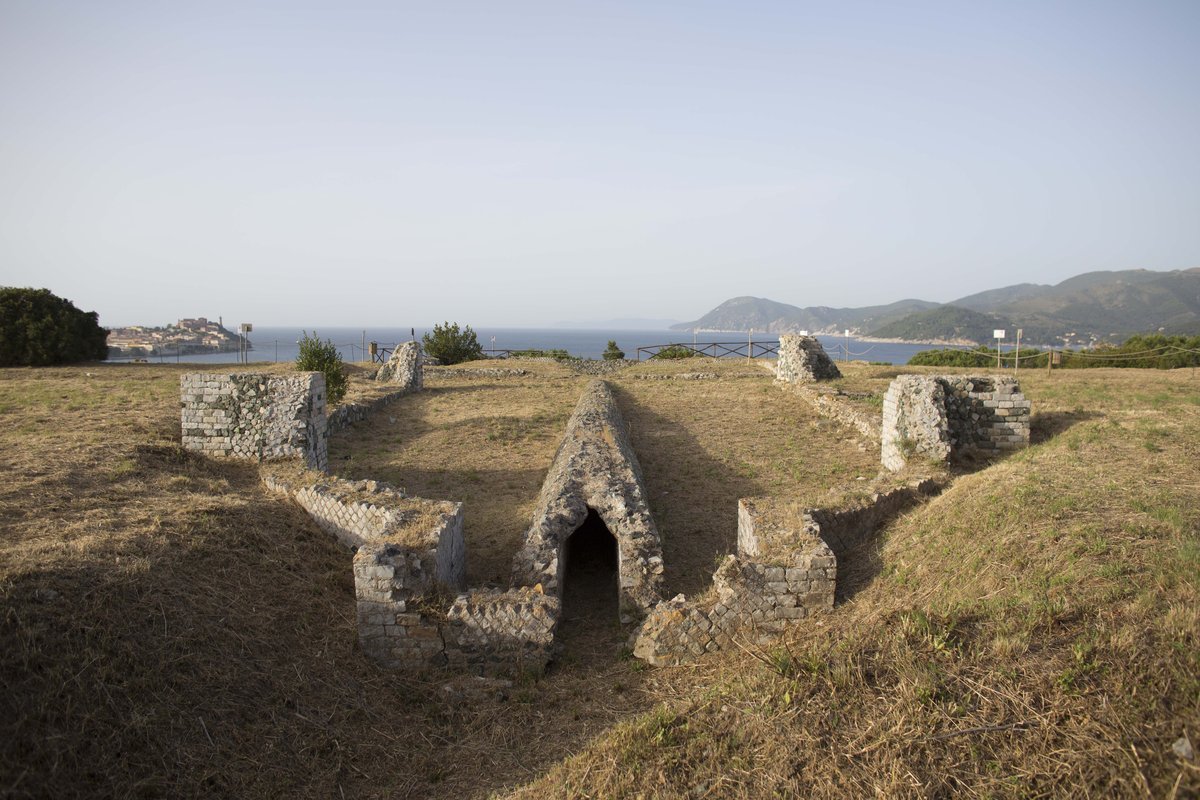
The Villa romana delle Grotte is one of the most fascinating archaeological sites on the island of Elba. Located just a few kilometers from Portoferraio, it offers a unique combination of ancient history and breathtaking sea views. Here’s what awaits you:
Remains of a maritime villa from the 1st century BC, with thermal baths and mosaics.
Terrace with a view over the Bay of Portoferraio: a perfect spot for unforgettable photos.
Path through olive groves connecting the villa to the center of Portoferraio.
Free admission and guided tours during the summer months.


Events nearby


Copertina itinerario Villa romana delle Grotte: History and Breathtaking Views in Portoferraio
Villa romana delle Grotte: an archaeological site overlooking the sea in Portoferraio, with mosaics, barrel vaults, and a panoramic terrace on the bay. What to see, how to get there, and why to visit.

Good to know


Evocative Introduction

On the hill of Portoferraio, overlooking a sea that looks like a painting, there’s a place that takes you back in time: the Villa delle Grotte. It’s not just an archaeological site; it’s an experience. You arrive, and your eyes immediately fall on the bay below, then on the ancient walls and mosaics that have defied time. It seems incredible to think that here, two thousand years ago, someone enjoyed the same breathtaking view. It’s one of those places that makes you feel small and, at the same time, part of an immense history.

Historical Background

Built in the 1st century BC, the villa was likely owned by a Roman patrician family linked to nearby Fabricia (ancient Portoferraio). The remains show a typical layout: residential quarters, baths, and a huge cryptoporticus (a semi-subterranean corridor). After being abandoned in the 3rd century AD, the structure was reused as a quarry for materials. In the 16th century, the Medici transformed it into a defensive post, adding bastions. Here is a brief timeline:

  • 1st century BC: construction of the villa.
  • 3rd century AD: abandonment and spoliation.
  • 16th century: Medici fortification.
  • 20th century: archaeological excavations and opening to the public.

What to See: Mosaics and Architecture

The villa is a small gem. As you walk among the ruins, notice the floor mosaics in black and white, with geometric and marine motifs. The cryptoportico is impressive: a long vaulted gallery, now partially collapsed, but it gives you a sense of the villa’s grandeur. A bit further on, the panoramic terrace is the highlight: from here, the view stretches over Portoferraio and the sea. It feels like being on a ship’s deck. A tip: don’t just look, but touch the stones – some still bear the marks of ancient stonemasons.

Why Visit

1. A dive into history with a sea view: few Roman villas offer such a panorama. Perfect for those who love places with a unique atmosphere. 2. Accessible and not too crowded: unlike other destinations on the island, you can enjoy the site at your own pace, perhaps even in solitude. 3. Great for stunning photos: the sunset colors on the ancient walls are postcard-worthy. No filters needed.

When to Go

If you can, choose the late afternoon. The sunset light enhances the mosaics, and the sea becomes a palette of colors. The villa faces west, so the setting sun creates an almost magical atmosphere. If you go in spring or autumn, temperatures are mild and there’s less wind. Avoid the central hours in summer: the sun beats down and there’s no shade.

Nearby

Take advantage of the location and visit Portoferraio just minutes away: the historic center with its Medici walls and the Linguella Museum. Or, if you love the sea, head to Ghiaie Beach, a stone’s throw from the villa, with smooth pebbles and crystal-clear waters. For a scenic walk, the lighthouse trail offers dreamlike views.

Itineraries nearby


💡 Did You Know…?

According to tradition, the villa was owned by Marcus Vipsanius Agrippa, Augustus’s son-in-law, who spent his summers here away from Rome. Local legends tell of a secret passage connecting the villa to the sea, used for sudden escapes. Even today, at low tide, the remains of a submerged pier are visible: a dive into history best explored with mask and fins.