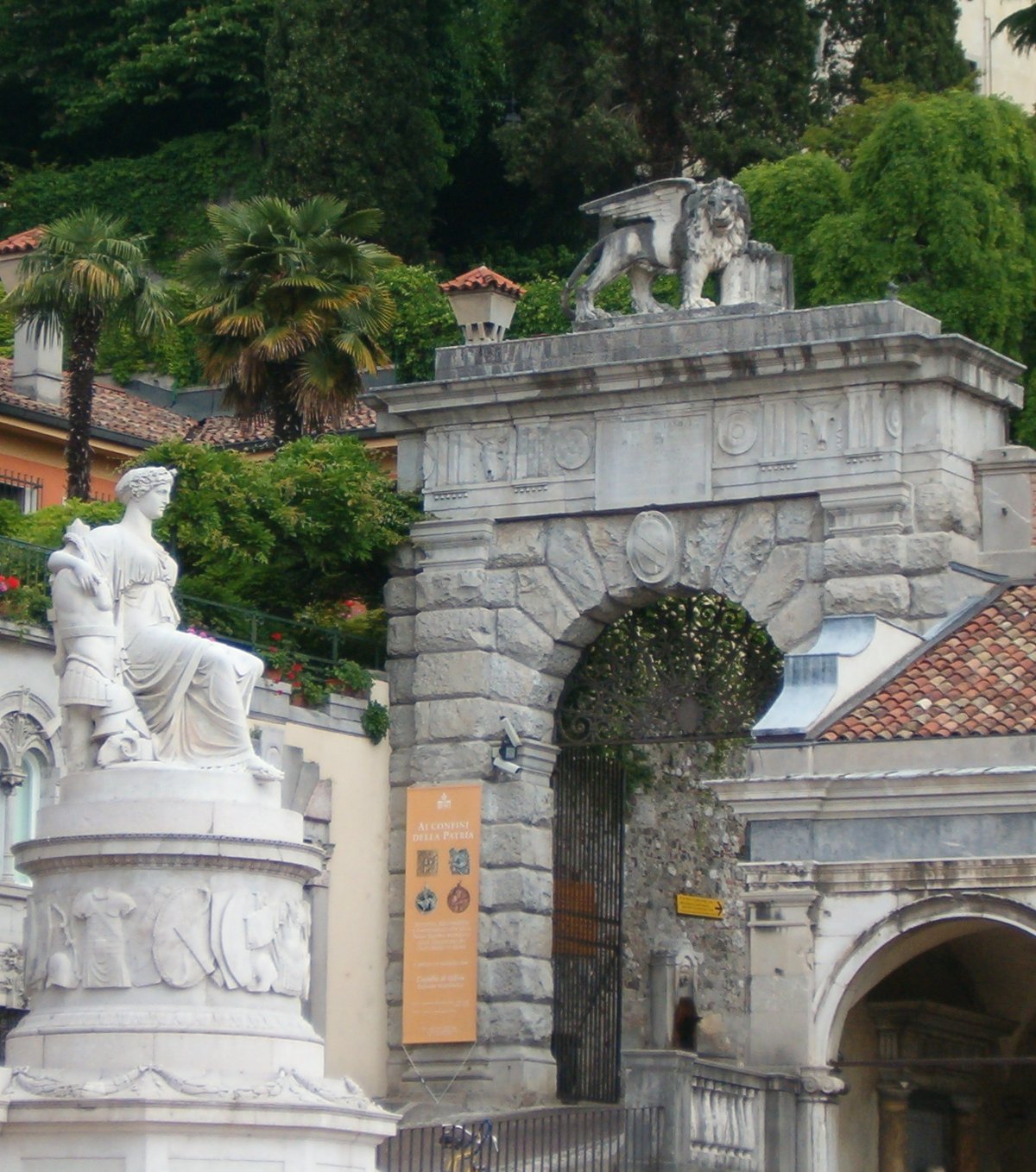
Bollani Arch in Udine: Lion of Saint Mark and Panoramic View from the Castle

The Bollani Arch is Udine’s Renaissance symbol, built in 1556 to celebrate the end of a plague. Designed by Andrea Palladio, it showcases the Lion of Saint Mark in Istrian stone and allegorical statues. Passing through it marks the beginning of the ascent to Udine Castle, offering a breathtaking panoramic view of the city.

  • Renaissance arch from 1556 designed by Andrea Palladio
  • Lion of Saint Mark and allegorical statues in Istrian stone
  • Free access and always open, no tickets required
  • Panoramic view of Udine from the terrace above

Copertina itinerario Bollani Arch in Udine: Lion of Saint Mark and Panoramic View from the Castle
Renaissance arch from 1556 designed by Palladio, featuring the Lion of Saint Mark and allegorical statues. Free access to Udine Castle and city view from the terrace.

Good to know


Introduction

When you arrive in Udine, the Bollani Arch immediately welcomes you with its elegant and solemn presence. It’s not just a monument: it’s the symbol of the Friulian Renaissance, a portal that makes you feel like you’re entering the historic heart of the city. You see it towering in Piazza della Libertà, with its white stone structure contrasting with the red of the surrounding rooftops. Walking under its arches gives you an immediate sense of grandeur, as if you’re passing through a piece of living history. For me, it’s the ideal starting point for exploring Udine, because it encapsulates the essence of this city: noble, welcoming, and full of stories to tell. If you love architecture and details that speak of centuries past, you’ll find plenty to savor here.

Historical Notes

The Bollani Arch was built in 1556 based on a design by architect Andrea Palladio, one of the greatest exponents of the Italian Renaissance. It was commissioned by the Venetian lieutenant Giovanni Bollani, from whom it takes its name, to celebrate the end of a plague epidemic and symbolize the power of the Serenissima over Udine. The structure, made of Istrian stone, features a round arch topped by a Lion of Saint Mark, symbol of Venice, and a statue of Justice. Over time, it has withstood earthquakes and urban transformations, maintaining its role as the gateway to the Castle. Today, it is a protected monument and a landmark for tourists and locals alike.

  • 1556: Construction of the Arch based on Palladio’s design
  • 16th century: Symbol of Venetian rule over Udine
  • 1976: Damage from the Friuli earthquake and subsequent restoration
  • Today: Historical monument freely accessible to visitors

Architecture and Details

Approach the Bollani Arch and observe the details: the Istrian stone, white and luminous, is crafted with a precision that only the Renaissance could achieve. Above the arch, the Marcian lion holds an open book with the inscription ‘Pax Tibi Marce Evangelista Meus’, a message of peace that contrasts with its original function as a symbol of power. On the sides, two niches house allegorical statues, while the inner vault is simple yet majestic. Climbing the adjacent staircase, you can admire the Arch from a different angle and notice how it integrates perfectly with Udine Castle. For enthusiasts, it’s a striking example of how Palladio influenced Friulian architecture, creating a balance between elegance and functionality.

The Arch in Daily Life

Bollani Arch is not just a monument to photograph: it’s an integral part of Udine’s daily life. In the morning, you’ll see students rushing by, while in the evening it transforms into a meeting point for aperitifs at nearby venues. During events in Piazza della Libertà, like the Christmas market or summer festivals, it becomes the perfect backdrop for concerts and performances. Locals consider it a silent “friend” that has watched generations grow and the city evolve. If you want to grasp Udine’s soul, stop here and observe the comings and goings: you’ll understand why this arch is so beloved, not only for its beauty, but because it’s a lived-in place that naturally connects past and present.

Why Visit It

Visiting the Bollani Arch is worthwhile for three concrete reasons. First, it’s free and always accessible: there are no tickets or closing hours, you can admire it at any time of day. Second, it’s a concentration of history and art: in a few square meters, you’ll find references to the Renaissance, Palladio, and Venetian rule, perfect for those who want to delve deeper without getting lost in huge museums. Third, its location is strategic: from here, you can reach Udine Castle, the Loggia del Lionello, and shopping streets on foot in just a few minutes. In short, it’s an efficient stop that offers culture, beauty, and practicality, without requiring too much time or effort.

When to Go

For a truly enchanting experience, I recommend visiting the Bollani Arch at sunset. At that hour, the warm sunlight bathes the white stone, creating shadow plays that highlight the architectural details. The square becomes less crowded than during the day, offering a more intimate and peaceful atmosphere. If you prefer spring or autumn, the colors of the Friulian sky during these seasons make the scene even more photogenic. Avoid the midday hours on summer days, when the heat can be intense and crowds are larger. In winter, however, if you catch a sunny day, the low-angle light accentuates every sculpture, providing a unique spectacle.

In the Surroundings

After admiring the Bollani Arch, explore the surroundings to enrich your visit. Just a short walk away, you’ll find the Castle of Udine, which houses civic museums and offers a panoramic view of the city from its terrace. For a Renaissance-themed experience, head to the Loggia del Lionello in Piazza della Libertà, another architectural gem from the same period. If you love art, don’t miss the Gallery of Ancient Art in the Castle, with works that tell the story of Friuli. For a tasty break, nearby you’ll find traditional taverns where you can sample local cured meats and wines, such as San Daniele ham or Refosco.

💡 Did You Know…?

A little-known curiosity: the statue of the Lion of Saint Mark on the arch has a unique feature. Unlike many other Marcian lions in the former Republic of Venice, this one holds a closed book, a symbol of war, rather than an open one (which would indicate peace). Some local historians link this to the turbulent period when the arch was built. Additionally, if you look closely at the base, you will notice the coats of arms of Bollani and the Serenissima, a detail that makes the arch a true historical document in stone.