
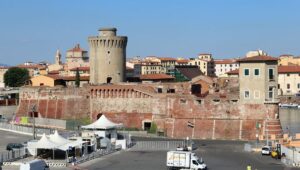
The Castle of Castiglione della Pescaia, also known as the Rocca, stands atop the promontory overlooking the medieval historic center. Built by the Pisans in the 10th century as a watchtower, it was expanded over the centuries into the imposing fortress we see today. Now privately owned, it can only be visited from the outside, but offers one of the most spectacular views of the Tuscan Maremma.
- Walk along the walls and towers (Pisan Tower, Lilli Tower)
- Breathtaking panorama of the coast and hills
- The ancient village with Porta Urbica and the Church of San Giovanni Battista
- Proximity to the Diaccia Botrona Nature Reserve
Events nearby

31/01/2026 - 02/06/2026
03/06/2026 - 07/06/2026

The Castle of Castiglione della Pescaia, an ancient Pisan fortress, dominates the medieval village and the Maremma coast. History, architecture, and surroundings in an unmissable visit.
- Via Giatti, Grosseto (GR)
- Open in Google Maps
- View on Google Images Castello di Castiglione della Pescaia a Grosseto
Good to know
Introduction: a fortress by the sea
Perched atop the promontory, the Castle of Castiglione della Pescaia is the symbol of the medieval village. From up there, the gaze sweeps over a wide stretch of the Maremma coast, between golden beaches and green hills. It doesn’t matter that it’s now privately owned and closed to the public: just looking at it from below is enough to feel its power. The three towers, with the massive Pisan Tower standing guard, tell centuries of history. It’s one of those places where you stop, look, and think: ‘what a sight.’ Perfect for those who love a mix of history and breathtaking views.
Introduction: a fortress by the sea
Perched atop the promontory, the Castle of Castiglione della Pescaia is the symbol of the medieval village. From up there, the gaze sweeps over a wide stretch of the Maremma coast, between golden beaches and green hills. It doesn’t matter that it’s now privately owned and closed to the public: just looking at it from below is enough to feel its power. The three towers, with the massive Pisan Tower standing guard, tell centuries of history. It’s one of those places where you stop, look, and think: ‘what a sight.’ Perfect for those who love a mix of history and breathtaking views.
Historical Notes: From the Pisans to the Present Day
The castle was founded around the 10th century as a Pisan watchtower, the Torre Pisana. Over the next two centuries, two more towers were added, and the curtain walls were built during the Renaissance. After the Pisans, it passed to the Aragonese, who fortified it in the 15th century, then to the Medici, and finally to the Lorraine, who restored the structure in the 18th century. At the beginning of the 20th century, architect Lorenzo Porciatti carried out the last interventions. Today it is privately owned, but the exterior can be visited.
- 10th century: construction of the Torre Pisana
- 12th–13th century: expansion with additional towers
- 15th century: Aragonese interventions
- Late 18th century: Lorraine restorations
- Early 20th century: Porciatti’s restoration
Historical Notes: From the Pisans to the Present Day
The castle was founded around the 10th century as a Pisan watchtower, the Torre Pisana. Over the next two centuries, two more towers were added, and the curtain walls were built during the Renaissance. After the Pisans, it passed to the Aragonese, who fortified it in the 15th century, then to the Medici, and finally to the Lorraine, who restored the structure in the 18th century. At the beginning of the 20th century, architect Lorenzo Porciatti carried out the last interventions. Today it is privately owned, but the exterior can be visited.
- 10th century: construction of the Torre Pisana
- 12th–13th century: expansion with additional towers
- 15th century: Aragonese interventions
- Late 18th century: Lorraine restorations
- Early 20th century: Porciatti’s restoration
Architecture and Breathtaking Views
The castle consists of three corner towers with battlements, connected by curtain walls that enclose an inner courtyard. The Torre Pisana, to the east, is the oldest and most massive, with a sloped base of squared stone. On the west side stands the main building overlooking the sea. From the southwestern tower, a battlemented curtain wall runs along the southern side, where an arched doorway opens onto a panoramic terrace. It’s a shame you can’t go inside, but even just walking around it stirs the emotions. The town walls, with eleven towers and three gates, complete the scene.
Architecture and Breathtaking Views
The castle consists of three corner towers with battlements, connected by curtain walls that enclose an inner courtyard. The Torre Pisana, to the east, is the oldest and most massive, with a sloped base of squared stone. On the west side stands the main building overlooking the sea. From the southwestern tower, a battlemented curtain wall runs along the southern side, where an arched doorway opens onto a panoramic terrace. It’s a shame you can’t go inside, but even just walking around it stirs the emotions. The town walls, with eleven towers and three gates, complete the scene.
The Medieval Village of Alleyways and Towers
Coming down from the castle, getting lost in the ancient village is a must. Cobbled streets, stone houses, and sudden glimpses of the sea. The walls, reinforced by the Aragonese, connect eleven towers: square ones from medieval times, circular ones from the Renaissance. Must-sees include the Porta Urbica, fortified with murder holes in 1608, and the Church of San Giovanni Battista, whose bell tower was once a tower. Don’t miss the Clock Tower and the Renaissance Palazzo Centurioni. The village is lively all year round, but summer evenings are magical, with lights and the scents of the sea.
The Medieval Village of Alleyways and Towers
Coming down from the castle, getting lost in the ancient village is a must. Cobbled streets, stone houses, and sudden glimpses of the sea. The walls, reinforced by the Aragonese, connect eleven towers: square ones from medieval times, circular ones from the Renaissance. Must-sees include the Porta Urbica, fortified with murder holes in 1608, and the Church of San Giovanni Battista, whose bell tower was once a tower. Don’t miss the Clock Tower and the Renaissance Palazzo Centurioni. The village is lively all year round, but summer evenings are magical, with lights and the scents of the sea.
Why Visit It
Three good reasons: 1. The view: from the castle terrace (even just from outside) you can enjoy a view that stretches from the sea to the hills. 2. The history: the castle contains a thousand years of Pisan, Aragonese, Medici, and Lorraine dominations. 3. The village atmosphere: walking among the medieval walls and towers is like taking a step back in time. And then there’s the legend of Pia de’ Tolomei (the one from Dante) that seems to hover among these walls. A place that speaks for itself, even without entering.
Why Visit It
Three good reasons: 1. The view: from the castle terrace (even just from outside) you can enjoy a view that stretches from the sea to the hills. 2. The history: the castle contains a thousand years of Pisan, Aragonese, Medici, and Lorraine dominations. 3. The village atmosphere: walking among the medieval walls and towers is like taking a step back in time. And then there’s the legend of Pia de’ Tolomei (the one from Dante) that seems to hover among these walls. A place that speaks for itself, even without entering.
When to Go
The best time? At sunset. The golden light caresses the towers and the sea turns red. The village empties of tourists and only the sound of the waves remains. In autumn the air is cool and the beaches deserted: ideal for a solitary walk. If you are in summer, go early in the morning or late in the afternoon, to avoid the heat and the crowds. In the evening, the castle lights up and becomes even more evocative.
When to Go
The best time? At sunset. The golden light caresses the towers and the sea turns red. The village empties of tourists and only the sound of the waves remains. In autumn the air is cool and the beaches deserted: ideal for a solitary walk. If you are in summer, go early in the morning or late in the afternoon, to avoid the heat and the crowds. In the evening, the castle lights up and becomes even more evocative.
Nearby
Just a stone’s throw away is the Diaccia Botrona Nature Reserve, what remains of the ancient marsh drained by the Lorraine family. A paradise for birdwatchers, with flamingos and herons. And then Vetulonia, a nearby Etruscan town with its monumental tomb and archaeological museum. In short, combining sea, nature, and history is a breeze. Bring binoculars!
Nearby
Just a stone’s throw away is the Diaccia Botrona Nature Reserve, what remains of the ancient marsh drained by the Lorraine family. A paradise for birdwatchers, with flamingos and herons. And then Vetulonia, a nearby Etruscan town with its monumental tomb and archaeological museum. In short, combining sea, nature, and history is a breeze. Bring binoculars!
Itineraries nearby


💡 Did You Know…?
It is said that during the siege of 1442, the inhabitants held out thanks to the miraculous intervention of the Madonna delle Grazie. Moreover, it is rumored that the ghost of Pia de’ Tolomei, mentioned by Dante in the Divine Comedy, wanders among the castle towers.