
🧭 What to Expect
Ideal for lovers of art and history, set in a travertine backdrop. Stroll among squares, Roman bridges, and Renaissance palaces. Must-see museums: Art Gallery, Archaeological, and Ceramic. Unique views from Forte Malatesta and Torre degli Ercolani. Cuisine: olive all'ascolana and Piceno wines.
Ascoli Piceno is one of the most charming cities in the Marche region, with a historic center entirely made of travertine that makes it unique. Piazza del Popolo is the beating heart, but don't stop there: explore Piazza Arringo with its Cathedral and Baptistery, the Roman Theatre, and museums like the Civic Art Gallery and the Archaeological Museum. Travertine dominates every corner, from palaces to bridges. Stroll between Porta Gemina and Porta Solestà, discover Forte Malatesta, and relax at the Tempietto di Sant'Emidio Rosso. Don't miss the Museum of Ceramic Art for a dive into local craftsmanship. A city that captivates at first sight.
Overview
- Piazza del Popolo: The Travertine Living Room
- Piazza Arringo: The Roman Forum That Spoke to the People
- Palazzo dell'Arengo: A Medieval Gem
- Roman Theatre
- Pinacoteca Civica: A Dive into Art Among Masterpieces and Period Furnishings
- Pinacoteca Civica: A Dive into Art Among Masterpieces and Period Furnishings
- State Archaeological Museum of Ascoli Piceno: The Treasure of the Piceni
- State Archaeological Museum of Ascoli Piceno: The Treasure of the Piceni
- Palazzo dei Capitani del Popolo: The Medieval Heart of Ascoli
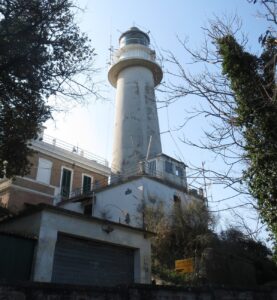
- Forte Malatesta: History and Culture within Renaissance Walls
- Roman Bridge of Solestà
- Porta Gemina: The Silent Roman Entry Not to Be Missed
- Porta Solestà: History and Medieval Charm
- Fortezza Pia: History and Mystery Among the Ruins
- The Little Temple of Saint Emidio Rosso: A Hidden Gem
- Museum of Ceramic Art: A Dive into Ascoli's Tradition
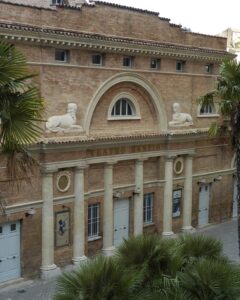
- Teatro Ventidio Basso: A Neoclassical Gem in the Heart of Ascoli
Itineraries nearby

Piazza del Popolo: The Travertine Living Room
- Go to the page: Piazza del Popolo Ascoli Piceno: A Renaissance Travertine Salon with Caffè Meletti
- Ascoli Piceno (AP)
- Open in Google Maps
- View on Google Images
 If there’s one thing that took my breath away in Ascoli Piceno, it was Piazza del Popolo. It’s not just beautiful: it’s an experience. Imagine a large rectangle, 29 by 87 meters, paved entirely in white travertine that turns into a perfect mirror of the sky when it rains. Porticoes on three sides, with travertine columns and reddish brick vaults, invite you to stroll sheltered: they were built between 1507 and 1509 by order of Pope Julius II and Governor Raniero de’ Ranieri. Each arch is a different width, because it had to adapt to the existing medieval shops – a detail that makes it all more authentic.
At the center, the Palazzo dei Capitani del Popolo dominates with its crenellated tower that seems to have been watching over the square since the 13th century. Across from it, Caffè Meletti (Art Nouveau style, opened in 1907) is a must-stop: try their anisette under the brass chandeliers. The north side is closed by the Church of San Francesco, Gothic and imposing, with the Loggia dei Mercanti attached – here, on a slab from 1569, the standard measures for bricks and tiles are engraved, a sign that the square has always been a center of trade.
It’s not a square to just visit: it’s a place to experience. Sunset is magical, when the travertine lights up gold, and during the Quintana (first Sunday of August) you feel like you’ve stepped back in time. And then there’s the silence, broken only by the murmur of people under the porticoes – much more intimate and sheltered than other Italian squares. In short, a living room that embraces you.
Piazza Arringo: The Roman Forum That Spoke to the People
- Go to the page: Piazza Arringo Ascoli Piceno: Cathedral, Art Gallery and Golden Travertine Pavement
- Ascoli Piceno (AP)
- Open in Google Maps
- View on Google Images
 When you arrive in Piazza Arringo, you immediately understand that here the city was born. Older and less symmetrical than Piazza del Popolo, it is the true historical heart of Ascoli Piceno. Irregularly rectangular (140 meters long, up to 56 meters wide), it is dominated by two giants: the Cathedral of Sant'Emidio and the Baptistery of San Giovanni, a Romanesque gem with an immersion baptismal font. Beneath your feet, the local travertine tells centuries of history: here stood the Roman forum and, in the Middle Ages, the people gathered under a large elm for the "arringhe" (speeches) – hence the name. In 1215, Saint Francis of Assisi preached here; in 1446, Saint James of the Marches pacified the factions. At the center, two elliptical travertine fountains from 1882, with sea horses and bronze putti by Giorgio Paci, add lightness. On the south side, the long Baroque facade of Palazzo dell'Arengo (65 meters) houses the Civic Art Gallery; next door, Palazzo Panichi hosts the Archaeological Museum. There are curious corners, like the ancient church of San Biagio, demolished in 1887 to enlarge the square. Today, renovation works are restoring the travertine pavement: by June 2026, the entire north side will reopen, just in time for the Quintana. Walk here early in the morning, when light caresses the cathedral and the smell of warm bread comes from historic cafés. It is a place to be enjoyed slowly, letting every stone speak.
Palazzo dell'Arengo: A Medieval Gem
- Go to the page: Arengo Palace Ascoli Piceno: Medieval Architecture and 13th-Century Loggia
- Piazza Arringo, Ascoli Piceno (AP)
- Open in Google Maps
- View on Google Images
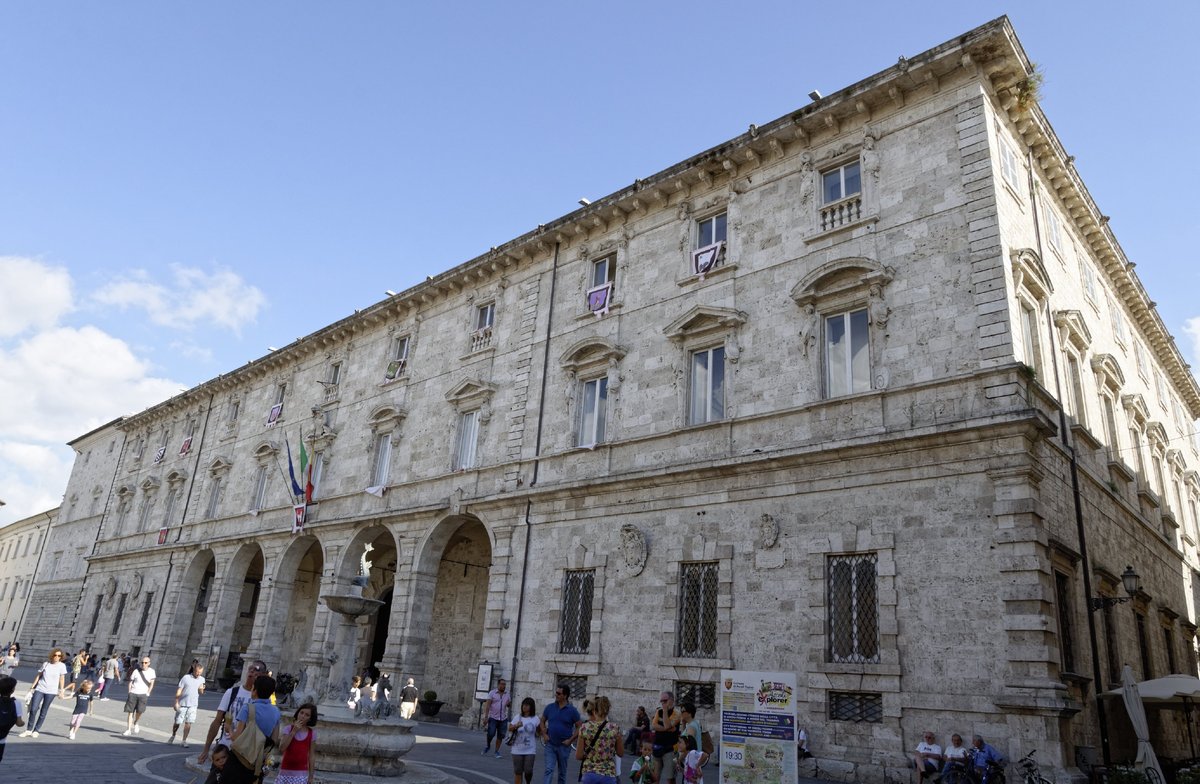 If you think Ascoli Piceno is just Piazza del Popolo, you're in for a big surprise. Just steps away, in Piazza Arringo, stands Palazzo dell'Arengo, a building that is much more than a municipal office. Its origins date back to the 12th century, when the first core was built, and over the centuries it expanded to become the complex you see today. The facade in travertine blocks is a masterpiece by the Giosafatti, completed in 1745: look at the five-arched portico, the windows with pensive-faced caryatids, and the telamons on the second floor. Walk under the portico and you'll notice the large rusticated portal from 1658: it leads into an entrance hall that was once a 13th-century hall, divided into three naves with cross vaults. There, once upon a time, markets were held and justice was administered. Today that hall houses the Pinacoteca Civica, one of the most important in the Marche region, with works by Van Dyck, Titian, Tintoretto, Guido Reni, and even Turner. A true treasure. But that's not all: on the ground floor, to the left, is the headquarters of the Ente Quintana with costumes from the historical reenactment, and in the Sala dei Mercatori, two Lombard tombs from Castel Trosino are reconstructed. In short, every corner of the palace tells different stories. And if you go up to the main floor, you'll find the municipal offices, but also the mayor's office. A place to discover, far from mass tourism.
Roman Theatre
- Go to the page: Roman Theater Ascoli Piceno: 1st Century BC Cavea in the Historic Center
- Via Francesco Ricci, Ascoli Piceno (AP)
- Open in Google Maps
- View on Google Images
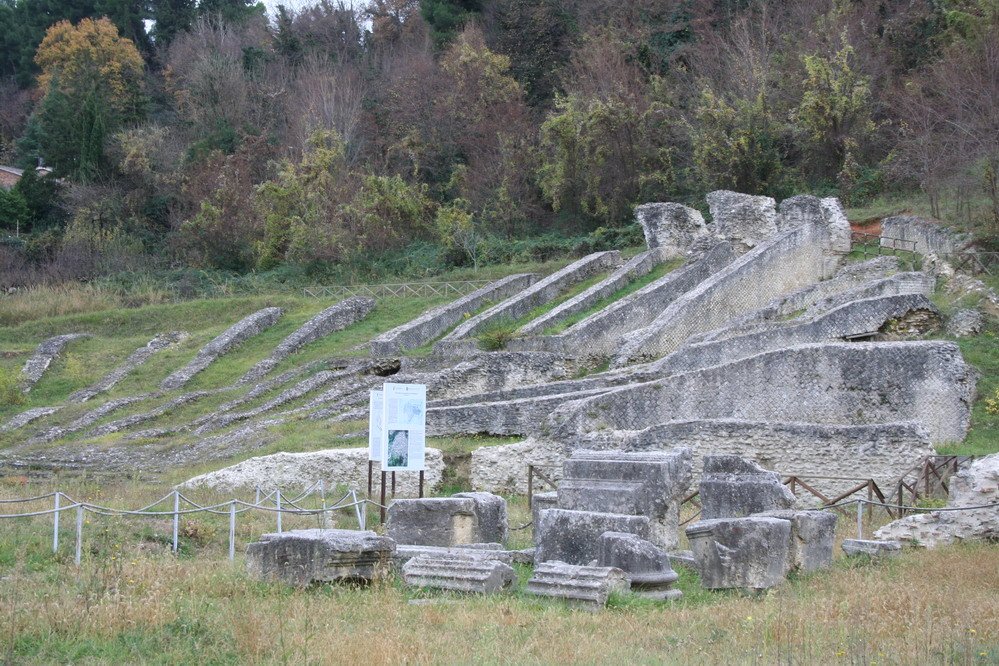 Strolling along Via Francesco Ricci, almost hidden among the buildings, you'll find the Roman Theatre of Ascoli Piceno. Nestled against the Colle dell'Annunziata, it uses the natural slope to support the 95-meter-diameter cavea. Built in the 1st century BC, it was here – according to tradition – that the killing of some Roman envoys sparked the Social War. After centuries of neglect and looting, the remains re-emerged during excavations between 1932 and 1959. Today, restored in 2010, it once again hosts summer performances.
Entering, what strikes you is the grandeur of the radial walls in opus reticulatum with travertine tesserae. At the west entrance, a semicircular exedra with polychrome marbles and half-columns served as a waiting room. Traces of the ancient orchestra and tiers remain, while the original seats bearing subscribers' names are in the Archaeological Museum. The stage, unfortunately, has almost entirely disappeared.
Today the theatre can only be visited by reservation (phone 071 5029811), with free admission. The visit lasts about 30 minutes, but is not accessible for the disabled. Every summer, the magic of the place comes alive with classical dramas and concerts, thanks to the Teatri Antichi Uniti delle Marche circuit. I saw it at sunset, when the warm light caresses the old travertine blocks: an atmosphere that takes you back two thousand years. I recommend pairing it with a walk to Porta Gemina, nearby.
Motivation
Reservation required, free admission: a treasure to discover on request.
Pinacoteca Civica: A Dive into Art Among Masterpieces and Period Furnishings
- Go to the page: Civic Art Gallery of Ascoli Piceno: Masterpieces from the Middle Ages to the 20th Century
- Piazza Arringo, Ascoli Piceno (AP)
- Open in Google Maps
- View on Google Images
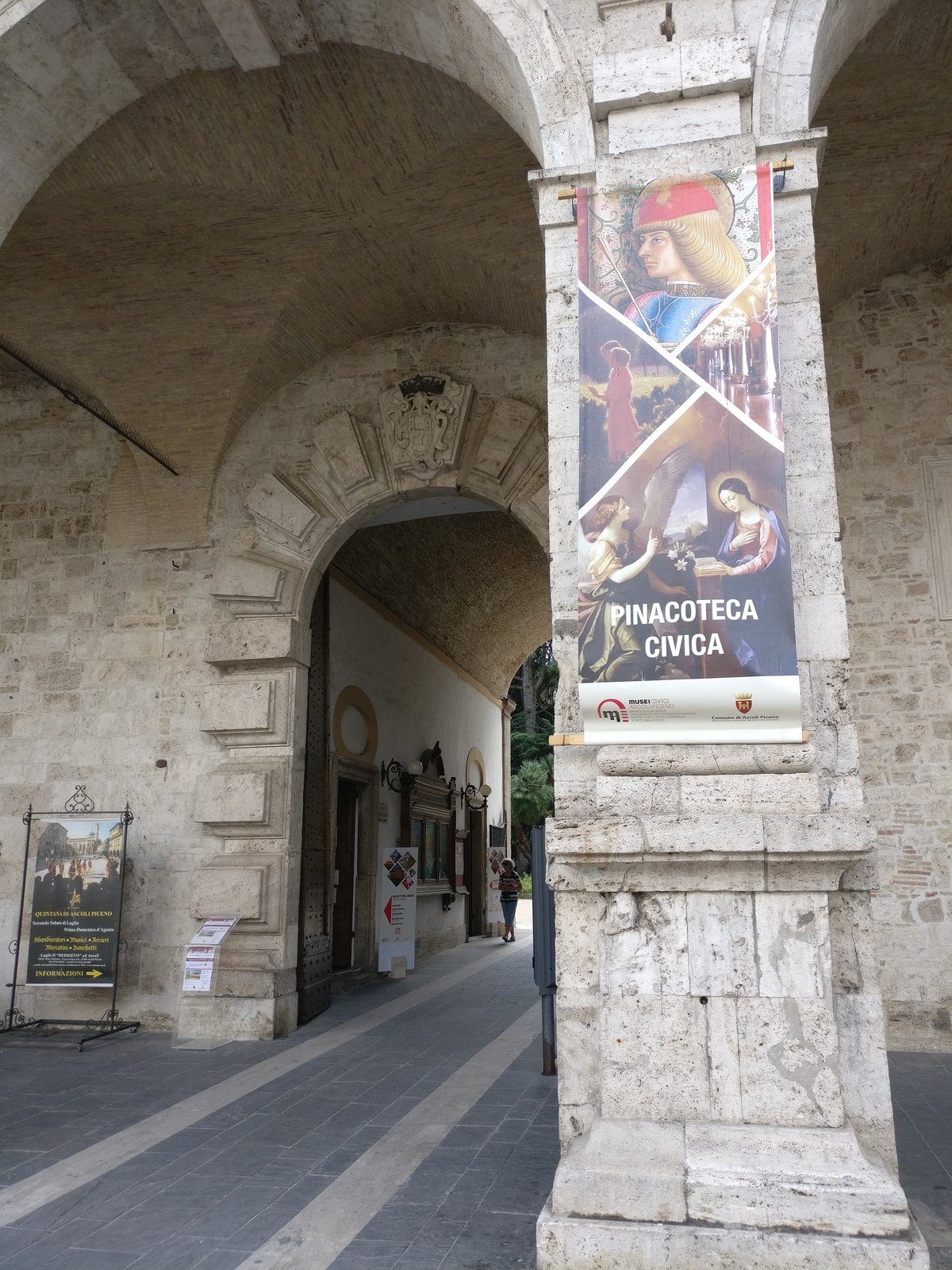 If you think that in Ascoli Piceno there is only Piazza del Popolo, you are very wrong. The Pinacoteca Civica, housed in the majestic Palazzo dell’Arengo in Piazza Arringo, is one of the most important art collections in the Marche region. Opened in 1861 thanks to Giorgio Paci and Giulio Gabrielli, it holds works from suppressed churches and monasteries, along with donations from local collectors. Upon entering, you get the impression of a noble palace: 18th-century Marche furniture, Murano glass chandeliers, and Venetian mirrors frame absolute masterpieces. Highlights include the polyptychs by Carlo Crivelli, ‘The Amorous Walk’ by Pellizza da Volpedo (1901), and, unique in Italy, the Piviale di Niccolò IV (13th century), a rare English embroidery in silk and gold. Also unmissable is the room dedicated to Titian, with the ‘Stigmata of St. Francis’. The itinerary unfolds through 15 rooms, from the first to the second floor, with sections on ceramics, numismatics, and a rich collection of drawings (Guercino, Pietro da Cortona). Full price ticket is €8 (reduced €5) and it is open from Tuesday to Sunday, 10:00-19:00. The museum is accessible and offers audio guides. In short, a must-stop for those who love art without the crowds of big cities.
Pinacoteca Civica: A Dive into Art Among Masterpieces and Period Furnishings
- Go to the page: Ascoli Piceno Civic Art Gallery: Crivelli's Polyptych and Marche Art in Palazzo dell'Arengo
- Piazza Arringo, Ascoli Piceno (AP)
- Open in Google Maps
- View on Google Images
If you think that in Ascoli Piceno there is only Piazza del Popolo, you are very wrong. The Pinacoteca Civica, housed in the majestic Palazzo dell’Arengo in Piazza Arringo, is one of the most important art collections in the Marche region. Opened in 1861 thanks to Giorgio Paci and Giulio Gabrielli, it holds works from suppressed churches and monasteries, along with donations from local collectors. Upon entering, you get the impression of a noble palace: 18th-century Marche furniture, Murano glass chandeliers, and Venetian mirrors frame absolute masterpieces. Highlights include the polyptychs by Carlo Crivelli, ‘The Amorous Walk’ by Pellizza da Volpedo (1901), and, unique in Italy, the Piviale di Niccolò IV (13th century), a rare English embroidery in silk and gold. Also unmissable is the room dedicated to Titian, with the ‘Stigmata of St. Francis’. The itinerary unfolds through 15 rooms, from the first to the second floor, with sections on ceramics, numismatics, and a rich collection of drawings (Guercino, Pietro da Cortona). Full price ticket is €8 (reduced €5) and it is open from Tuesday to Sunday, 10:00-19:00. The museum is accessible and offers audio guides. In short, a must-stop for those who love art without the crowds of big cities.State Archaeological Museum of Ascoli Piceno: The Treasure of the Piceni
- Go to the page: Archaeological Museum of Ascoli Piceno: Piceni and Roman Treasures
- Piazza Arringo 28, Ascoli Piceno (AP)
- http://musei.beniculturali.it/musei?mid=204&nome=museo-archeologico-statale-di-ascoli-piceno
- Open in Google Maps
- View on Google Images
- museoarcheologicoascolipiceno@beniculturali.it
- +39 0736 253562
 If you think you've seen everything in Ascoli Piceno after a stroll through Piazza del Popolo, think again. Just a stone's throw away in Piazza Arringo, there's a place that will take you back millennia: the State Archaeological Museum. Housed in the historic Palazzo Panichi (a Renaissance gem with original façade frescoes), the museum tells the story of the Piceno region from the Paleolithic to the Roman era. The itinerary unfolds over three floors: on the second, prehistory; on the first, the heart of the collection – the Piceni civilization – with artifacts that will leave you speechless. Here you'll find the famous female lozenge-shaped belts from the Salino necropolis, the refined engraved parure of Monteprandone, and the mysterious Stele of Castignano, one of the earliest examples of Italic writing. Then there are the slingshot bullets: over five thousand lead projectiles used during the Social War, some with insulting messages against the Romans. Spine-chilling stuff. On the ground floor, the Roman section welcomes you with a magnificent two-faced herma mosaic from a domus beneath the Palace of Justice and a portrait of Emperor Trajan. The display is modern, with scientific reconstructions of Piceni ladies and warriors in costume. Recommended visiting time: one and a half hours. The museum is accessible, but check the hours as it's closed on Mondays. Ticket: €4. In short, a dive into an unexpected past.
State Archaeological Museum of Ascoli Piceno: The Treasure of the Piceni
- Go to the page: Ascoli Piceno Archaeological Museum: Piceni and Roman artifacts in Palazzo Panichi
- Piazza Arringo 28, Ascoli Piceno (AP)
- http://musei.beniculturali.it/musei?mid=204&nome=museo-archeologico-statale-di-ascoli-piceno
- Open in Google Maps
- View on Google Images
- museoarcheologicoascolipiceno@beniculturali.it
- +39 0736 253562
If you think you've seen everything in Ascoli Piceno after a stroll through Piazza del Popolo, think again. Just a stone's throw away in Piazza Arringo, there's a place that will take you back millennia: the State Archaeological Museum. Housed in the historic Palazzo Panichi (a Renaissance gem with original façade frescoes), the museum tells the story of the Piceno region from the Paleolithic to the Roman era. The itinerary unfolds over three floors: on the second, prehistory; on the first, the heart of the collection – the Piceni civilization – with artifacts that will leave you speechless. Here you'll find the famous female lozenge-shaped belts from the Salino necropolis, the refined engraved parure of Monteprandone, and the mysterious Stele of Castignano, one of the earliest examples of Italic writing. Then there are the slingshot bullets: over five thousand lead projectiles used during the Social War, some with insulting messages against the Romans. Spine-chilling stuff. On the ground floor, the Roman section welcomes you with a magnificent two-faced herma mosaic from a domus beneath the Palace of Justice and a portrait of Emperor Trajan. The display is modern, with scientific reconstructions of Piceni ladies and warriors in costume. Recommended visiting time: one and a half hours. The museum is accessible, but check the hours as it's closed on Mondays. Ticket: €4. In short, a dive into an unexpected past.Palazzo dei Capitani del Popolo: The Medieval Heart of Ascoli
- Go to the page: Palazzo dei Capitani del Popolo: Renaissance Façade and Medieval Courtyard in Ascoli Piceno
- Via del Trivio, Ascoli Piceno (AP)
- Open in Google Maps
- View on Google Images
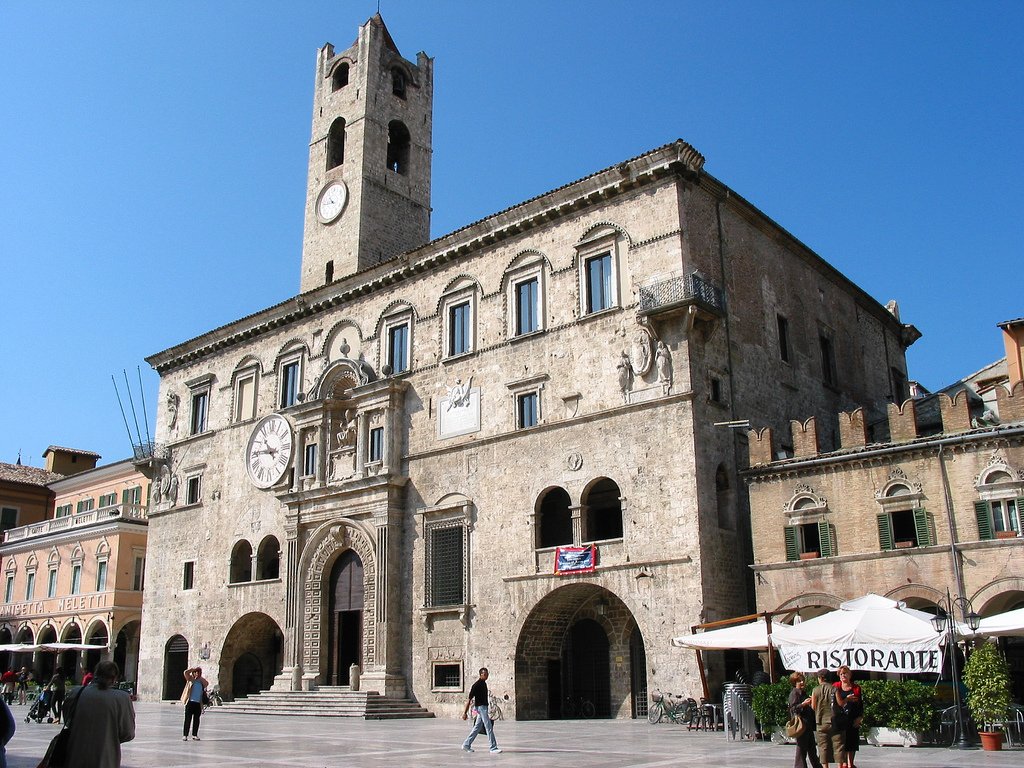 Leave the square behind and dive into the history of the Palazzo dei Capitani del Popolo. Built between the 13th and 14th centuries, this building has seen it all: it served as the seat of the communal government, later the pontifical governors, and was even the scene of a fire in 1535 during a noble revolt. The travertine façade is a Renaissance masterpiece: the portal from 1546 by Lazzaro di Francesco is surmounted by a statue of Pope Paul III, while on the sides you'll find loggias with 15th-century mullioned windows. Don't miss the medieval crenellated tower with the ‘Pacifica’ bell recast in 1547.
Enter and discover the Renaissance courtyard with three orders of loggias, designed by Camillo Merli in 1549. On the first floor, the Sala della Ragione will leave you speechless: a 15th-century fresco attributed to Pietro Alamanno and 12 wooden panels painted between the 18th and 19th centuries. Nearby, the Sala degli Stemmi preserves frescoes of the pontifical governors. If you love archaeology, ask to visit the ground floor area: overlapping Roman and medieval structures, a true stone book.
Today the palace houses the Department of Culture and temporary exhibitions. Entry is free, but the archaeological area can only be visited by reservation (email: turismo@comune.ap.it). Hours: Tuesday to Sunday, 9:00 AM–1:30 PM. Address: Piazza del Popolo, 10. A tip? Look up at the inscriptions on the façade: there’s also a “Difficile placere multis” that sounds like an ancient saying.
Forte Malatesta: History and Culture within Renaissance Walls
- Go to the page: Forte Malatesta: Medieval Fortress with Breathtaking Views over Ascoli Piceno
- Ponte di Cecco, Ascoli Piceno (AP)
- Open in Google Maps
- View on Google Images
 Leave behind the famous Piazza del Popolo and head towards the Castellano stream. Here awaits the Forte Malatesta, a fortified architecture that alone is worth the detour. Designed by Antonio da Sangallo the Younger in 1540 at the behest of Pope Paul III, the fort hides centuries of history: first a medieval fortress, then a French barracks, and for 150 years it served as a judicial prison (until 1978). After a decade-long restoration (2000-2010), today it is a multipurpose museum complex. Inside, the Museo dell'Alto Medioevo displays spine-tingling Lombard artifacts: they come from the Castel Trosino necropolis and include complete funerary assemblages, such as those of a lady with gold jewelry and fibulae, and a knight with sword and harness. The layout is modern, with interactive touchscreens that immerse you in the life of the Lombards. But that's not all: until October 2025, the fort hosts the exhibition 'Seeing is Believing. The Shadow of Cecco' by artist Antonio Marras, which plays with shadows and light in the ancient halls. Visit the dodecagonal church of Santa Maria del Lago, incorporated into the fort, and admire the irregular star-shaped plan. A tip: check the opening hours (Tuesday-Friday 10am-1pm and 3pm-7pm, Saturday-Sunday 11am-7pm) and allow at least an hour and a half. Full ticket €6, reduced €4. Unmissable for history and archaeology lovers.
Roman Bridge of Solestà
- Ponte di Porta Solestà, Ascoli Piceno (AP)
- Open in Google Maps
- View on Google Images
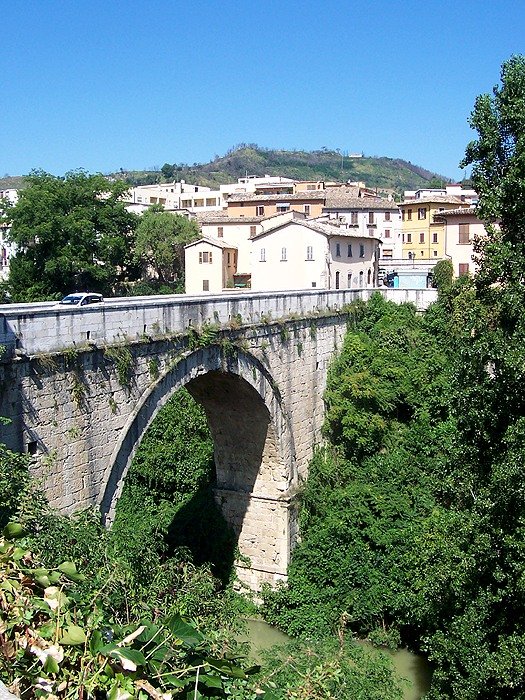 If you think Ascoli Piceno is just Piazza del Popolo, think again. Just a few steps away, the Roman Bridge of Solestà awaits with its thousand-year history. Built under Emperor Augustus, this giant of travertine spans the Tronto River with a single arch over 22 meters wide. Yes, you read that right: a single arch, 25 meters high from the water level, still capable of bearing traffic today. The stone blocks are assembled dry, without mortar: an engineering masterpiece that has withstood earthquakes and floods for two thousand years.
Walking across it, you notice the width: 6.50 meters, more than enough for Roman chariots to pass each other. The road surface still bears the grooves of ancient wheels, carved into the travertine. If you're curious, you can enter the bridge: an inspection corridor (accessible by reservation) reveals the structure's core, with the original blocks and the modern reinforced concrete skeleton inserted in the 1930s. Yes, because in 1938, engineer Viccei hollowed out the interior to add a concrete heart, saving the bridge from modern traffic. A stone marker commemorates that work, with a Latin inscription erased in '43: pieces of history mingling together.
On the bank, don't miss the 18th-century votive capital with two caryatids and a fresco of the Holy Family: a nearly hidden detail that adds charm. The bridge connects the center to the Porta Cappuccina district: crossing it is like stepping back in time, but with scooters zipping by. A contrast that makes it all more real.
Porta Gemina: The Silent Roman Entry Not to Be Missed
- Piazza Cecco d'Ascoli, Ascoli Piceno (AP)
- Open in Google Maps
- View on Google Images
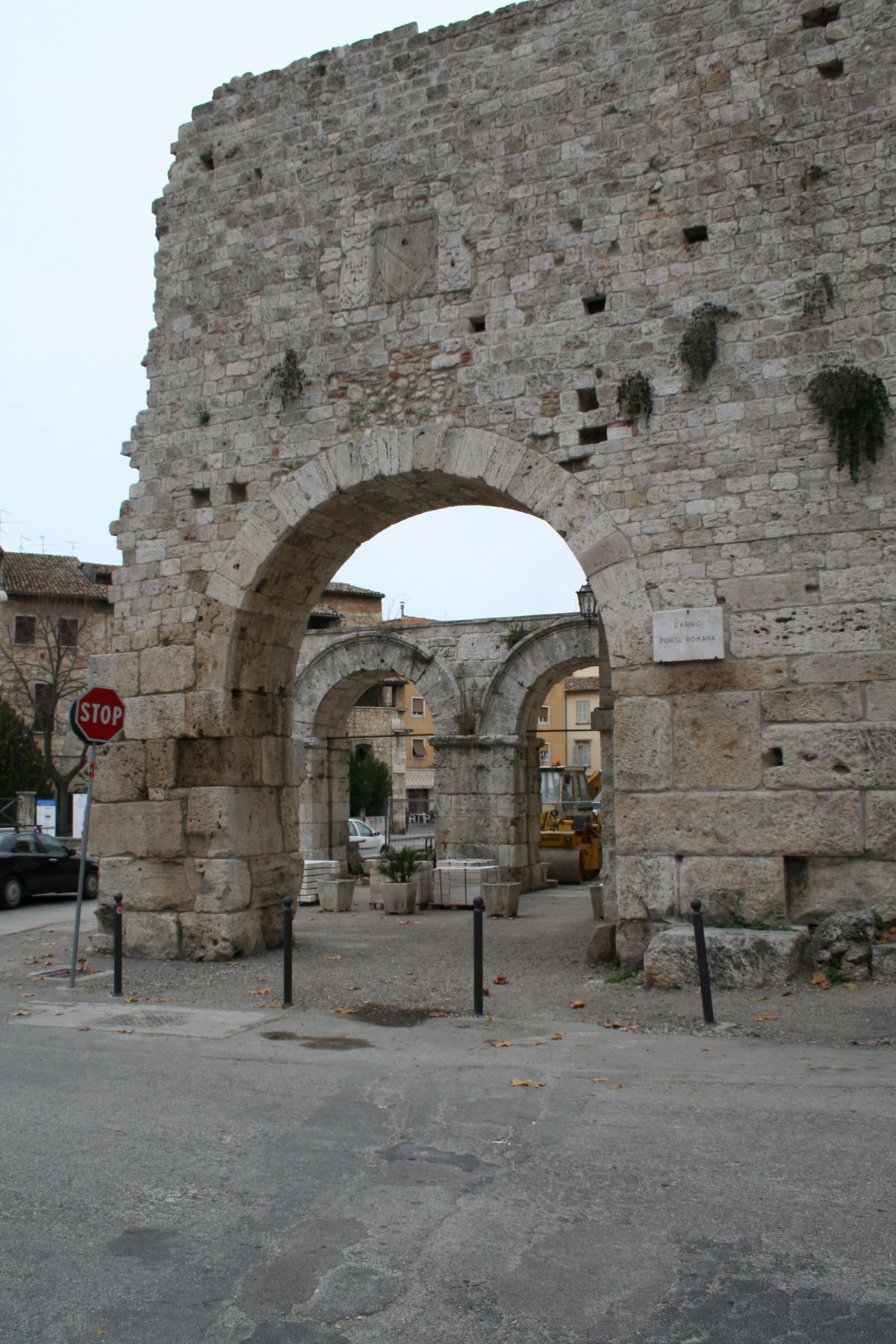 If you're in Ascoli Piceno and have already visited Piazza del Popolo, don't miss Porta Gemina. It's a piece of history waiting for you in Piazza Cecco d'Ascoli, the eastern entrance to the historic center. Built in the 1st century BC, it's one of the best-preserved Roman gates in the region. Its twin arches of local travertine are 5.70 meters high and 2.95 meters wide—precise dimensions that have allowed the structure to stand for over 2,000 years. The Via Salaria, the ancient salt road connecting Rome to the Adriatic, passed through here. The gate served as a control and defense point, but also as a symbol of power. Today, walking through its arches, you can still see the grooves that held the portcullises. In the Middle Ages, it was incorporated into the city walls: a 13th-century crenellated tower rises beside it, and for a time one of the arches was blocked by a small church, later demolished in the 19th century. The structure is layered: beneath the Roman blocks are Piceni remains in sandstone, and above are medieval additions. It's a place that invites you to stop, touch the carved stone, and imagine the travelers of two thousand years ago. Porta Gemina is accessible year-round, free of charge, and offers great photo opportunities. For information, contact the tourist office at 07362553045 or email iat.ascolipiceno@regione.marche.it.
Porta Solestà: History and Medieval Charm
- Via Elisabetta Trebbiani, Ascoli Piceno (AP)
- Open in Google Maps
- View on Google Images
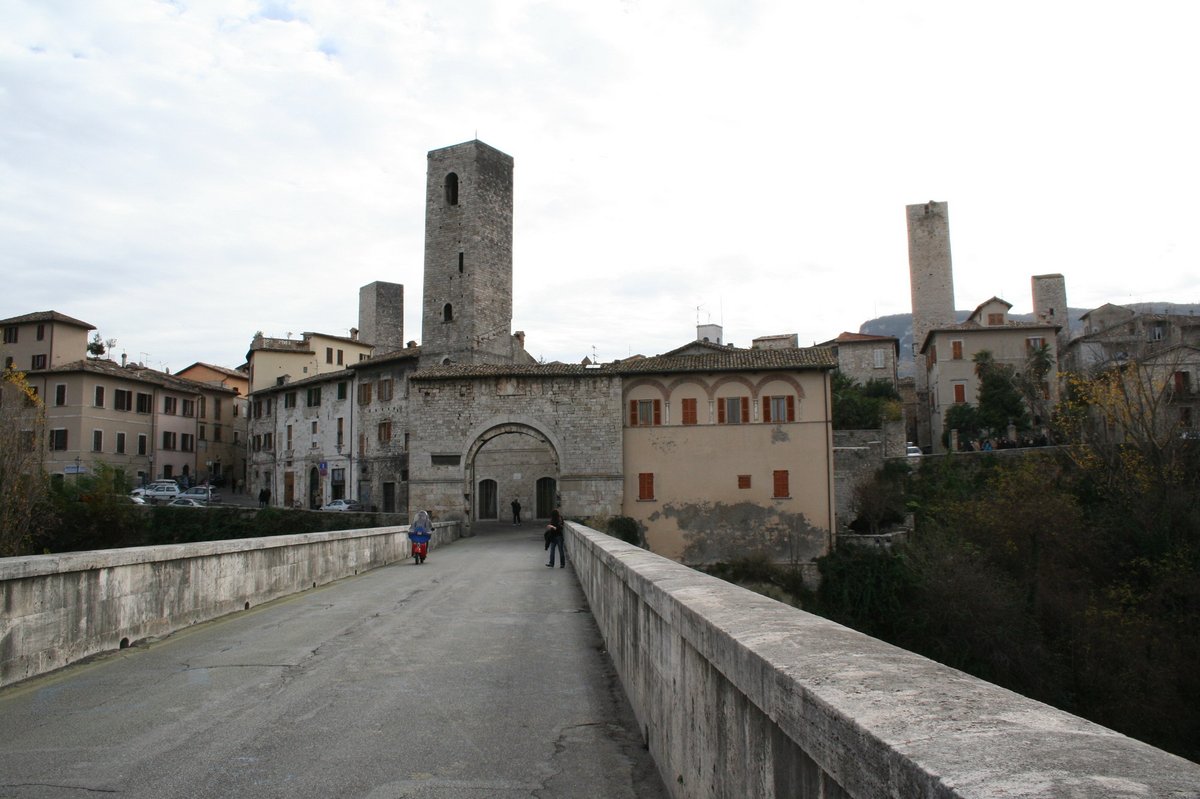 When thinking of Ascoli Piceno, the mind immediately goes to the splendid Piazza del Popolo. But if you want to discover a lesser-known corner, Porta Solestà is a must. Also known as Porta Cappuccina, this medieval gate was built in 1230 by order of podestà Fildesmido da Mogliano, using materials from a pre-existing Roman gate from the 1st century AD – traces of which remain visible in the base. Overlooking the Roman Bridge, still passable today, it is an example of ancient engineering that has withstood the centuries. The structure is simple: a large arch in squared travertine blocks, with a two-band frame along the sides. On the wall are set Latin inscriptions recalling the foundation and the peace of 1450 with Fermo, and the coats of arms of the two cities. Walking under the arch, you'll notice the tranquil atmosphere: here you breathe authentic history, away from the crowds. Don't forget to visit the small museum of the Sestiere di Porta Solestà, at Via De Berardinis, 18, which displays costumes and banners of the Giostra della Quintana. The nearby Roman bridge, 62 meters long with a 22-meter arch, is an engineering masterpiece: built in dry travertine, it has crossed two thousand years of history. A stop here is a dive into the past, between the Middle Ages and Ancient Rome.
Fortezza Pia: History and Mystery Among the Ruins
- Viale della Fortezza Pia, Ascoli Piceno (AP)
- Open in Google Maps
- View on Google Images
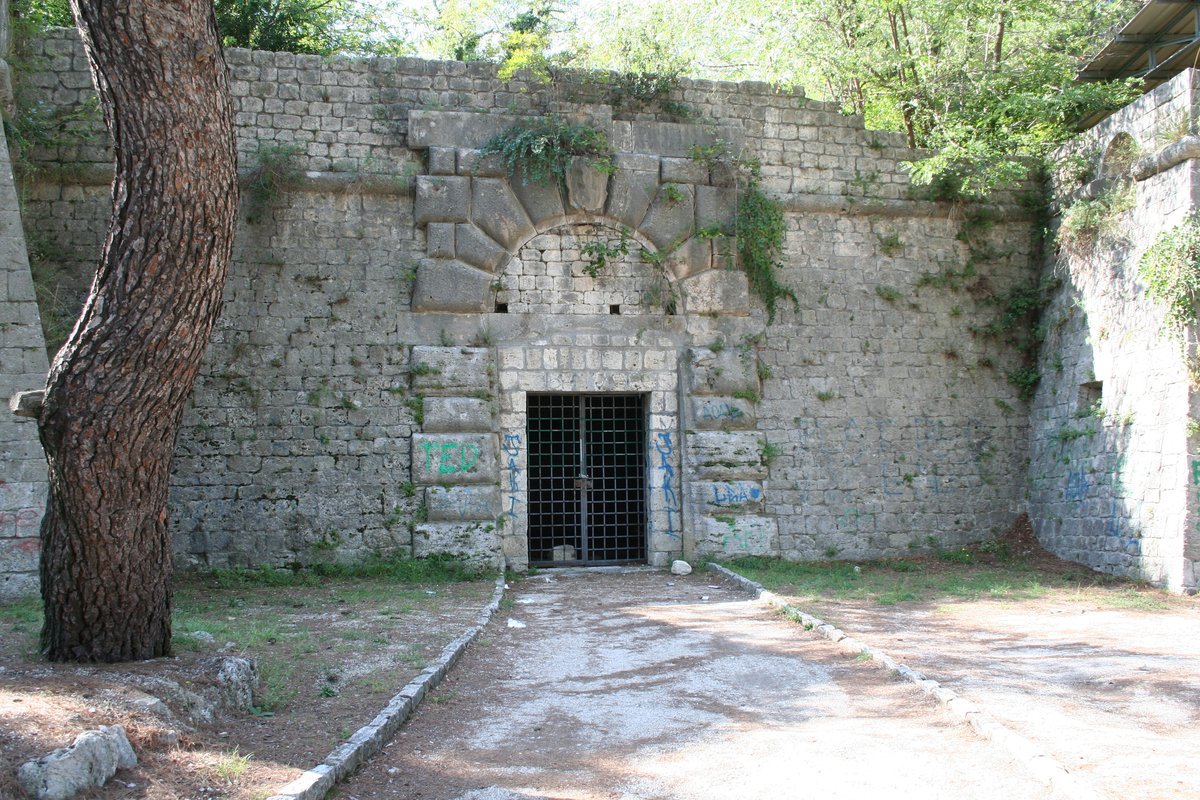 If you think Ascoli Piceno is just Piazza del Popolo, you’re sorely mistaken. Climbing up to the Colle dell'Annunziata, the highest point in the city, you’ll come across Fortezza Pia, a ruin that tells centuries of battles and transformations. As early as Piceno-Sabine times, a fortress stood here, destroyed by Gnaeus Pompeius Strabo and later rebuilt by the Romans. The fortress you see today owes its name to Pope Pius IV, who ordered its reconstruction in 1560, adding sloping bastions and embrasures for crossfire. But its history is a continuous alternation of demolitions and restorations: dismantled by the Lombards, rebuilt by the Commune between 1185 and 1195, razed to the ground by Frederick II, restored by Galeotto Malatesta in 1349. The 16th-century works were entrusted to Lombard masters, perhaps following a project by Antonio da Sangallo the Younger. Then the French arrived: in 1799 they dismantled everything, and for years the fortress became a stone quarry. Today, the northern walls, eastern bastions, and a rusticated portal with the inscription recalling Pius IV remain. The place is half-hidden by vegetation, but worth the walk: from here the view over the city is spectacular. Entry is free, but I recommend calling the IAT (0736.253045) to check if it’s open, as the hours are erratic. In short, a corner of history with an adventurous feel, far from the chaos.
The Little Temple of Saint Emidio Rosso: A Hidden Gem
- Via Berardo Tucci, Ascoli Piceno (AP)
- Open in Google Maps
- View on Google Images
 If you think of Ascoli Piceno and only Piazza del Popolo comes to mind, you're missing its most intimate corners. The Shrine of Saint Emidio Rosso is one of these: a small octagonal church, painted entirely red, located a stone's throw from the Roman bridge, in the Porta Solestà district. The red is no coincidence: it symbolizes the blood shed by the city's patron saint, Saint Emidio, who according to tradition was beheaded right here in the 4th century. The stone on which his head rested is still preserved under the altar, a relic venerated by the people of Ascoli. Climb the few steps and you'll notice the smooth travertine base, the only sober element on a facade that contrasts with the blue of the sky. The interior is essential: a single altar with a painting depicting the beheading, and above the portal an epigraph recalling Bishop Sigismondo Donati, who commissioned the construction in 1633. But the history is more complex: as early as the 16th century, the canons of the cathedral had set up a votive shrine. Enter and try to imagine the scene: the cephalophore saint walking with his head in his hands. It is a place that speaks of popular faith, far from tourist circuits. The little church is often open, but if you find the gate closed, ask around: someone will let you in. Do not expect masterpieces of art, but an authentic immersion in Ascolan devotion.
Museum of Ceramic Art: A Dive into Ascoli's Tradition
- Go to the page: Museum of Ceramic Art Ascoli Piceno: Renaissance Maiolica and Living History
- Piazza San Tommaso, Ascoli Piceno (AP)
- https://www.ascolimusei.it/siti-museali/museo-dellarte-ceramica/
- Open in Google Maps
- View on Google Images
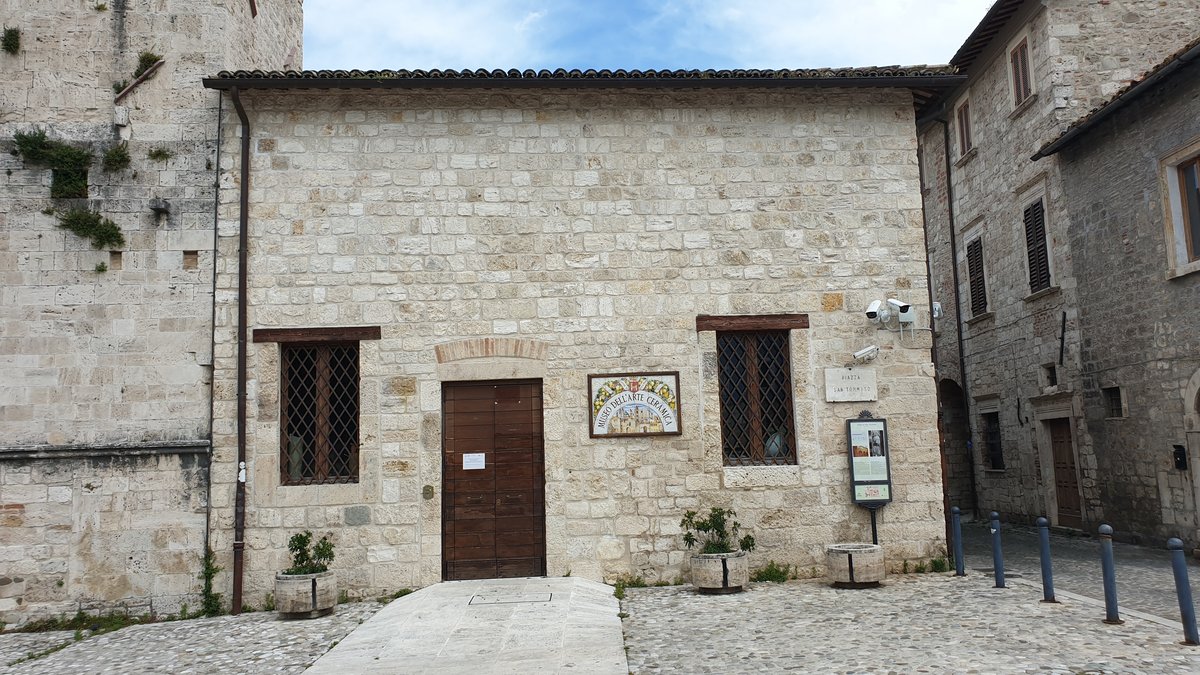 If you think Ascoli Piceno is just about Piazza del Popolo, think again. Just steps away, in the cloister of the former San Tommaso convent, lies the Museum of Ceramic Art, opened in 2007 and already one of Europe's most fascinating collections. Over a thousand pieces await you, divided into five sections that tell the story of local ceramics from the 1400s to the 1900s. I was glued to the archaic majolica basins, with their characteristic green coloring from copper oxide—you still see them on church facades today. Then there are works from the Paci, Matricardi, and Fama workshops—vases, plates, urns, coffeepots—and the Antonio Ceci bequest, a doctor and collector who donated pieces from Deruta, Faenza, Montelupo, Savona, and Genoa to the city. But my highlight? The painted tiles by Francesco and Carlo Antonio Grue and Bernardino Gentili, from the Sant'Angelo Magno convent: absolute ceramic masters. The museum also has a workshop with a potter's wheel and kilns, where demonstrations are sometimes held. In short, if you appreciate craftsmanship, here's a piece of history you won't easily forget.
Teatro Ventidio Basso: A Neoclassical Gem in the Heart of Ascoli
- Go to the page: Ventidio Basso Theatre: A Neoclassical Hall with 800 Seats and Exceptional Acoustics in Ascoli Piceno
- Via del Trivio 33, Ascoli Piceno (AP)
- Open in Google Maps
- View on Google Images
 If after a stroll in Piazza del Popolo you feel the need for a dive into history and culture, the Teatro Ventidio Basso is the right place. Just a stone's throw from the square, on via del Trivio, this neoclassical theater is a small masterpiece worth a visit. Named after Publio Ventidio Basso, an Ascolan who became a Roman general, the theater's history traces back to 1579, when the city had a wooden theater. The current building, designed by Ireneo Aleandri (the same architect of the Sferisterio in Macerata), was completed in 1846 and inaugurated with Verdi's opera "Ernani". The travertine facade, with its six Ionic columns pronaos, is extremely elegant, but it's the interior that leaves you breathless: a horseshoe-shaped hall with four tiers of boxes, each decorated with gilded stuccoes and medallions of composers. The ceiling painted by Ferdinando Cicconi depicts the Muses, while the historic curtain tells the story of Ventidio Basso's victory over the Parthians. Today the theater is still fully active: it hosts a season of drama, dance, and music, as well as free guided tours (from Friday to Sunday). Admission is free, and you can enter to admire the foyer decorated with allegories of the arts. If you are an architecture enthusiast or simply curious, don't miss the chance to sit in the stalls and imagine the performances of the past.