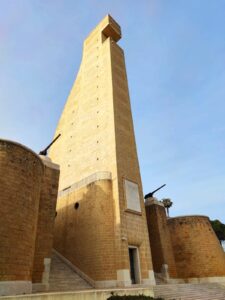
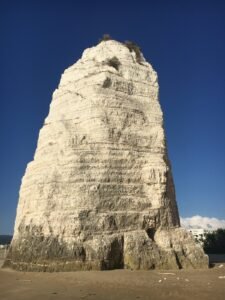
If you’re looking for an authentic way to experience Brindisi in a day, this itinerary is for you. Away from mass tourism, it leads you to discover Castello Svevo, a Norman fortress housing the Archaeological Museum, and Castello Alfonsino, a seaside fortress that seems to float on the water. Then, a stop at Nuovo Teatro Verdi, an example of contemporary architecture, and a stroll among the historic fountains of Piazza Vittoria and Piazza del Popolo. The route ends at the Cathedral, in the heart of the historic center. Each stop tells a piece of history, through alleys and glimpses of the sea. Ideal for those who love art, culture, and port atmospheres. Everything is done on foot, without haste, in a day full of discoveries. An experience that combines history and the sea, giving you a unique perspective of Brindisi.
🗺️ Your trip at a glance
Brindisi in a day offers you a mix of history, architecture, and maritime scenery. An itinerary off the beaten path, perfect for an authentic and relaxing experience.
- Ideal for: curious travelers who want to discover an unseen side of Brindisi, on foot and stress-free.
- Highlights: castles, modern theater, and historic fountains, with sea views and picturesque alleys.
- Why it’s different: it combines medieval history and contemporary architecture, with constant seaside vibes.
Itinerary stops
Stop no. 1
Castello Alfonsino: the sea fortress that seems to float
 I start my exploration of Brindisi from the island of Sant’Andrea, where Castello Alfonsino stands, also called the Red Castle for the color of the carparo stone that at sunset takes on warm hues. Commissioned by Ferdinand of Aragon in 1481 and expanded by the Spanish in the 16th century, it is a fascinating blend of two eras: the Aragonese fortress with its decorated hall and the 1527 washbasin, and the Forte a Mare with its mighty bastions. For centuries it defended the port from Venetians and Turks, then served as a lazaretto and naval base until 1984. After a long restoration, it is finally open to visitors: I booked a guided tour (mandatory, about 50 minutes) and discovered the inner dock, the Mannerist portal from 1609, and an incredible view of the sea. The ticket costs 8 euros, 6 for residents. Don’t miss the almost suspended atmosphere, with the water lapping against the walls.
- Go to the page: Alfonsino Castle: The Red Fortress on Brindisi’s Port
- Via Luigi Rizzo, Brindisi (BR)
- Open in Google Maps
- View on Google Images

You should go if…
Stop no. 1
Castello Alfonsino: the sea fortress that seems to float
I start my exploration of Brindisi from the island of Sant’Andrea, where Castello Alfonsino stands, also called the Red Castle for the color of the carparo stone that at sunset takes on warm hues. Commissioned by Ferdinand of Aragon in 1481 and expanded by the Spanish in the 16th century, it is a fascinating blend of two eras: the Aragonese fortress with its decorated hall and the 1527 washbasin, and the Forte a Mare with its mighty bastions. For centuries it defended the port from Venetians and Turks, then served as a lazaretto and naval base until 1984. After a long restoration, it is finally open to visitors: I booked a guided tour (mandatory, about 50 minutes) and discovered the inner dock, the Mannerist portal from 1609, and an incredible view of the sea. The ticket costs 8 euros, 6 for residents. Don’t miss the almost suspended atmosphere, with the water lapping against the walls.- Go to the page: Alfonsino Castle of Brindisi: The Aragonese Fortress Dominating the Port
- Via Luigi Rizzo, Brindisi (BR)
- Open in Google Maps
- View on Google Images
You should go if…
Stop no. 2
Nuovo Teatro Verdi
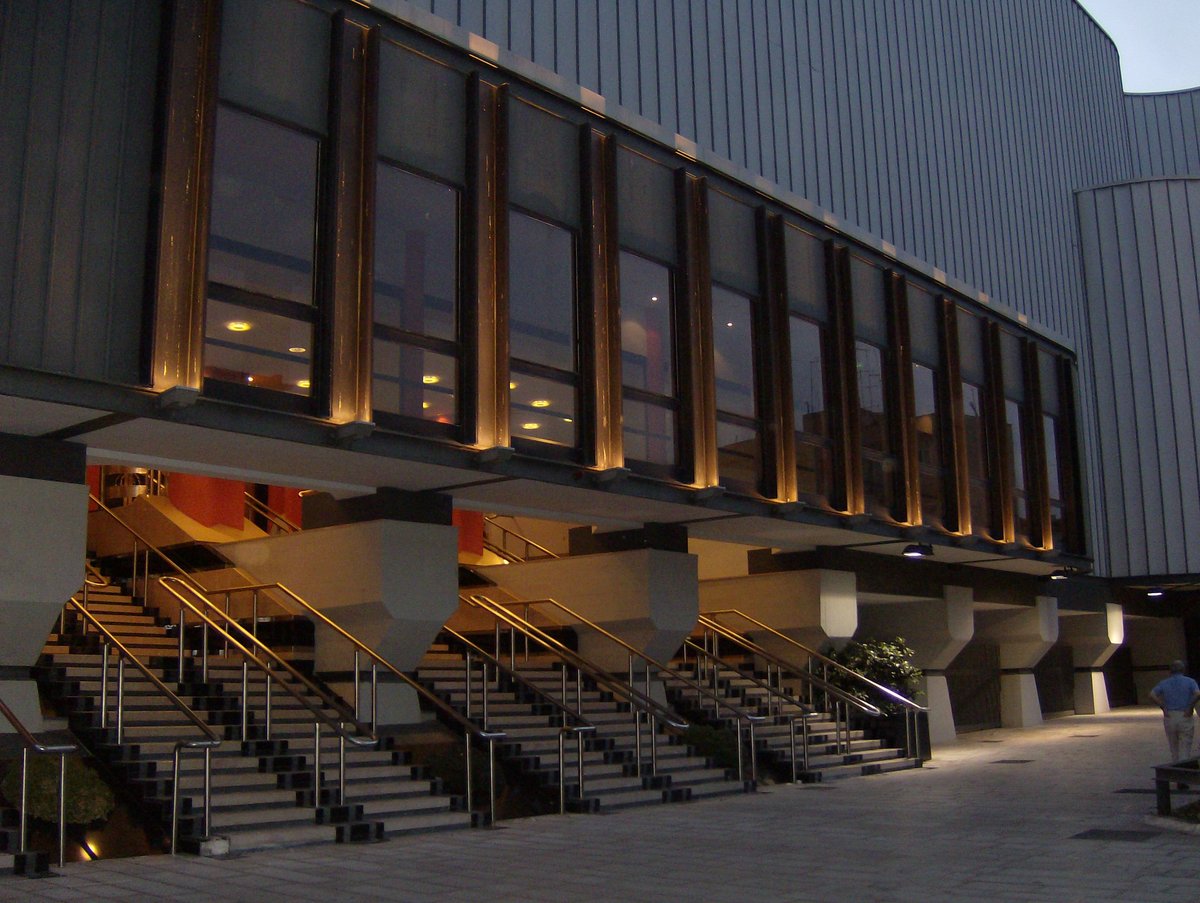 Continuing our itinerary, we stop at the Nuovo Teatro Verdi, a building that seems to float above the remains of ancient Brindisi. Inaugurated in 2006 with a concert conducted by Riccardo Muti, it is an example of bold architecture: designed by Enrico Nespega, it rests on pillars that offer glimpses, through the glass floor of the foyer, of Roman streets and mosaics from the San Pietro degli Schiavoni site. With 995 seats and one of the largest stages in Italy, the theater offers an eclectic program: from drama to music, jazz to opera. Not to be missed is the Verdi Green section, aimed at young people, with contemporary shows at affordable prices. The box office is open Monday to Friday (11:00-13:00 and 17:30-19:30), and tickets start from 18 euros. As I observe the ancient remains beneath my feet, I think how fascinating this mix of modernity and history is.
- Go to the page: New Verdi Theatre Brindisi: Modern Architecture and Theatre Season
- Via Santi 1, Brindisi (BR)
- https://www.nuovoteatroverdi.com/
- Open in Google Maps
- View on Google Images
You should go if…
Stop no. 3
Fontana De Torres: A Dive into Spanish Brindisi
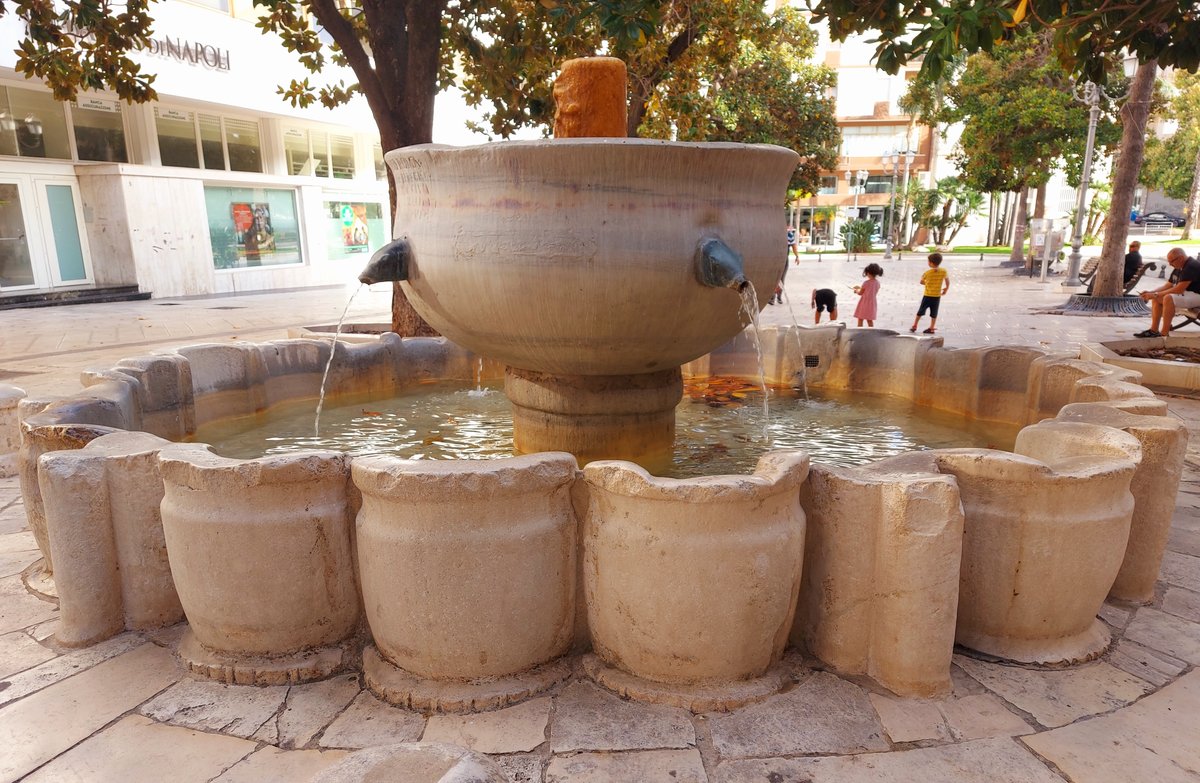 Leaving the New Verdi Theater, we head to the city’s beating heart: Piazza della Vittoria. Here awaits the Fontana De Torres, a monument that seems from another era. Commissioned in 1618 by the Spanish governor Pedro Aloysio de Torres to bring drinking water to the citizens – after the epidemics of 1617-1618 that decimated the population – this fountain is made of two superimposed marble basins. The lower one is surrounded by half-jars and reused pieces of Roman columns, while the upper basin is an ancient baptismal font from the 12th century, possibly from the church of San Giovanni al Sepolcro. Four bronze horse heads spout water into the lower basin. Latin inscriptions on the structure commemorate the governor, King Philip III, and the viceroy Duke of Osuna. The fountain has a troubled history: it risked demolition in 1922 to make way for a war memorial, but was saved by Canon Pasquale Camassa. Today it is a symbol of the city, a place where water still flows as it did centuries ago. Perfect for a photo break or to reflect on the past.
- Go to the page: De Torres Fountain in Brindisi: The 16th Century Monumental Fountain
- Piazza della Vittoria, Brindisi (BR)
- Open in Google Maps
- View on Google Images
You should go if…
Stop no. 4
Empire Fountain
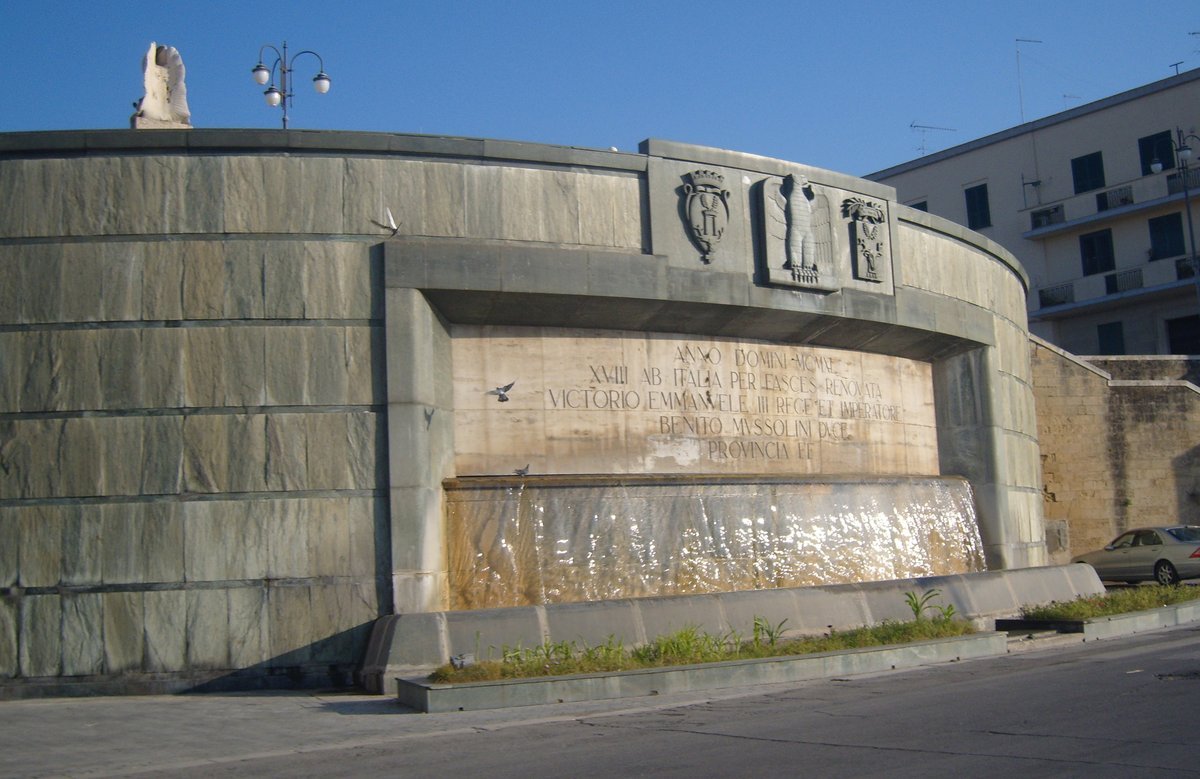 Continuing along the waterfront, we come across the Empire Fountain, nestled at the foot of Piazza Santa Teresa. Built in 1940 from green marble, its rigid, severe lines contrast with the softness of the sea view. It features the imperial eagle, the coats of arms of the city and province, and a Latin inscription dedicated to the Duce and the King. Long unused, the fountain was restored in 2020 and now flows again, framed by two flights of stairs leading up to the square. Behind it, the ancient Messapian walls can be glimpsed—a blend of different eras. For me, it is a place that invites reflection on the complexity of history, between architectural charm and memory.
- Piazza Santa Teresa, Brindisi (BR)
- Open in Google Maps
- View on Google Images
You should go if…
Stop no. 5
San Pietro degli Schiavoni Archaeological Area: History Beneath the Theater
 Walking on the transparent floor of the New Teatro Verdi is a surreal experience: beneath your feet, just a few centimeters away, stretches an entire Roman insula. The San Pietro degli Schiavoni archaeological area, discovered in the 1960s during the theater’s construction, is an authentic cross-section of Brundisium. A paved road, over six meters wide, runs north to south, flanked by sidewalks and marked by the grooves of chariot wheels. On the sides, the remains of patrician domus with mosaic floors – one in particular with marble lozenges – and a late Roman bath complex with a calidarium and frigidarium. The neighborhood’s name recalls the Schiavoni, Balkan populations who settled here in the 1500s. Today, despite occasional closures, the site is open to visitors and offers a fascinating contrast between modern steel architecture and ancient ruins. Many artifacts are displayed in the Ribezzo Museum, but here, under the stage, history truly comes alive.
- Largo Gianni D’Errico, Brindisi (BR)
- http://musei.beniculturali.it/musei?mid=878&nome=878
- Open in Google Maps
- View on Google Images
You should go if…