
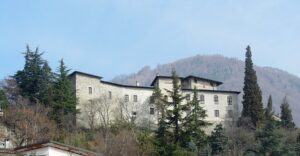
The Castle of Castiglione delle Stiviere is one of those places that can be appreciated even just from the outside. Perched on the hill overlooking the town center, it preserves the imposing entrance tower and the memory of a fortress that was among the most important of the Gonzagas. Today, the courtyard and the Church of San Sebastiano can be visited, while the interior is owned by a religious institution and is not accessible.
What you’ll find here:
Birthplace of Saint Luigi Gonzaga (March 9, 1568), with a commemorative stele from 1891.
Church of San Sebastiano, commissioned by Ferrante Gonzaga in 1577 as a thanks after the plague.
Entrance tower and remains of the walls, all that remains after the destruction of 1706.
Staircase and panoramic view from the hill over the town and the plain.
Events nearby


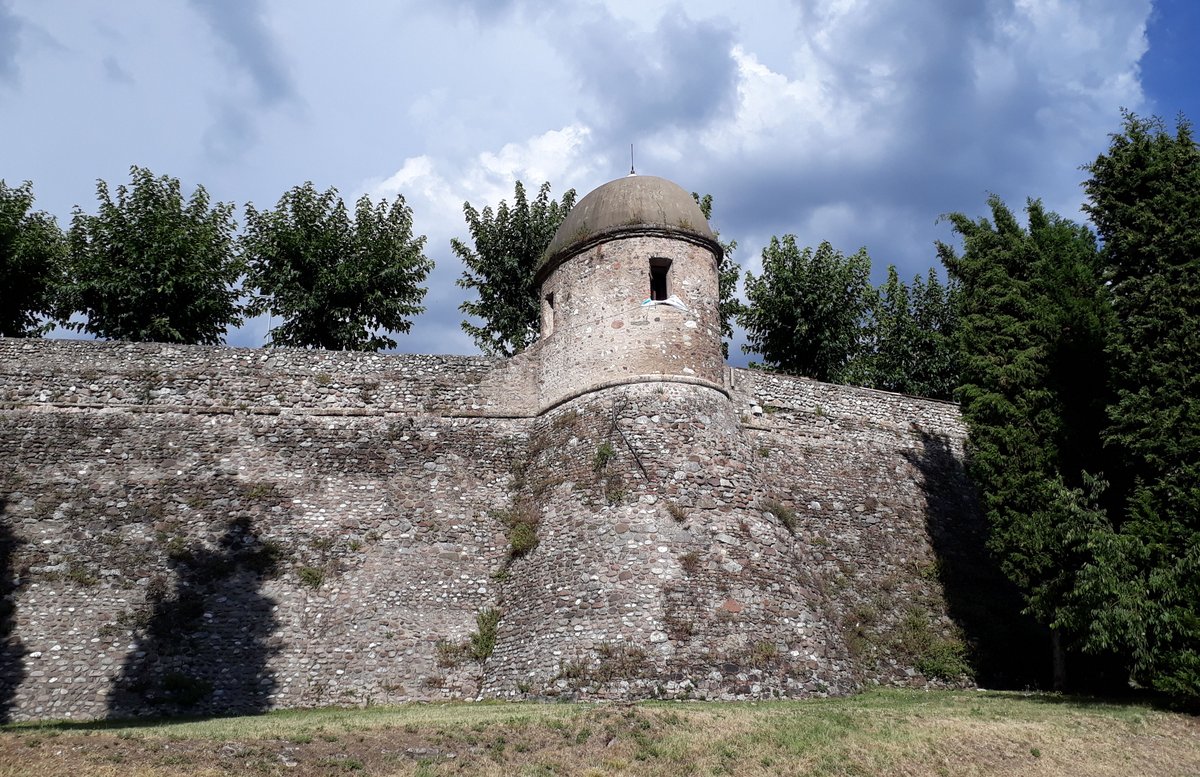
The Gonzaga castle where Saint Luigi Gonzaga was born. Today, the entrance tower, the Church of San Sebastiano, and a view over the town remain: a stop between history and faith.
- Via San Carlo Borromeo, Mantova (MN)
- Open in Google Maps
- View on Google Images Castello a Mantova
Good to know
Introduction
Historical Notes
- 9th century: probable foundation on a Roman castrum
- 1310: assault by Cangrande della Scala
- 15th century: transfer to the Gonzaga family
- 1491: design of the new fortress by Giovanni da Padova
- 9 March 1568: birth of Saint Luigi Gonzaga
- 1577: construction of the church of San Sebastiano
- 1706: partial destruction during the Battle of Castiglione
- 1763: demolition to recover materials for the Duomo
The Tower and the Church of San Sebastiano
A living place, between faith and community
Why visit it
When to go
In the surroundings
Itineraries nearby
💡 Did You Know…?
A curious fact: the name of the town itself speaks of encampments (Castiglione from ‘castrum’, Stiviere from ‘ad aestivis’). In the courtyard, the white marble stele marks the site of Saint Luigi’s birthplace. After decades of neglect, in the 1970s the local community restored it, turning it into a meeting point for catechism, teenagers, and summer camps (Grest).