Corte Castiglioni at Casatico: Frescoes and the Renaissance

Corte Castiglioni is a fortified 15th-century rural court in Casatico di Marcaria, in the province of Mantua, linked to the Castiglioni family since 1415 and the birthplace of Baldassarre Castiglione, author of The Book of the Courtier. Damaged by the 2012 earthquake, it is undergoing a €4,260,000 restoration that is expected to be completed by the end of 2026. It preserves frescoes of the Giuliesque school hidden beneath plaster for about 300 years and a star-shaped tower linked to Giulio Romano.
Frescoes: clouds, mythological figures and pseudo-portraits, intact and unaltered.
Star-shaped tower: lower hall used as an icehouse, with a well at its centre.
Birth room: Baldassarre Castiglione was born here on 6 December 1478.
Restoration: post-earthquake works to reopen the complex to cultural events.


Events nearby


Copertina itinerario Corte Castiglioni at Casatico: Frescoes and the Renaissance
In Casatico di Marcaria, Baldassarre Castiglione’s 15th-century court reopens after the earthquake: frescoes of the Giuliesque school, a star-shaped tower and restoration work in progress until 2026.

Good to know


Introduction

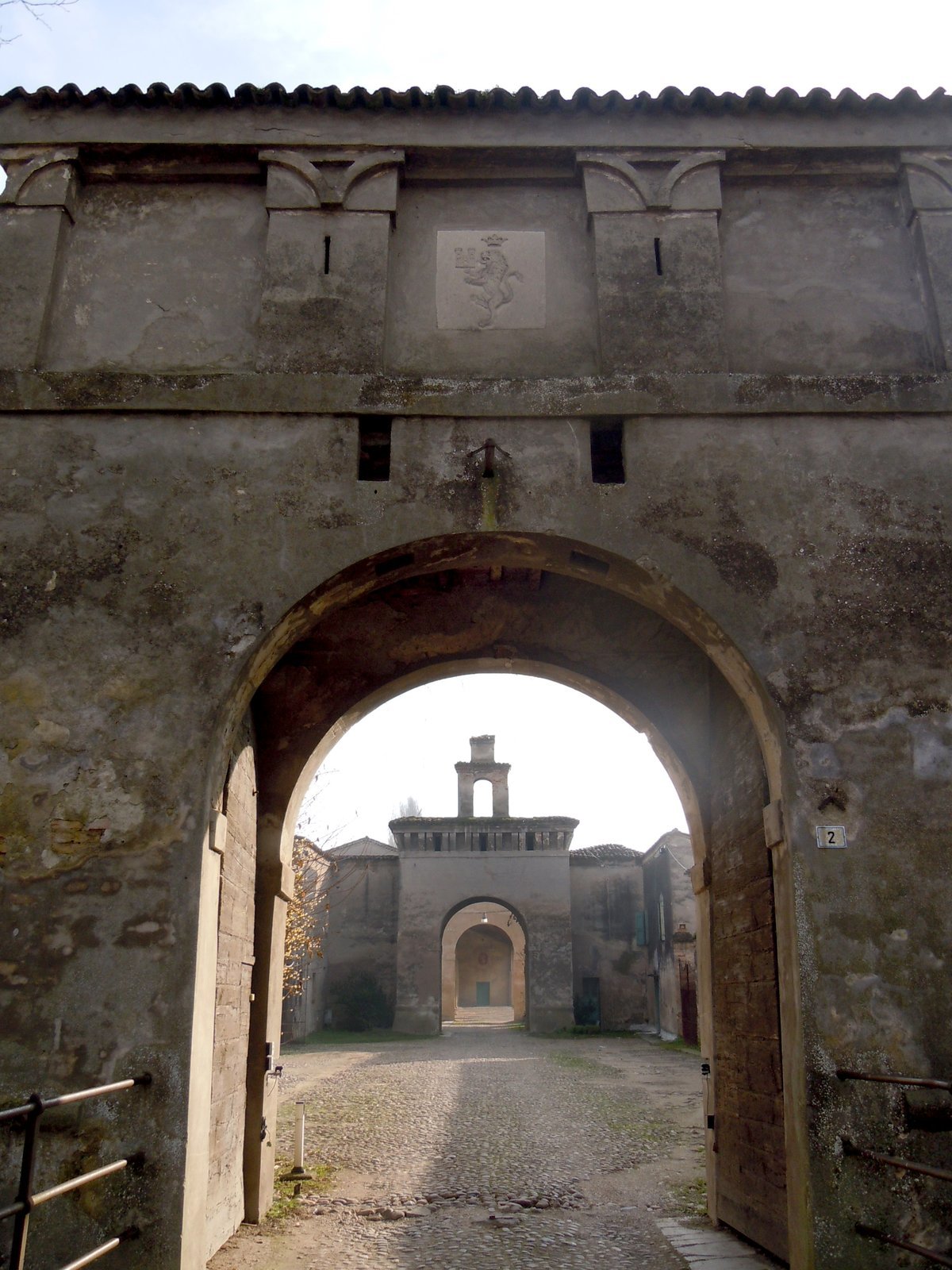
Corte Castiglioni in Casatico, a hamlet of Marcaria, is one of those places that stick with you. You expect a country farmhouse and instead find yourself before a true fortified court, ringed by a moat, with an entrance with mock battlements and the Castiglioni coat of arms. A star-shaped tower rises at the edge of the manor house. And inside, a cycle of frescoes from the Giuliesque school that remained hidden under plaster for about 300 years. The May 2012 earthquake closed everything for 14 years, but now a restoration site is bringing the court back to light. It is not yet open to visitors, and perhaps this is exactly the right moment to discover it before it reopens. Po Valley landscape, silence, bricks and history: here the Renaissance has the flavor of the countryside.

Historical background

Corte Castiglioni began as a fortified rural complex. In 1415 the Gonzagas granted the Castiglioni family the lands of Casatico, which still belong to them today. Here, on 6 December 1478, Baldassarre Castiglione was born, a man of letters and diplomat among the most refined of the Renaissance, a friend of Raphael and Giulio Romano. Around 1470, Luca Fancelli is thought to have worked on the smaller 15th-century wing. In 1546 Count Camillo transformed the main residence to a design by Giulio Romano, adding the star-shaped tower. In 1576 Giulio Rubone and Giangiacomo da Mantova executed the interior decorations. Then came the 18th century and a long period of neglect.

  • 1415: the Gonzagas grant Casatico to the Castiglioni
  • 1478: Baldassarre Castiglione is born
  • 1546: Camillo remodels the palazzo to a design by Giulio Romano
  • 1576: the interior decorations
  • 2012: an earthquake damages the estate
  • 2025: restoration work begins
  • 2026: completion expected

The Rediscovered Frescoes

In one of the rooms of the estate there is the most beautiful surprise. A cycle of frescoes from the Giulio Romano school remained hidden beneath the plaster for about 300 years. Clouds, mythological figures and pseudo-portraits have come down to us intact and unaltered by modern restorations. On the lower floor of the tower, the hall was occupied for centuries by a domed icehouse; when it was demolished, a well re-emerged at its center. The restoration is by restorers Elisabetta Garilli and Cinzia Cavalli of Restauratori Associati, Emanuela Braglia, Monica Borgani and Ilaria Segala, with historical-artistic support from Carlo Togliani and architect Fabrizio Gatti. The frescoes evoke deities and winds, echoing the Chamber of the Caesars in the Ducal Palace in Mantua. Keep an eye out for the smaller details: an overdoor with a star, little birds and butterflies. The kind of thing that usually doesn’t survive.

A Court, Two Souls

You pass through the courtyards of Corte Castiglioni to the manor house. At the far end rises the star-shaped tower, which Giulio Romano may have helped design. The building has two distinct sections: the smaller 15th-century one, which Luca Fancelli may have worked on around 1470, and the larger, composite one, renovated in 1546 at the behest of Count Camillo. Outside, the court is encircled by a moat, with an entrance featuring faux battlements and the Castiglioni coat of arms. There are also frescoes from 1576, including those decorating the tower, whose attribution is still debated: some link them to Giangiacomo da Mantova. Baldassarre’s birth room has been identified in the smaller wing, on the upper floor. Since 2023, the court has been owned by the Municipality of Marcaria.

Why visit it

Even though the construction site will be active until the end of 2026, there are good reasons to keep an eye on Corte Castiglioni. First: the frescoes, because few Renaissance cycles have survived so intact, without modern restorations changing their colors. Second: the connection with Baldassarre Castiglione, who was born here and who, with “The Book of the Courtier,” wrote one of the most widely read books in Europe. Third: the rebirth, with works funded to the tune of €4,260,000 and the prospect of a new landmark for cultural events. Following a construction site that brings a piece of the Renaissance back to life has its own charm. The advice is to follow its opening and return once restoration is complete.

When to Go

The restoration work is ongoing until late 2026, so for now the courtyard is best admired from the outside. If you’re looking for the right time to walk around it, choose a clear spring or early autumn morning: the low light brings out the brickwork and the moat, and the Po Valley countryside around it is at its best. In summer the sun beats down hard and there is no shade, so it’s best to avoid the middle of the day. In winter, with fog, the courtyard takes on a suspended atmosphere that is not unwelcome. All in all, the first morning sun remains the most convenient choice, perhaps combined with a walk through the fields.

In the Surroundings

Just a short step from the theme of the visit is the Sanctuary of the Graces, at the gates of Mantua: here Giulio Romano built the funeral chapel for Baldassarre Castiglione, the same architect who designed the layout of the court. Another perfect connection is Mantua, a UNESCO city with the Ducal Palace and the Chamber of the Caesars, which inspired the deities and winds painted at Casatico. Those with more time can venture to Sabbioneta, the ideal city of the Gonzagas, another UNESCO site. All in the province, all Renaissance-themed: the itinerary takes shape on its own, between a country court and the lords’ palaces.

Itineraries nearby


💡 Did You Know…?

For about 300 years the frescoes remained beneath the plaster, and in the tower’s lower hall a domed icehouse concealed a central well until it was demolished. The restoration involved Elisabetta Garilli, Cinzia Cavalli, Emanuela Braglia, Monica Borgani and Ilaria Segala, with advice from Carlo Togliani and Fabrizio Gatti. Among the curious details is an overdoor with a star, small birds and butterflies.