Castello dei Conti Calepio: A Residence Overlooking the Oglio Valley

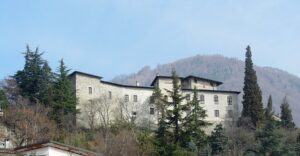
The Castello dei Conti Calepio dominates the Oglio Valley from the medieval village of Calepio, in Castelli Calepio, in the province of Bergamo. Commissioned by Count Trussardo in 1430, an ally of the Most Serene Republic of Venice, it retains swallowtail merlons, squat towers and a fortified entrance. The guided tour lasts 90 minutes, and proceeds support the Conti Calepio Foundation. – 90-minute guided tour through the history of the village and the manor – Full-price ticket €10, reduced €3 for children aged 7 to 12 – Hall of Flowers, stuccoes and frescoes by Carloni and Deleidi – Terrace garden with views over the Lower Sebino


Events nearby


Copertina itinerario Castello dei Conti Calepio: A Residence Overlooking the Oglio Valley
Castello dei Conti Calepio in Castelli Calepio (BG): 90-minute guided tour, admission €10 and €3 for children, terraced gardens overlooking the Oglio Valley and views toward Lake Iseo.

Good to know


Introduction

The Castello dei Conti Calepio rises at the top of the village of Calepio and makes you stop. Pale walls, battlements, stocky towers: it looks like something out of an old print, yet there it is, just a few minutes from Lake Iseo. From up here your gaze sweeps over the Valle dell’Oglio and the lower Sebino, and you understand why it was fought over for centuries. This is not just another castle-museum: it is still a lived-in home, with rooms that smell of history and terraced gardens suspended above the river. You reach it by walking through the old village, among alleys and stone houses, and the climb is already part of the experience. Then the main door, the courtyard with the founder’s statue, and the feeling that you have truly stepped into another era. I happened upon it while following the Valcalepio, and I fell in love with it.

A Brief History

Here once stood an early medieval stronghold, already documented in the time of Berengar of Friuli—not the castle you see today. That structure was destroyed in 1428 by the attacks of Niccolò Piccinino. Then Trussardo I Calepio enters the story: in the wars between Milan and Venice he sided with the Most Serene Republic, won, and obtained the feudal investiture of the valley. The manor was rebuilt around 1430, as an inscription on the entrance arch recalls. His son Ambrogio, an Augustinian friar, published in 1502 the first Latin dictionary, the “Calepino”, which ran to more than 200 editions. In 1842, after the last count died, the castle passed to the Ospizio Conti di Calepio; today the Foundation carries on its social mission.

  • c. 1000 — first stronghold
  • 1240 — the family takes the name Conti di Calepio
  • 1428 — destroyed by Niccolò Piccinino
  • 1430 — Trussardo I begins reconstruction
  • 1502 — Ambrogio publishes the “Calepino”
  • 1693-1695 — new Chapel of the Guardian Angel
  • 1849 — the Opera Pia Ospizio Conti di Calepio is founded
  • 2015 — restoration by the Foundation

Battlements, Towers, and Moat: The Architecture

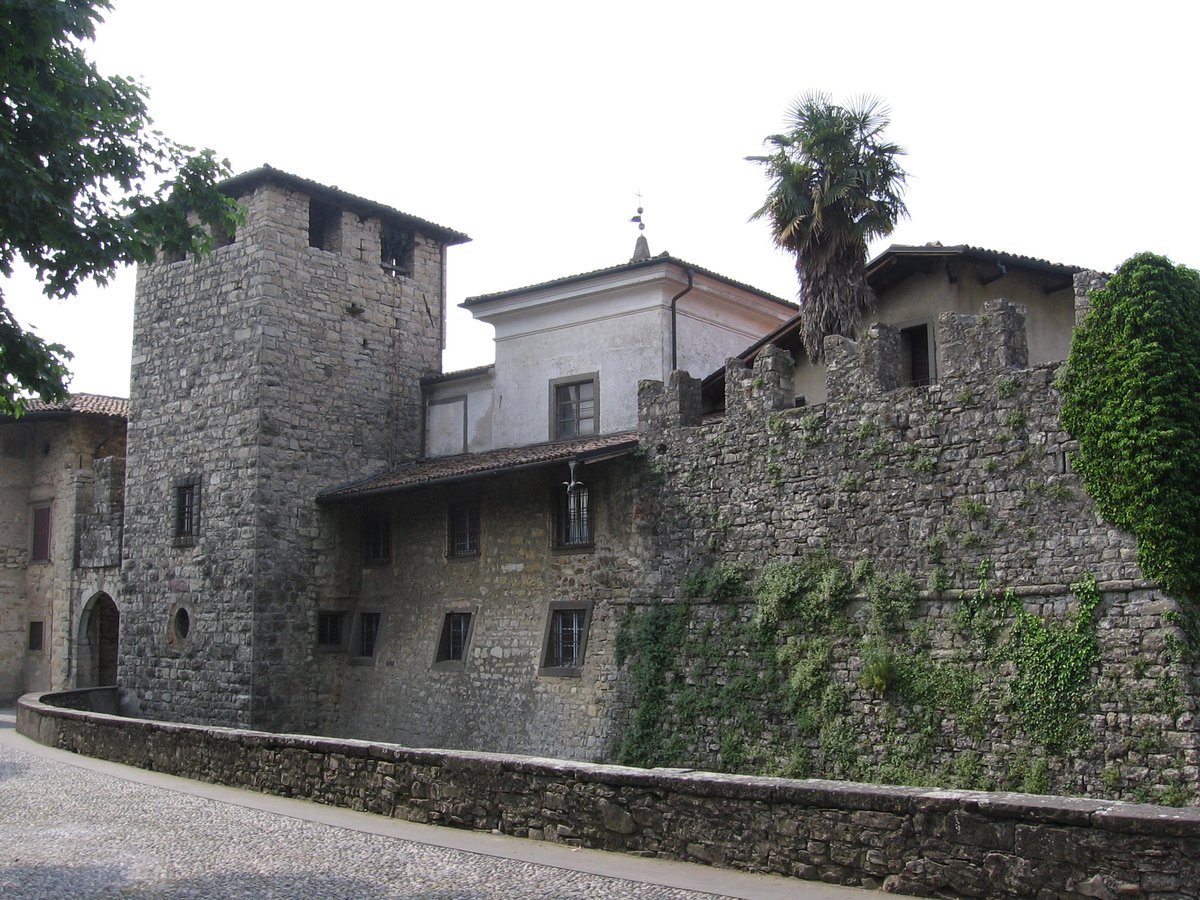
Natural defenses do half the work: to the south, a sheer scarp overlooking the Oglio; to the west, the Cimavalle valley; to the north and east, a deep moat. The curtain wall is made of small stones and preserves traces of Guelph battlements, later replaced or integrated by swallowtail merlons when the manor became a noble residence. On the north side rise two towers: a small one and one with a square base, perhaps pre-existing, next to the entrance once served by a drawbridge. A third tower, predating 1430 and partly destroyed in the fighting, has been the chapel of San Maurizio since 1433. As you follow the walls, you can see how the castle grew in layers between the 17th and 18th centuries, with the residential wing and buttresses to the south.

Inside the castle: from the Hall of Flowers to the terrace

Once you step inside, the castle reveals a different side. The rooms tell the story of its transition from garrison to residence: frescoes by Luigi Deleidi, known as il Nebbia, French wall hangings, a colonnaded portico. There is the Hall of Flowers, striking for the brightness of the colors of the painted floral species, and Rococo and Neoclassical decorations with stuccoes by Muzio Camuzio and frescoes by Carlo Innocenzo Carloni. At the center of the courtyard, beneath a late-fifteenth-century loggia, stands the statue of Trussardo da Calepio. From the Hall of Flowers, a fan-shaped staircase leads to the Italian-style terrace garden: here the view sweeps over the valley and the Basso Sebino, with Lake Iseo in the background. It is the spot everyone photographs, and it’s easy to see why. Photography, however, is allowed only in the outdoor spaces.

Why Visit It

First: this is a castle that is still lived in, not an empty shell. The guided tour, led by the Foundation’s staff, lasts 90 minutes and weaves together the history of the village, the nearby buildings, and the manor’s transformations. It’s not your usual standardized tour. Second: admission costs 10 euros (3 euros for children aged 7 to 12, free for those up to age 6), and the proceeds support the Foundation’s charitable work; the Foundation runs a center for people with disabilities here. Third: in the rooms you’ll find things you don’t expect, from the uniforms and registers of the 19th-century hospice to an original edition of the ‘Calepino’. And then there’s the view from the terrace, which alone is worth the climb.

When to Go

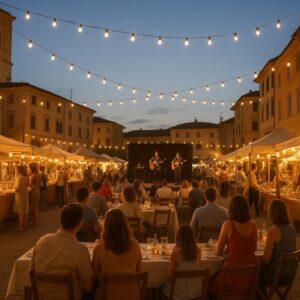
I’d choose an afternoon, when the low light sets the walls aglow and the view toward Lake Sebino warms up. Visits are held on fixed dates, and in spring and summer the calendar fills out: free evening concerts and events such as the Festival Filosofi lungo l’Oglio. Autumn, with the hills of Valcalepio changing color, has its own charm and fewer crowds. Either way, it’s best to book, even if you’re on your own: a phone call or a message and you’re set. Dates change, so always check the Foundation’s website before you set off. This isn’t a place you can just wing it.

In the Surroundings

After your visit, the natural next move is to head down towards Lake Iseo and the Lower Sebino: Sarnico, with its lakeside promenade, is the most convenient gateway. We are right in the heart of Valcalepio, a DOC wine area, so a tour of the valley’s wineries is a natural fit. If you feel like staying on the historical theme, the village of Calepio, with its stone houses, deserves a slow stroll, perhaps while rereading the story of Trussardo and his dictionary. For anyone wanting to better understand the link between the castle and its surroundings, the route along the Oglio offers endless inspiration, between river scenery and vine-covered hills.

Itineraries nearby


💡 Did You Know…?

In the courtyard stands the statue of the founder Trussardo, while a display case holds an edition of the Calepino, the famous Latin dictionary published in 1502 by Ambrogio Calepio. Since 1849 the castle has been linked to the Conti di Calepio Hospice, which cared for girls from less affluent families: during the visit you can still see uniforms, letters and class registers.