National Museum of Abruzzo: The MuNDA in L’Aquila

The National Museum of Abruzzo, the MuNDA, is the region’s principal museum: after the 2009 earthquake it displayed its collections at the former Mattatoio in Borgo Rivera, opposite the Fountain of the 99 Spouts, and on 20 December 2025 it partially reopened in its historic home at Forte Spagnolo. Its route spans archaeology, the Middle Ages, the Renaissance, and the Baroque, with masterpieces recovered and restored. Here’s what to expect:
Beffi Triptych (1410-1415) and Saint Sebastian by Silvestro dell’Aquila (1478)
Mammuthus meridionalis from Scoppito and the Amiternum Calendar
Madonna of Lettopalena and paintings by Mattia Preti
Nineteenth-century Abruzzo with Michetti, Celommi, and Patini


Events nearby

Copertina itinerario National Museum of Abruzzo: The MuNDA in L'Aquila
The National Museum of Abruzzo in L’Aquila: its historic home at Forte Spagnolo and collections from the Middle Ages to the twentieth century, including the Beffi Triptych, Saint Sebastian, and the Scoppito Mammoth. 2025 reopening and visitor information.

Good to know


Introduction

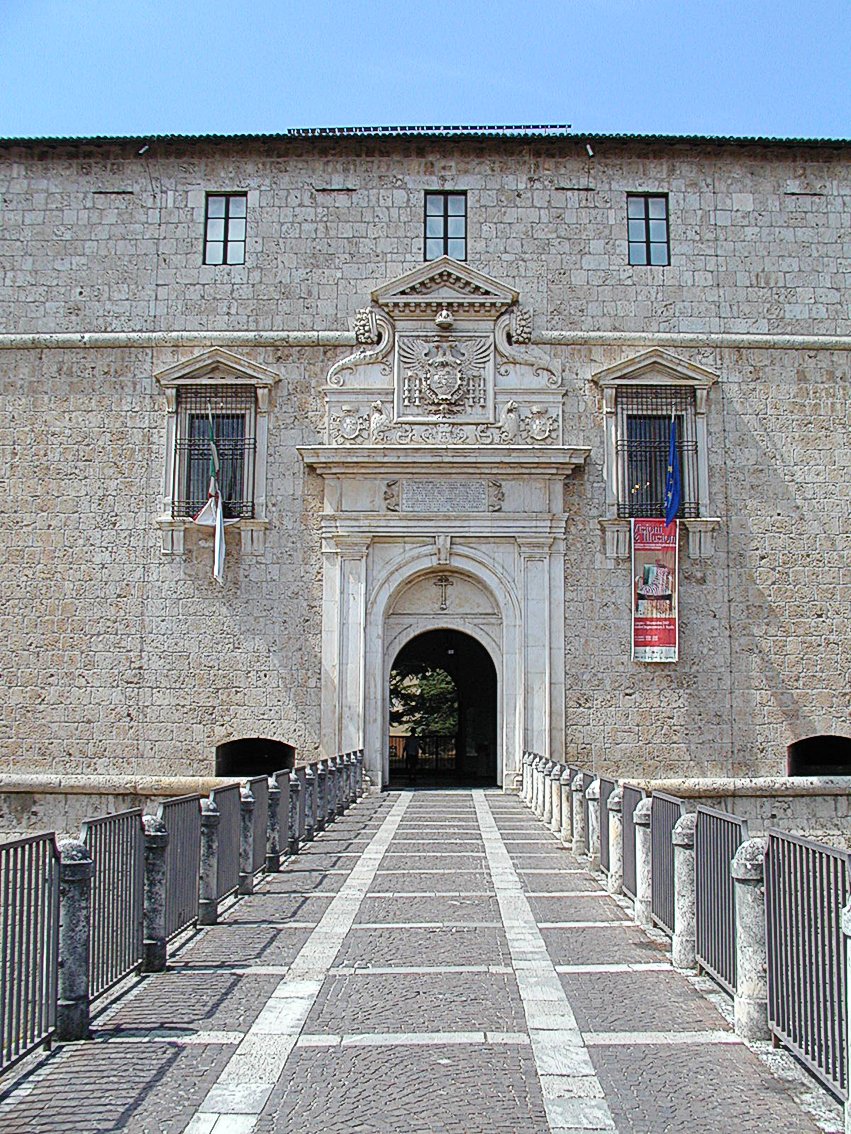
Entering MuNDA, the National Museum of Abruzzo, means coming to terms with two stories at once: that of Abruzzese art and that of a city that continues to rise again. Its historic home is the Forte Spagnolo, the 16th-century castle that towers over L’Aquila: even from the outside, you can tell it is no ordinary container. After the 2009 earthquake, the collection spent years at the former Mattatoio in Borgo Rivera, facing the Fontana delle 99 Cannelle, and since 20 December 2025 it has returned, at least in part, within the castle walls. Inside, wooden sculptures, Madonnas on gold ground, 17th-century Neapolitan canvases and the Mammoth of Scoppito await you—the skeleton of Mammuthus meridionalis that alone is worth the ticket. A state museum, among Abruzzo’s foremost, which in 2023 drew more than 56,000 visitors.

Historical Background

MuNDA’s story goes back a long way: at its roots is the Civic Museum of L’Aquila, founded by Professor Mario Chini in the late nineteenth century and dismantled in 1942, along with the Superintendency’s storerooms and, from 1966, the works of the Diocesan Museum of Sacred Art. The turning point came with the restoration of the Spanish Fortress between 1949 and 1951: on 23 September 1951, the museum opened in its historic home. Then came 6 April 2009, the earthquake: closure and damage. The collection moved to the former municipal slaughterhouse in Borgo Rivera, which reopened on 19 December 2015. Since 2019, the museum has had special autonomy and also manages the Amiternum Archaeological Park.

  • Late nineteenth century: Civic Museum founded by Mario Chini
  • 1942: dismantling of the Civic Museum
  • 1949–1951: restoration of the Spanish Fortress
  • 23 September 1951: opening at its historic home
  • 6 April 2009: earthquake, museum closure
  • 19 December 2015: reopening at the former slaughterhouse in Borgo Rivera
  • 2019: special autonomy for the museum
  • 20 December 2025: partial reopening at the Spanish Fortress

The Route Through the Rooms: From the Middle Ages to the 20th Century

The heart of the museum is its chronological route. It begins in the Middle Ages with a truly remarkable collection of Madonnas: thirteenth-century icons such as the Madonna de Ambro and the Madonna del Latte from 1283, plus Romanesque-Byzantine wooden sculptures such as the Madonna di Lettopalena. The most famous piece belongs to the fifteenth century: the Beffi Triptych (1410–1415), attributed to Leonardo di Sabino, the Master of Beffi, and the wooden San Sebastiano by Silvestro dell’Aquila (1478). The sixteenth century brings the terracottas of Saturnino Gatti, the seventeenth the canvases of Neapolitan masters, from Mattia Preti, with five paintings, to Jusepe de Ribera. The nineteenth-century room, reopened in December 2022, closes the route with Michetti, Celommi, and Patini.

The Scoppito Mammoth and the Archaeological Finds

Many come for the art and are left stunned by the Mammoth. In the historic building, the northeast bastion houses the skeleton of Mammuthus meridionalis, discovered in 1954 at Madonna della Strada, in Scoppito: a fossil that on its own tells of an Abruzzo far older than you might imagine. The archaeological section completes the picture with finds from Amiternum, Aveia, and Peltuinum, the Italic and Roman centres of the L’Aquila basin. Keep an eye out for the Amiternine Calendar and the limestone reliefs showing gladiatorial combat and a funeral ceremony. From the necropolises of Fossa and Bazzano come weapons, jewellery, and everyday objects. The museum also has a tactile section.

Why visit it

Three concrete reasons. First: it is the main museum in Abruzzo, and in a single visit you can grasp the region’s art from the Middle Ages to the twentieth century, without skipping any periods. Second: the highlights are truly strong, from the Beffi Triptych to Silvestro dell’Aquila’s Saint Sebastian, and all the way to the Mammoth and Antonello da Messina‘s Ecce Homo. Third: the Spanish Fort, its historic home and a sixteenth-century castle, is worth visiting for the architecture alone. It is a state museum with special autonomy since 2019, well organized, with programs for schools and families and temporary exhibitions. And then there is the symbolic value: seeing the works recovered from the rubble of 2009 displayed again is a small lesson in resilience.

When to go

There’s no wrong season, but I’d aim for a weekday morning: the museum is quieter, and you can enjoy the galleries without the crowds. Opening hours are convenient, from 8:30 am to 7:30 pm, Tuesday through Sunday, closed on Mondays. If you can, choose a sunny day: after your visit, Forte Spagnolo offers light and views over L’Aquila and the surrounding mountains that are rewarding in themselves. In spring or early autumn, the city is at its best, with mild temperatures for walking. At weekends, remember that entry may require booking: it’s best to call ahead on 0862.28420.

Around the Area

After leaving the museum, don’t stop there. In Borgo Rivera, in front of the Fontana delle 99 Cannelle, you’ll find the most photographed view in the area: the venue that housed MuNDA from 2015 to 2025 is right there, and the 14th-century fountain is well worth a stop. Then there’s the Amiternum Archaeological Park, run by the same museum: Roman theatre and amphitheatre, perfect for rounding off the story of ancient Abruzzo begun in the archaeological galleries. If you still have time, the historic centre of L’Aquila, with its cathedral and squares, is the natural end to the day. And for those travelling with children, the mammoth idea makes everything easier.

Itineraries nearby


💡 Did You Know…?

Fun fact: the Scoppito mammoth was discovered in 1954 and is now one of the most iconic finds; the work Nereid by Emilio Greco was donated by the artist in 1993; the museum has a tactile section and a virtual tour. After the earthquake, many works were recovered from the rubble and restored, such as the thirteenth-century Deposition of Christ from the Cathedral of Penne.