Basilica of San Bernardino: Renaissance and Faith in L’Aquila

In the heart of L’Aquila, the Basilica of San Bernardino is a treasure trove of Renaissance and Baroque art, dedicated to the Sienese saint who died here in 1444. Today, after restoration following the 2009 earthquake, the church is open to visitors once again, housing works such as the Resurrection by Andrea della Robbia and the mausoleum by Silvestro dell’Aquila. Admission is free, and pairing your visit with a walk through the historic center is highly recommended.
Mausoleum of San Bernardino, a Renaissance masterpiece
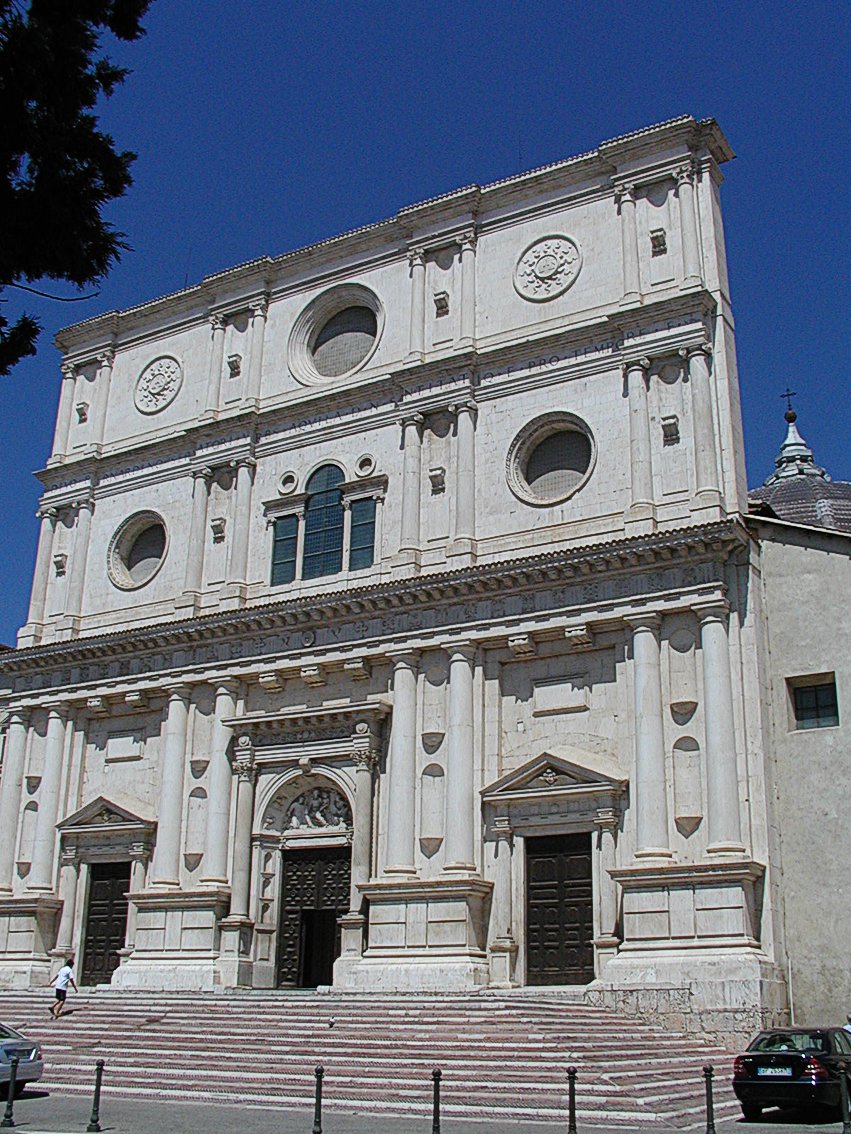
Facade by Cola dell’Amatrice in three tiers
Gilded wooden ceiling by Ferdinando Mosca
Terracotta Resurrection by Andrea della Robbia


Events nearby

Copertina itinerario Basilica of San Bernardino: Renaissance and Faith in L'Aquila
Basilica of San Bernardino in L’Aquila: Renaissance facade by Cola dell’Amatrice, mausoleum by Silvestro dell’Aquila, and Baroque wooden ceiling. Opening hours and visitor information.

Good to know


Introduction: An Unexpected Impact

Climbing the steps to Piazza San Bernardino is already a small spectacle: the white, squared facade rises before you, divided into perfect sections. Then you cross the portal and the Baroque interior envelops you with its gilded wooden ceiling, a work by Ferdinando Mosca. After the 2009 earthquake, restoration restored all its splendor, and today the basilica is once again alive, with its mausoleum, its chapels, and that scent of wax and history that few churches can impart.

Historical notes

It all begins with Bernardino da Siena, who died in L’Aquila on 20 May 1444 while trying to bring peace between the factions. The city obtained from Pope Eugene IV to keep his body and between 1454 and 1472 built this church for him. The works, initially supervised by Giovanni da Capestrano and Giacomo della Marca, came to a halt due to the earthquake of 1461, then resumed up to the dome. After the earthquake of 1703, the interior was rebuilt in Baroque style, and in 1946 Pius XII elevated it to a minor basilica. Here are the key steps:

  • 1444 – Death of San Bernardino in L’Aquila
  • 1454-1472 – Construction of the church
  • 1703 – Earthquake and Baroque renovation
  • 1946 – Becomes a minor basilica
  • 2009 – Earthquake damage and restoration

In 2015, the basilica was returned to the city.

The Facade: Signature of Cola dell’Amatrice

You can’t help but look at it. The facade is considered the ultimate expression of the Abruzzese Renaissance, and it’s easy to see why. Carved by Nicola Filotesio, known as Cola dell’Amatrice, between 1525 and 1542, it is divided into three superimposed orders that recall classical architectural language. The double columns create nine panels: at the bottom the three portals, higher up round windows and the IHS monogram of San Bernardino. When the sun hits it, the pale stone seems to light up, and the staircase makes it look even more monumental.

Inside: Gold, Devotion, and the Saint’s Mausoleum

Stepping inside, you’ll be left speechless. The carved and gilded wooden ceiling by Ferdinando Mosca, from 1724, is a triumph of light: at its center, the saint’s monogram stands out, surrounded by canvases by Girolamo Cenatiempo. Just beyond, the Mausoleum of San Bernardino by Silvestro dell’Aquila dominates the scene: a marble ark commissioned in 1489 by Jacopo di Notar Nanni, holding the remains of the city’s patron saint. Precious chapels follow one after another, from Andrea della Robbia’s Resurrection to the Madonna and Child by the same Silvestro.

Why visit it

Because it’s a concentration of art you wouldn’t expect to find in a single church: Renaissance and Baroque coexist without conflict. Because Saint Bernardine rests here, and devotion is still very much alive. And because, unlike many museums, this beauty can be visited without a ticket: admission is free. Of course, the spaces call for respect, but you can take your time to admire every chapel without rushing.

When to go

If you can, choose a weekday mid-morning: that’s when the nave is quietest and the light traces the coffered ceiling. In the late afternoon, the facade warms up and the staircase becomes a perfect grandstand over the city. I find it most beautiful in shoulder season, when the air is clear and the white stone stands out. If you want a different atmosphere, go during the days of the saint’s feast: the square fills with people and the basilica returns to being what it has always been, the heart of the city.

In the Vicinity

Stay in the Santa Maria quarter, then let the center lead you. The nearby climb to the Spanish Fort rewards you with a view over the city and the opportunity to visit the National Museum of Abruzzo. If instead you prefer to soak up the spiritual atmosphere you’ve just experienced, continue to the Basilica of Santa Maria di Collemaggio, linked to Celestino V and the Aquilan pardon. This route weaves together art, memory, and an Abruzzo still waiting to be discovered.

Itineraries nearby


💡 Did You Know…?

Few people know that San Bernardino actually died in L’Aquila on May 20, 1444, while he was on his way to preach in the Kingdom of Naples. After the miracles attributed to his remains, the people of L’Aquila obtained permission from Pope Eugene IV to keep his body; since then, the saint has become the city’s patron. Today he rests in a modern silver urn, because the original one was stolen by the French. Before leaving, look up at the large 18th-century organ and the gilded IHS monogram: they are symbols of a faith that, despite the earthquakes, continues to shine.