
🧭 What to Expect
- Ideal for those seeking a mix of sea, history, and industrial archaeology in Calabria.
- Key features: 15 detailed locations with interactive maps and practical guides for each stop.
- Unique experiences: rock village (Zungri Caves), Bourbon sites (Mongiana), and panoramic medieval fortresses.
- Clear structure: organized itinerary with photos, directions, and links to delve deeper into each visit.
The Province of Vibo Valentia is a land that combines crystal-clear sea and millennia-old history. Here, the Coast of the Gods offers breathtaking beaches like those of Capo Vaticano, while the inland area hides authentic villages and highly valuable archaeological sites. In Pizzo, you'll find the Murat Castle, where Joachim Murat was imprisoned, and the evocative Chiesetta di Piedigrotta carved into the rock. In Vibo Valentia, the Norman Castle dominates the city with its imposing structure, while the Greek Walls of Hipponion bear witness to the ancient Magna Graecia origins. In the Mongiana area, you'll discover the Bourbon Royal Ironworks, an important 19th-century industrial site. Between Nicotera with its Ruffo Castle and the charming inland villages, this Calabrian province offers a perfect blend of nature, history, and traditions.
Overview
- Cape Vaticano Lighthouse
- Murat Castle
- Norman Castle
- Piedigrotta Chapel
- Ruffo Castle of Nicotera
- Mongiana Weapons Factory
- Regional Sanctuary of Santa Maria nel Bosco
- Vito Capialbi National Archaeological Museum
- Bourbon Royal Ironworks Museum
- Greek Walls of Hipponion
- Zungri Caves
- Galluppi Castle
- Rocca Angitola
- La Rocchetta di Briatico
- Mongiana Foundry
Itineraries nearby


Cape Vaticano Lighthouse
- Go to the page: Capo Vaticano Lighthouse: 360° View of Costa degli Dei and Aeolian Islands Since 1885
- Percorso Panoramico, Ricadi (VV)
- Open in Google Maps
- View on Google Images
 The Cape Vaticano Lighthouse stands on one of the most spectacular promontories of the Costa degli Dei, perched dramatically above the Tyrrhenian Sea. Built in 1885, this historic lighthouse continues to guide ships with its characteristic light, but has become primarily a privileged observation point for visitors. The location is simply unique: from here, you can enjoy a 360-degree view that stretches from the Aeolian Islands to Stromboli, and on clear days, all the way to the coasts of Sicily. The original limestone structure has been preserved over time, maintaining that ancient charm that makes it particularly photogenic. The path to reach it is an experience in itself: you walk through typical Mediterranean scrubland, with scents of broom and myrtle accompanying the ascent. Once you arrive, the panoramic terrace offers unforgettable sunsets, with the sun diving into the sea creating extraordinary plays of light. Many visitors choose to come here at sunset, when the warm light of the setting sun makes everything even more magical. The lighthouse is perfectly integrated into the natural environment, surrounded by sheer cliffs that drop 124 meters into the sea. It's not uncommon to spot dolphins or, during migrations, the majestic silhouettes of whales. Access is free and open to all, but it's important to respect the silence and atmosphere of the place. Bring your camera: every corner offers postcard-worthy views.
Murat Castle
- Go to the page: Murat Castle in Pizzo: Aragonese fortress with Murattian Museum and Tyrrhenian Sea views
- Scesa Castello, Pizzo (VV)
- https://www.castellomurat.it/
- Open in Google Maps
- View on Google Images
- info@cooperativakairos.net
- +39 0963 532523
 The Murat Castle dominates Pizzo's historic center from its strategic position overlooking the sea. Built in the 15th century by the Aragonese, this fortress became famous for being the prison of Joachim Murat, King of Naples and brother-in-law of Napoleon Bonaparte, who was executed here in 1815. Today the castle is a museum that tells this dramatic chapter of Italian history through authentic artifacts and faithful reconstructions. Inside, visitors can explore the rooms where Murat spent his final days, the original cell, and the weapons hall with a collection of military equipment from that era. The panoramic terrace offers a breathtaking view of the Tyrrhenian Sea and the characteristic fishing village of Pizzo, with its colorful houses cascading toward the sea. Particularly evocative is the condemnation room, where the atmosphere of those crucial moments can still be felt. The tour route is well-organized and accessible, with explanatory panels guiding visitors through the various areas without the need for a guide. I recommend dedicating at least an hour to fully appreciate every detail and stopping to admire the view from the main tower. The castle is open year-round with seasonal hours, so it's best to check before visiting.
Norman Castle
- Via Antica Monteleone, Vibo Valentia (VV)
- Open in Google Maps
- View on Google Images
 The Norman Castle of Vibo Valentia is one of the city's most recognizable landmarks, an imposing fortress that towers over the highest hill of the historic center. Built by the Normans in the 11th century on the ruins of the ancient Greek acropolis of Hipponion, this castle has witnessed centuries of history, passing through Swabian, Angevin, and Aragonese dominations. Today, after careful restoration, it stands as a well-preserved complex housing the Vito Capialbi National Archaeological Museum. As you ascend toward the castle, you'll walk along a charming tree-lined avenue offering breathtaking views of the Gulf of Sant'Eufemia and the surrounding mountains. Once you cross the entrance, you'll access the inner courtyard, where the perfectly maintained cylindrical towers and patrol walkways stand out. Inside the museum, the archaeological collection is truly remarkable: artifacts from ancient Hipponion and nearby sites, including ceramics, coins, and jewelry that tell the long history of this land. Particularly interesting is the section dedicated to findings from the Greek necropolis, with funeral goods of great value. The highlight of the visit remains the panoramic view from the walls: from here, your gaze spans from the Tyrrhenian Sea to the Serre mountain range, a panorama that alone makes the trip worthwhile. The castle is easily reachable on foot from the city center, although the climb can be a bit steep—but it's absolutely worth it. I recommend visiting at sunset, when the warm sunlight enhances the ancient stones and creates a magical atmosphere.
Piedigrotta Chapel
- Via Riviera Prangi, Pizzo (VV)
- Open in Google Maps
- View on Google Images
 The Piedigrotta Chapel is one of the most evocative and unusual places you can visit in Pizzo. It's not a traditional church, but a chapel carved directly into the rock, just steps from the sea. Legend has it that it all began in the 17th century, when Neapolitan sailors, having survived a shipwreck, found refuge in a natural cave and placed an image of the Madonna of Piedigrotta there to give thanks for their safe deliverance. Since then, the cave has been expanded and transformed into a unique place of worship. Upon entering, you'll be struck by the tuff stone sculptures that fill the space: these are works created between the late 19th century and the 1950s by the Barone family, local stonemasons. You'll find statues of saints, angels, and biblical scenes, all skillfully carved from the soft stone. The atmosphere is mystical and intimate, enhanced by the soft light filtering through the entrance that illuminates the carved forms. It's a place that speaks of faith, art, and history, all contained within a small but intense space. I recommend visiting in the morning, when the light is best for appreciating the details of the sculptures. Remember that access requires a fee and the structure is open year-round, but check the opening hours as they may vary. Bring a camera: the play of light on the statues creates unforgettable shots.
Ruffo Castle of Nicotera
- Go to the page: Ruffo Castle of Nicotera: Norman Fortress with Archaeological Museum and Gulf View
- Via Castello, Nicotera (VV)
- Open in Google Maps
- View on Google Images
 The Ruffo Castle of Nicotera is one of the architectural jewels of the province of Vibo Valentia, an imposing medieval fortress that rises on a rocky spur overlooking the Tyrrhenian Sea. Originally built by the Normans in the 11th century and later expanded by the Angevins, the castle owes its current name to the powerful Ruffo family, who transformed it into a noble residence in the 15th century. Today it stands as a well-preserved complex blending Norman, Angevin, and Renaissance elements. The structure is characterized by cylindrical towers that offer a 360-degree view of the Gulf of Gioia Tauro and the entire Calabrian Tyrrhenian coast. Inside, visitors can admire the noble halls with cross-vaulted ceilings and monumental fireplaces, while the inner courtyard retains the original medieval atmosphere. Particularly evocative is the Archaeological Museum housed in the castle's rooms, which collects artifacts from prehistory to the Roman era discovered in the Nicotera area and the surrounding territory. The strategic location of the castle, perched 220 meters above sea level, guarantees exceptional panoramic views that stretch from the Aeolian Islands to the Sicilian coast on the clearest days. A visit to the castle pairs perfectly with a stroll through the historic center of Nicotera, one of the most characteristic villages of the Costa degli Dei.
Mongiana Weapons Factory
- Go to the page: Mongiana Weapons Factory: Former Bourbon Steelworks with 1810 Smelting Furnaces
- Piazza Regina Elena 12, Mongiana (VV)
- http://www.museorealiferrieremongiana.it/
- Open in Google Maps
- View on Google Images
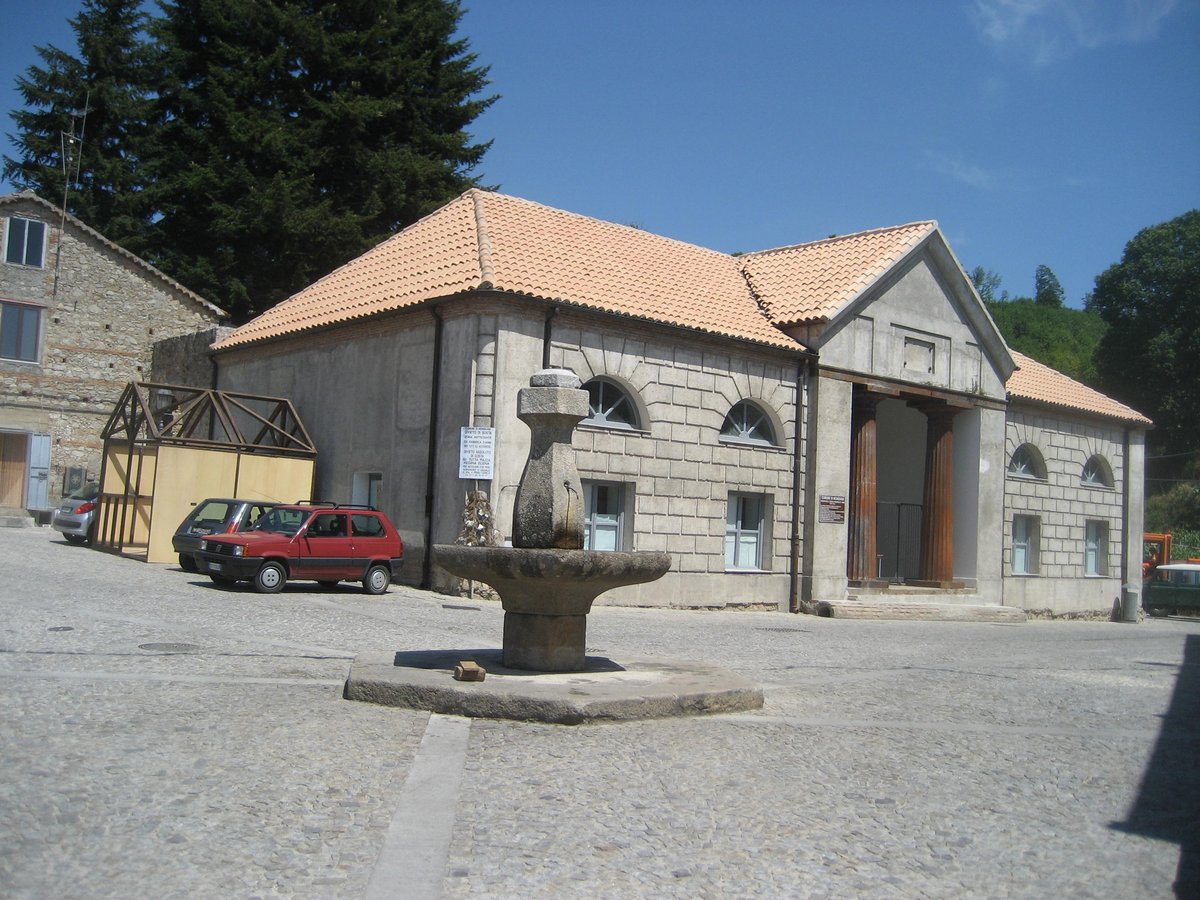 The Mongiana Weapons Factory represents one of the most fascinating gems of Calabria's industrial heritage. Built in 1852 by order of Ferdinand II of Bourbon, this facility was a technological avant-garde for its time, specializing in the production of firearms for the army of the Two Sicilies. Today, visiting this complex means immersing yourself in a piece of history that profoundly marked the Vibonese territory. The site still preserves the original 19th-century machinery, including lathes, milling machines, and hydraulic presses, which testify to the high engineering level achieved. The factory primarily produced rifles and cannons, with a capacity of over 300 weapons per month, becoming a strategic hub for the Kingdom. During the visit, you can admire the forging workshops, metal processing areas, and the rooms where the 1844 model rifles were assembled. The complex is nestled within the lush forests of the Serra, creating a striking contrast between nature and industrial archaeology. For those who love history and engineering, it's a unique experience that shows how Calabria was at the center of important industrial projects. I recommend combining the visit with the nearby Royal Ironworks Museum to get a complete picture of the Bourbon era in the area.
Regional Sanctuary of Santa Maria nel Bosco
- Sentiero Frassati, Serra San Bruno (VV)
- Open in Google Maps
- View on Google Images
- 096370676/ 096370405
- 3496738499
 The Regional Sanctuary of Santa Maria nel Bosco is a place that surprises you with its unique atmosphere, nestled within the dense forests of the Serra. It's not just a sanctuary, but a monumental complex that holds centuries of spiritual history linked to the Carthusian monks. The main church, with its simple yet elegant façade, houses the statue of the Black Madonna, an object of centuries-old devotion. Inside, the environment is intimate and evocative, with frescoes depicting episodes from the life of Saint Bruno, founder of the Carthusian order. The surrounding woodland is an integral part of the experience: well-maintained paths lead you through ancient oaks and beeches, creating a natural meditative trail. Nearby, you'll find the remains of the ancient Certosa di Serra San Bruno, founded in the 11th century, which adds an important piece to understanding this place. The visit is free and accessible, with parking nearby. I recommend wearing comfortable shoes to explore the trails and bringing a water bottle, especially in summer. For those seeking a moment of quiet, the benches scattered throughout the woods are ideal for a restorative break. Avoid patron saint feast days if you prefer tranquility, as the sanctuary attracts many devotees on those occasions.
Vito Capialbi National Archaeological Museum
- Go to the page: Capialbi Museum Vibo Valentia: Orphic Lamella and Greek Artifacts in the Norman-Swabian Castle
- Via Antica Monteleone, Vibo Valentia (VV)
- https://www.beniculturali.it/mibac/opencms/MiBAC/sito-MiBAC/Luogo/MibacUnif/Luoghi-della-Cultura/visualizza_asset.html?id=153555&pagename=157031
- Open in Google Maps
- View on Google Images
- pm-cal.capialbi@beniculturali.it
- +39 0963 43350
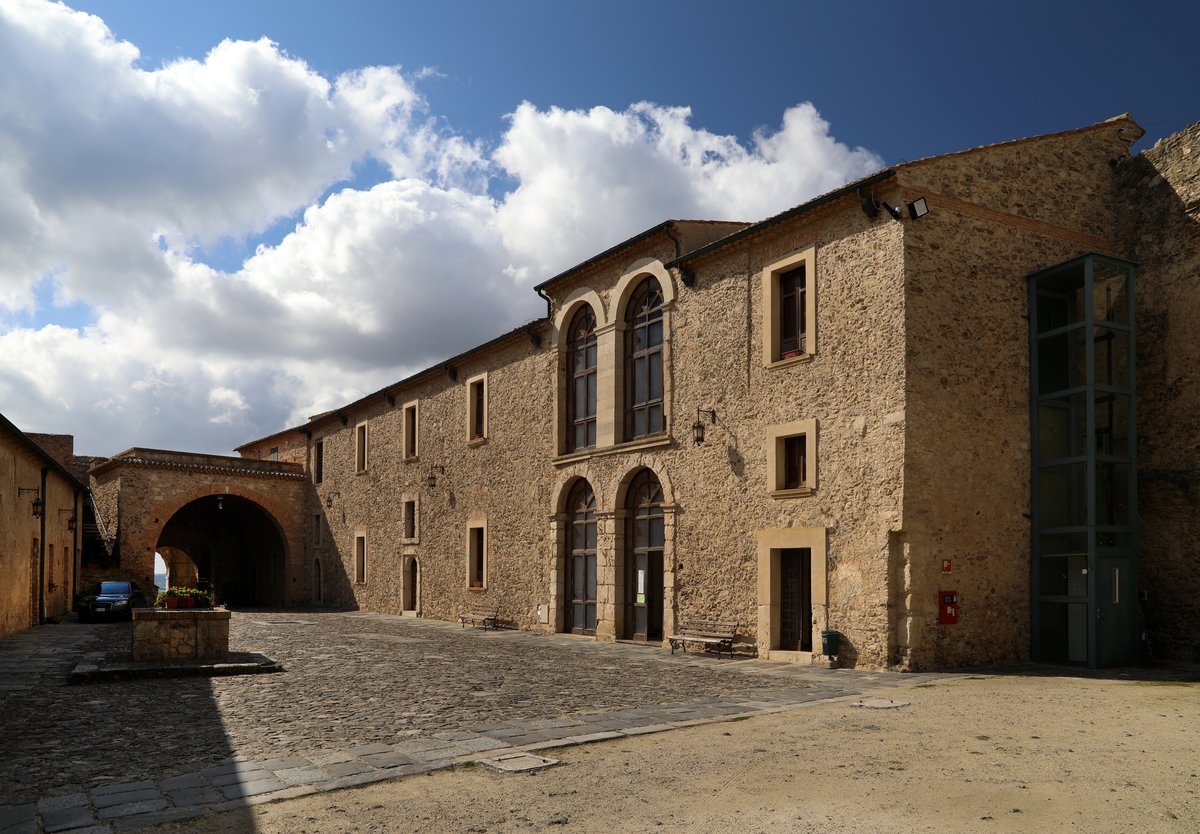 The Vito Capialbi National Archaeological Museum is a true gem in the historic center of Vibo Valentia, housed within the imposing Norman-Swabian Castle. This museum takes you straight to the heart of the history of ancient Hipponion, the Greek colony that preceded the modern city. The permanent collection is clearly organized and guides you through the centuries, from prehistoric artifacts to the Roman era. Don't miss the section dedicated to the funerary goods from local necropolises, featuring exceptionally crafted red-figure and black-figure Attic vases. Particularly moving are the artifacts from the Sanctuary of Persephone, including votive statuettes and ex-votos that tell the story of the cults of ancient Magna Graecia. The exhibition layout is well-designed and allows you to appreciate even the most recent discoveries, such as those from the Temple of Apollo. The visit is completed with the opportunity to access the castle towers, offering a breathtaking panoramic view of the Gulf of Sant'Eufemia. The museum is perfect for those who want to understand the Greek roots of this land without leaving the city. I recommend setting aside at least an hour and a half to appreciate all the details, especially the Greek and Latin inscriptions that enrich the epigraphic collection.
Bourbon Royal Ironworks Museum
- Piazza Regina Elena 12, Mongiana (VV)
- https://it.wikipedia.org/wiki/Fabbrica_d%27armi_di_Mongiana
- Open in Google Maps
- View on Google Images
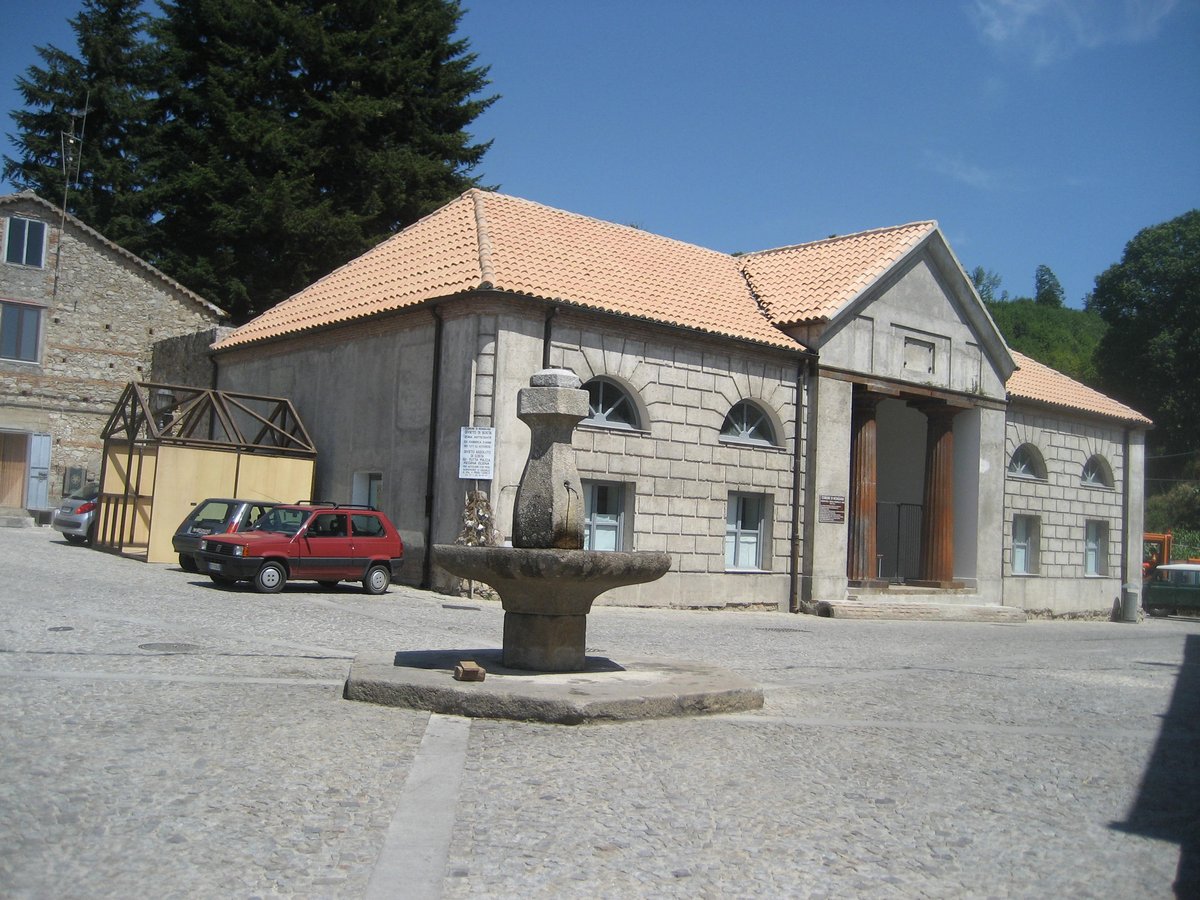 If you think Calabria is just about sea and medieval villages, the Bourbon Royal Ironworks Museum in Mongiana will surprise you. This unique place preserves the memory of one of the most important iron and steel complexes of the Kingdom of the Two Sicilies, active from 1770 to 1881. You'll find yourself face to face with perfectly preserved 19th-century original machinery: hammers, rolling mills, and lathes that tell a little-known chapter of Southern Italy's industrial history. The visit takes you through the spaces where they produced railway tracks, cannons for the army, and ship components. Don't miss the reconstruction of the smelting furnaces and the section dedicated to weapons production, which includes some specimens actually made right here. The museum is housed in the original ironworks buildings, surrounded by the greenery of the Calabrian Serre mountains. The atmosphere is unique: you can almost still hear the noise of the machinery and see the workers at their tasks. To best appreciate the experience, consider that the complex also includes the nearby Foundry and Weapons Factory, creating a complete historical-industrial itinerary. Ideal for those looking for something different from the usual tourist routes.
Greek Walls of Hipponion
- Via Paolo Orsi, Vibo Valentia (VV)
- Open in Google Maps
- View on Google Images
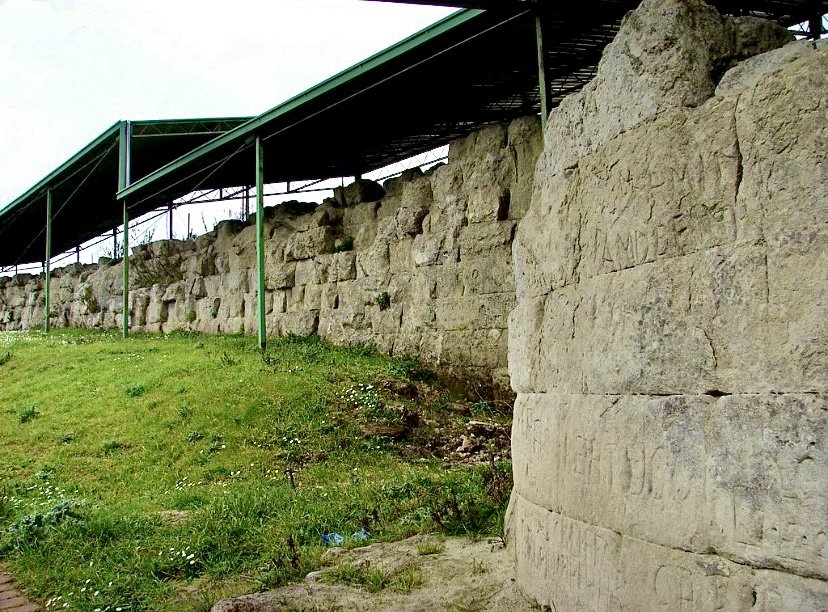 The Greek Walls of Hipponion represent one of the most significant testimonies of the ancient Magna Graecia colony that stood where Vibo Valentia is located today. These imposing fortifications, built between the 6th and 5th centuries BC, stretch for approximately seven kilometers and still showcase the engineering mastery of the Greeks. The isodomic block construction technique is perfectly visible in some sections, with local stones skillfully squared and placed without mortar. The wall path follows the hill's orography, creating a defensive system that protected the acropolis and the settlement below. The city access gates, such as Porta S. Anna, still preserve their original structure and allow visitors to imagine entering the ancient Hipponion. The panoramic view enjoyed from the wall path embraces the entire Gulf of Sant'Eufemia, offering a unique glimpse of the sea that the Greeks once sailed. Recent restoration works have made new sections accessible, allowing visitors to walk along what was the city's defensive perimeter. The evening lighting creates a suggestive atmosphere, ideal for sunset visits. The strategic position of the walls, between the acropolis and the sea, tells the story of a city that dominated the Tyrrhenian trade routes. The information panels along the path help understand the archaeological importance of the site. The proximity to the Archaeological Museum allows visitors to complete their tour with artifacts found in the area.
Zungri Caves
- SP85, Zungri (VV)
- https://www.grottezungri.it/
- Open in Google Maps
- View on Google Images
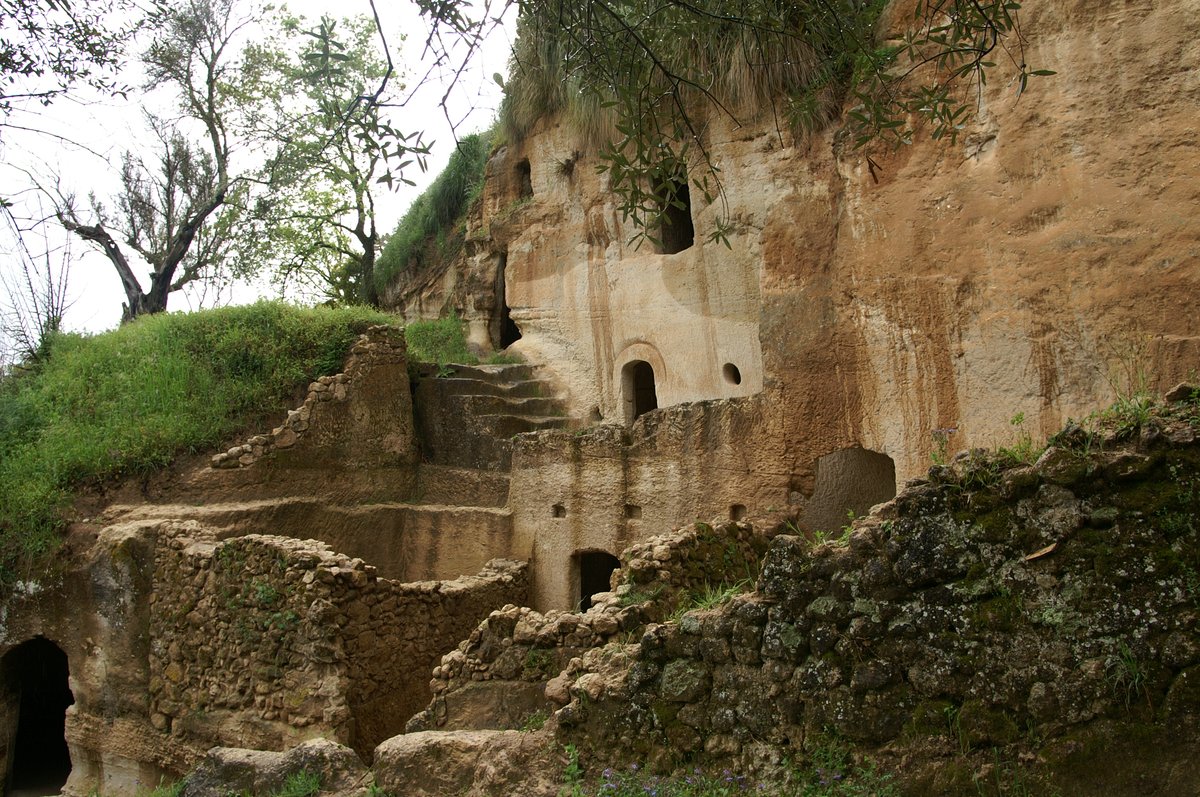 The Zungri Caves represent one of the most fascinating rock-hewn sites in Calabria, an entire village carved entirely into the rock that will transport you back in time. This complex of about one hundred caves, spread over two levels, constitutes a unique example of rock-cut architecture in Calabria, dating back to between the 12th and 14th centuries. The settlement develops along the rocky ridge of Monte Poro, offering a breathtaking view of the valley below. The dwellings are connected by an intricate system of stairs and passages carved directly into the stone, some of which still retain traces of rainwater collection systems and hearths. The visit allows you to explore domestic environments, workspaces, and common areas that tell the story of the daily life of the communities that lived here for centuries. The route is well-marked and accessible, with information panels explaining the different functions of the spaces. Particularly interesting is the largest cave, which probably served as a meeting place for the community. The site has recently undergone enhancement works that have improved its accessibility without compromising its authenticity. Practical tip: wear comfortable shoes with non-slip soles, especially after rain when the rocky surfaces can become slippery. The atmosphere you breathe among these caves is truly unique, a silence broken only by the wind blowing through the rocks and the singing of birds.
Galluppi Castle
- Via Regina Elena, Caria (VV)
- Open in Google Maps
- View on Google Images
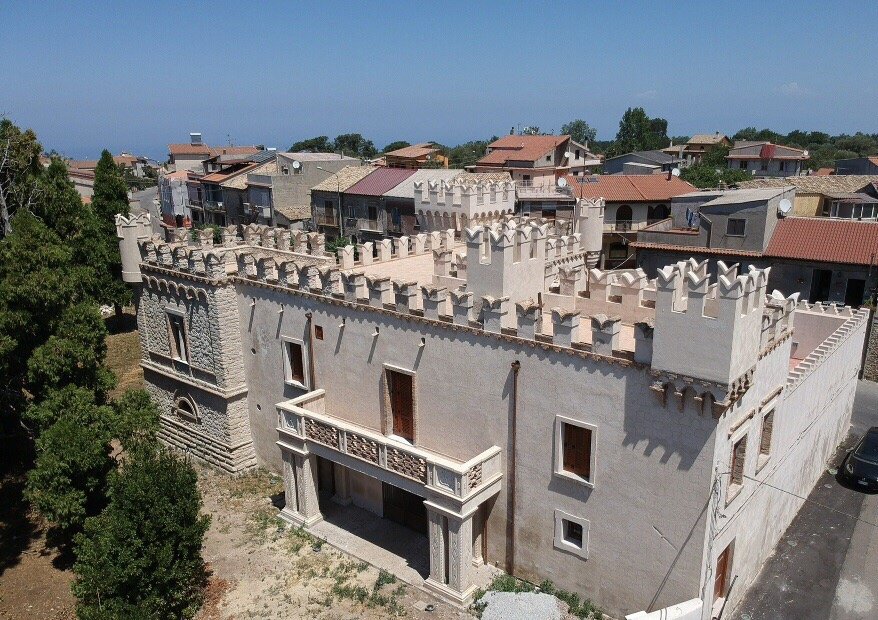 The Galluppi Castle in Caria is one of those places that instantly transports you back to the Middle Ages. Perched on a hill at 450 meters above sea level, it dominates the entire village with its imposing stone structure. Built between the 11th and 12th centuries, this manor has witnessed the passage of various noble dynasties, from the Ruffo to the Pignatelli, up to the Galluppi family who gave it its current name. What immediately catches the eye is the perfectly preserved quadrangular tower, standing about 20 meters high, which offers an extraordinary panoramic view of the valley below and, on clearer days, you can even glimpse the Tyrrhenian Sea. Access to the castle is through an arched portal that leads into the inner courtyard, where you can admire the remains of the ancient stables and service rooms. Inside, the main rooms retain traces of the original frescoes and monumental fireplaces. Particularly interesting is the gentlemen's chapel, dedicated to Saint Nicholas, with its marble altar and niches for relics. The castle is open year-round, but the best time to visit is from spring to autumn, when the weather allows you to fully enjoy the view from the tower. I recommend dedicating at least an hour to the visit, paying special attention to the architectural details of the Guelph merlons and the arrow slits that tell of the building's defensive function. For photography enthusiasts, the best spots are the inner courtyard and the top of the tower, from where you can take memorable photos of the village of Caria and the surrounding mountains.
Rocca Angitola
- Località Angitola, Maierato (VV)
- Open in Google Maps
- View on Google Images
 If you're looking for a place that combines history and breathtaking scenery, Rocca Angitola is the destination for you. Perched on a rocky spur in Maierato, this medieval fortress dominates the Plain of Sant'Eufemia and offers a spectacular view stretching from the Tyrrhenian Sea to the Serre Calabre mountains. Built between the 11th and 12th centuries, the Rocca held a strategic position for controlling communication routes between the coast and the hinterland. Today, although in a state of ruin, it retains an undeniable charm: you can still admire the remains of the perimeter walls, the quadrangular tower, and the rooms once used as storerooms and lodgings. The climb to the top, though challenging, is rewarded by a unique panorama: on clear days, your gaze can reach as far as the Aeolian Islands. The site is ideal for photography enthusiasts, especially at dawn or sunset, when the light enhances the silhouettes of the ruins. Bring comfortable shoes and water: the path is not equipped, but the silence and the timeless atmosphere will repay your effort. A tip: combine your visit with a stop in the village of Maierato, where you can sample local products like extra virgin olive oil and typical cured meats.
La Rocchetta di Briatico
- Via Marina, Briatico (VV)
- Open in Google Maps
- View on Google Images
 La Rocchetta di Briatico is one of the most iconic landmarks along the Vibo coast, a cylindrical tower standing solitary on a sea cliff. Built in the 16th century as a watchtower against Saracen raids, this structure dominates the landscape with its essential and massive architecture, typical of coastal fortifications of that era. Today, although partially ruined, it retains an undeniable charm, especially at sunset when the golden light reflects off its ancient stones. The site is easily accessible on foot with a short walk from the beach below, offering breathtaking views of the Tyrrhenian Sea and the surrounding coastline. Around the tower, the remains of ancient walls and minor structures tell of a vibrant past when this outpost was crucial for defending the territory. Its isolated location and history make it perfect for those seeking a quiet corner and a dive into the past, away from the crowds. Bring your camera: the contrasts between the blue of the sea and the gray of the stone create unforgettable shots. It's an ideal stop during a coastal tour, perhaps paired with a swim in the nearby coves.
Mongiana Foundry
 The Mongiana Foundry stands as one of the most significant industrial sites in 19th-century Southern Italy, a place where history comes alive amidst the remains of what was once an excellent iron and steel hub. Founded in 1771 by the will of Ferdinand IV of Bourbon, this structure was the beating heart of cast iron and steel production in the Kingdom of the Two Sicilies. Today, walking among the imposing ruins, you can still breathe in the atmosphere of an era when Mongiana was synonymous with technological innovation. The smelting furnaces, partially preserved, showcase the ingenuity of the production methods of the time, while the mechanical workshops tell of an activity that employed hundreds of workers. The foundry is closely linked to the nearby Arms Factory, with which it shared the production of military equipment for the Bourbon army. The site is part of the broader complex of the Bourbon Royal Ironworks, an integrated system that included iron mines and forests for coal. The visit offers a unique glimpse into Calabrian industrial archaeology, with explanatory panels guiding visitors through the various stages of metalworking. I recommend combining the visit with the Museum of the Bourbon Royal Ironworks, located nearby, to fully understand the importance of this industrial district. Access is easy and the route is well-marked, suitable even for families with children. The site is particularly evocative at sunset, when the slanting light enhances the textures of the surviving bricks and metal structures.