
Palazzo Chiericati is one of Andrea Palladio’s masterpieces, now home to the Civic Museum of Vicenza. It houses a rich art gallery with over 35,000 works from the 13th to the 20th century, including masterpieces by Paolo Veneziano, Cima da Conegliano, Veronese, and Tiepolo. The architecture is a unique fusion of an urban palace and a suburban villa, featuring a colonnaded portico on the ground floor and lateral loggias on the piano nobile.
– Palladian architecture: façade on a podium with portico and loggias, UNESCO-listed since 1994.
– Art collections: paintings, sculptures, and graphic works from the Middle Ages to the 20th century.
– Renaissance frescoes: rooms decorated by Brusasorzi, Zelotti, and others, with stuccoes and grotesques.
– Basement level: medieval servants’ quarters, the Roggia del Collo canal, and cellars open to the public.
Events nearby


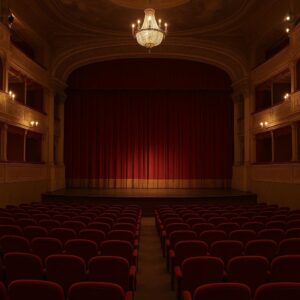

Palazzo Chiericati in Vicenza, designed by Andrea Palladio, houses the Civic Museum with works from the Middle Ages to the 20th century. Admire Renaissance frescoes and the Venetian art collection in one of the city’s UNESCO-listed palaces.
- Corso Andrea Palladio, Vicenza (VI)
- Open in Google Maps
- View on Google Images Palazzo Chiericati a Vicenza
Good to know
Palazzo Chiericati: A Masterpiece That Takes Your Breath Away
From noble residence to museum: a centuries-long story
- 1550: Palladio designs the palace for Girolamo Chiericati.
- 1551-1557: First works, then interrupted.
- 17th century: Completed by Carlo and Giacomo Borella.
- 1839: Purchased by the Municipality.
- 1855: Inauguration of the Civic Museum.
- 1994: Declared UNESCO World Heritage.
Architecture and Frescoes: A Journey Through Loggias and Myths
Art Gallery: From Paolo Veneziano to Tiepolo
Three Good Reasons to Add It to Your Itinerary
The Perfect Time for a Visit
What to See Nearby
Itineraries nearby


💡 Did You Know…?
A curious anecdote: during construction, the patron Girolamo Chiericati obtained permission from the Maggior Consiglio to create a public portico on the ground floor, sacrificing some privacy in exchange for a more open architecture. Today, visiting the basement, you can admire the remains of the ancient 14th-century ‘Chiericati houses’ and the Roggia del Collo, a branch of the Bacchiglione river channeled under the building, evidence of the square’s original port function.