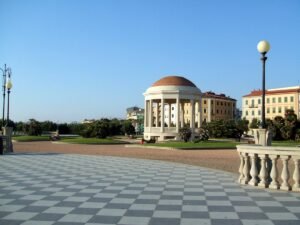
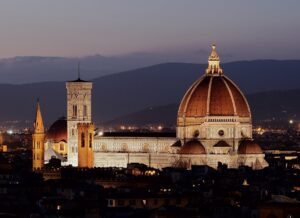
Want to explore Arezzo in a day? This walking itinerary takes you off the beaten path, through medieval art and ancient walls. Six stops in the historic center: from the Cathedral of Saints Donatus and Peter to the Roman Amphitheatre, from the Basilica of San Francesco with Piero della Francesca’s frescoes to the Church of Santa Maria della Pieve. Don’t miss the Vasari House Museum and the Medici Fortress with its panoramic views. An ideal route for art lovers who want to avoid the crowds. Arezzo is more than just the Saracen Joust: it’s a medieval gem waiting to be discovered. Put on your comfortable shoes and follow us through cobblestone alleys and hidden squares.
🗺️ Your trip at a glance
A compact yet rich itinerary, perfect for an authentic day out. You’ll discover medieval art and ancient walls away from mass tourism.
- Ideal for those with limited time who want the essence of Arezzo.
- Highlights: 6 lesser-known stops, walking through the historic center.
- Perfect for: medieval art enthusiasts and curious travelers.
Itinerary stops
Stop no. 1
Church of San Domenico
 The first stop on our itinerary is the Church of San Domenico, a Gothic gem that will surprise you with its asymmetrical facade in pietra forte and its bell-gable. Stepping inside, the single-nave interior with a truss roof welcomes you with light filtering through the mullioned windows, placed at progressively closer intervals to create a sense of depth. But the real reason this church is famous is Cimabue’s Crucifix, hanging above the high altar: an early masterpiece by the maestro, with a Christ whose arched body seems almost to leap out from the panel. Around you, frescoes by Spinello Aretino and his son Parri tell stories of saints, while the Dragondelli chapel houses a black stone altar from 1368. And to think that here, in 1276, the first conclave in history was held, while the church was still under construction! Today, admission is free and the church is open every day. Getting lost among these works is like diving into medieval Arezzo.
- Via Padre Caprara, Arezzo (AR)
- Open in Google Maps
- View on Google Images

You should go if…
Stop no. 2
Casa Vasari Museum
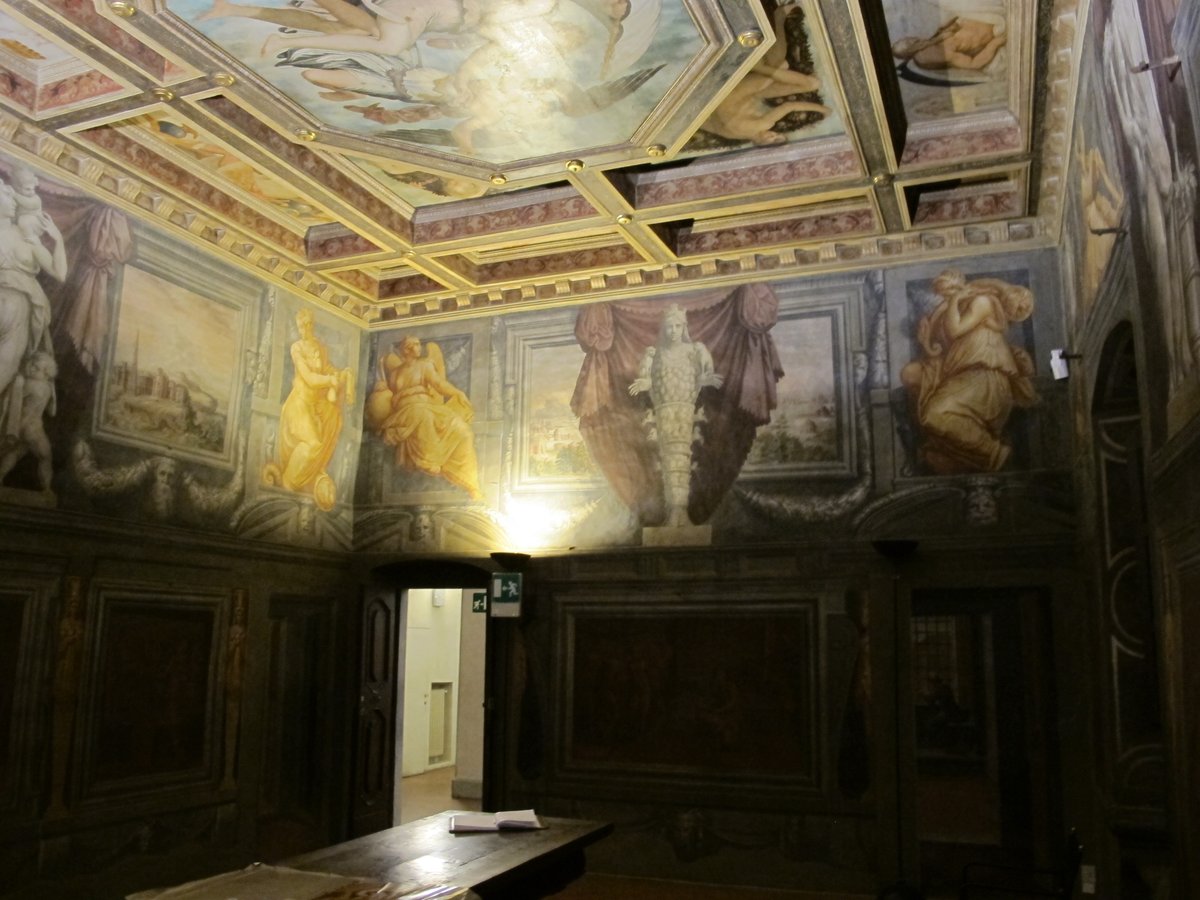 After strolling through the medieval streets, stepping into Casa Vasari is like taking a leap back in time, straight into the 1500s. This is the house that Giorgio Vasari bought in 1541 and personally decorated until 1548, turning it into a manifesto of early Mannerism. Climbing to the piano nobile, you’ll encounter frescoed rooms that tell his vision of art and memory: the Hall of Fame and the Arts celebrates the great masters of the past, while the Room of the Triumph of Virtue astounds with a wooden ceiling that plays with perspectives and allegories. Don’t miss the Picture Gallery, with over sixty Mannerist paintings, including works by Allori and Stradano. The Italian-style hanging garden is a peaceful corner, ideal for a break. Admission is charged (€7 full price online), but free on the first Sunday of the month. A tip: book ahead to avoid queues, as entry is limited to 25 people per hour. It’s an authentic experience, away from the crowds, making you feel like a guest of a Renaissance genius.
- Via Venti Settembre 55, Arezzo (AR)
- https://www.polomusealetoscana.beniculturali.it/index.php?it/192/museo-di-casa-vasari-arezzo
- Open in Google Maps
- View on Google Images
You should go if…
Stop no. 3
Teatro Petrarca: A 19th-Century Gem
 Continuing along Via Guido Monaco, you come across a gem of 19th-century theater architecture: the Teatro Petrarca. Inaugurated on April 21, 1833, with Donizetti’s Anna Bolena, this Italian-style theater was designed by architect Vittorio Bellini. Its horseshoe-shaped floor plan and four tiers of boxes evoke the charm of opera from a bygone era. After a decade-long restoration, it reopened in 2015 with a capacity of 461 seats, preserving its original acoustics. The clean sandstone facade blends seamlessly into the urban landscape. Today, it hosts seasons of drama, music, and dance, and is managed by the Fondazione Guido d’Arezzo. A tip: check the schedule, as attending a performance here is a unique experience, immersed in an atmosphere of times past.
- Via Guido Monaco 12, Arezzo (AR)
- Open in Google Maps
- View on Google Images
You should go if…
Stop no. 4
Church of the Most Holy Annunciation
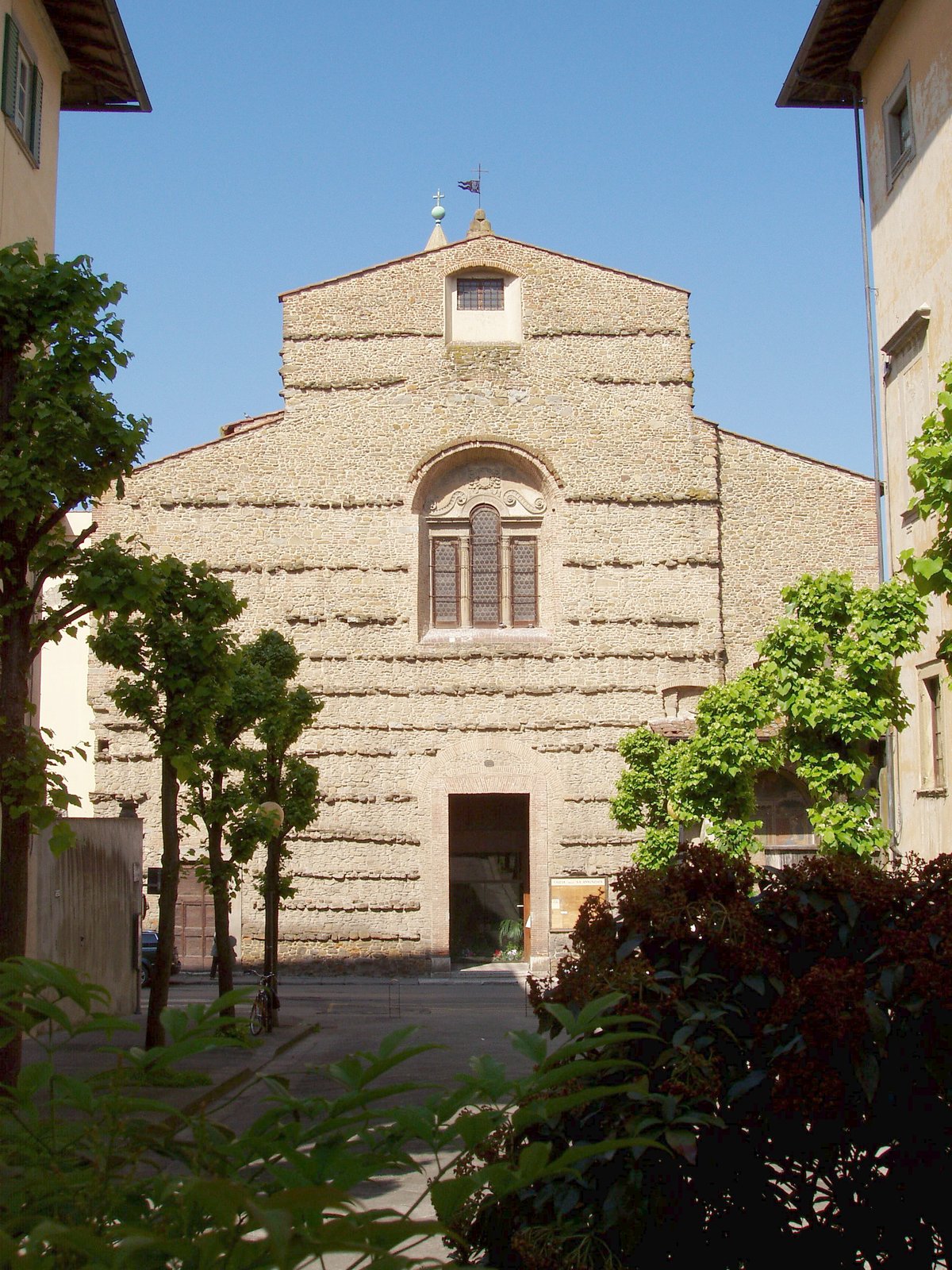 Leaving Teatro Petrarca, you walk down via Garibaldi to number 185, where the Church of the Most Holy Annunciation stands. It’s hard to miss: the façade is unfinished, but a precious fresco of the Annunciation by Spinello Aretino (1370) adorns it, surviving from the earlier oratory. Inside, the sober Renaissance elegance of three naves strikes you, with pietra serena capitals and six stained-glass windows by Guillaume de Marcillat (1520-1525) filtering the light. But the heart of the place is the high altar, which holds the statue of the Madonna of Tears, a terracotta by Michele da Florence. According to tradition, on February 26, 1490, the Madonna wept before a young pilgrim, an event that led to the church’s construction. Among the artworks, a Deposition by the young Giorgio Vasari (1529) and the Adoration of the Shepherds by Niccolò Soggi (1521) stand out. Free admission, open daily 8 am-7 pm. A place that unites faith and Renaissance masterpieces, off the beaten path.
- Via Giuseppe Garibaldi, Arezzo (AR)
- Open in Google Maps
- View on Google Images
You should go if…
Stop no. 5
Ferdinand III of Austria Statue
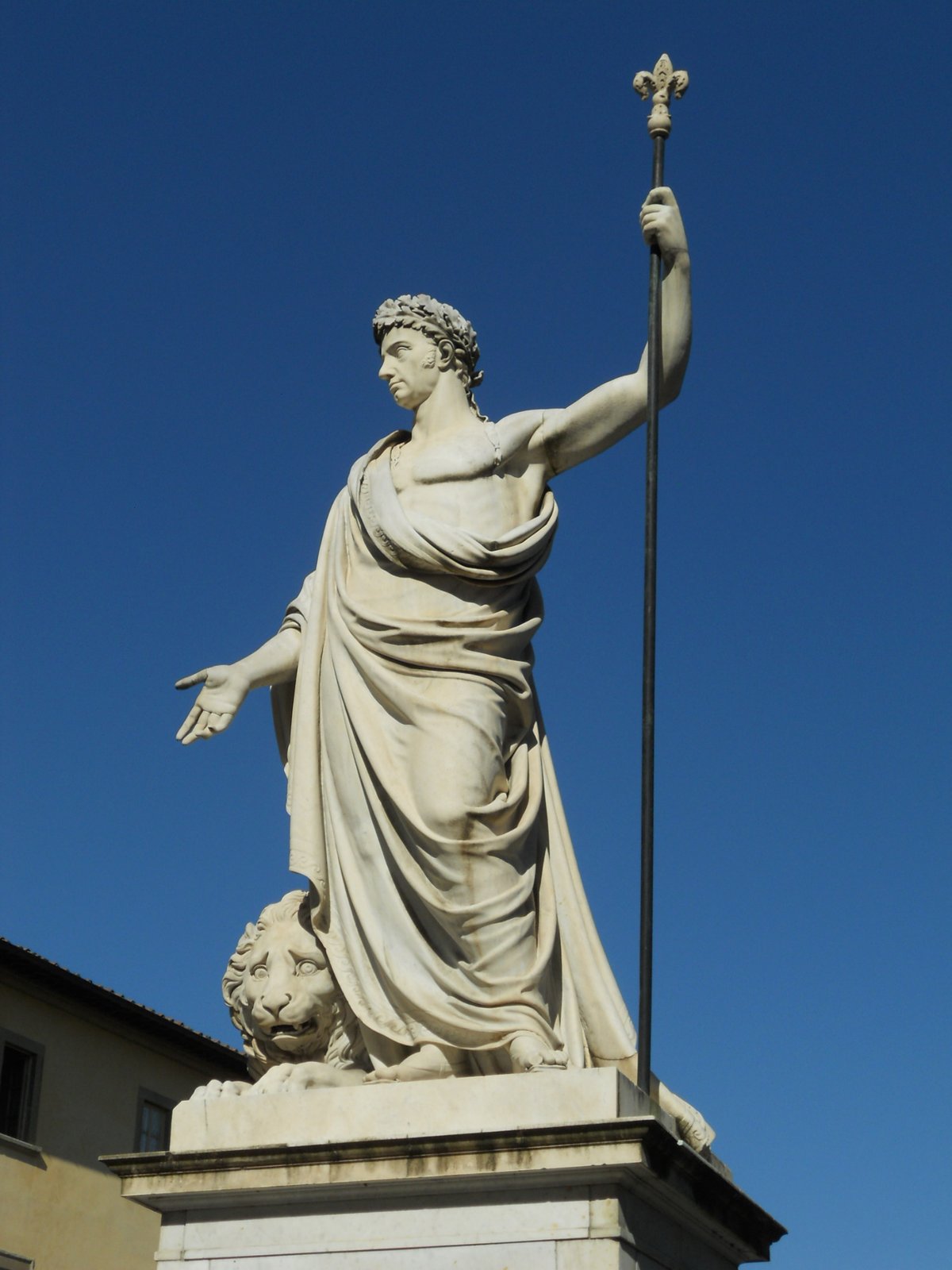 Leaving the Church of the Santissima Annunziata, we climb towards Piaggia di Murello. Here, at the top of the staircase, stands the imposing statue of Ferdinand III of Austria, Grand Duke of Tuscany. Carved from Carrara marble by Stefano Ricci in 1822, it is the finest example of Neoclassical sculpture in Arezzo. The sovereign is portrayed in ancient style, with a toga, a crown of oak leaves (symbol of perseverance), and a spear-shaped scepter. At his feet, a tame lion evokes subdued power. The base tells the story of the reclamation of Valdichiana: a bas-relief allegorically unites the Chiana and the Arno, a work of which Ferdinand was the architect. The statue originally stood in Piazza Grande; in 1932 it was moved here due to the neo-medieval revival. Over the years, it has suffered damage from frost and vandals, but has been restored several times (last intervention in 2019). Observing it at sunset, the warm light illuminates the marble and creates a solemn atmosphere. It is a quiet corner, far from the chaos, perfect for a reflective pause. Not far away, the deconsecrated church of San Sebastiano now houses MUNACS, the museum of historical collecting.
- Piaggia di Murello, Arezzo (AR)
- Open in Google Maps
- View on Google Images
You should go if…
Stop no. 6
Ivan Bruschi House Museum: The Antiquarian’s Treasure
 From the statue of Ferdinand III, we head down Corso Italia and slip into one of Arezzo’s most surprising homes: the Ivan Bruschi House Museum. Here, in the 14th-century Palazzo del Capitano del Popolo, the unbridled passion of a brilliant antiquarian—creator of the 1968 Antiques Fair—comes to life. The route winds through three floors and sixteen rooms, a veritable labyrinth of wonders. Over 10,000 pieces from around the world: from prehistory to the 20th century, with Etruscan and Egyptian artifacts, paintings by Pontormo and Fattori, furniture, weapons, coins, and even a prehistoric Venus. The terrace offers a unique view of the Pieve di Santa Maria. Entering here is like opening a bottomless treasure chest: every corner hides something unexpected. Open Wednesday to Sunday, 10 a.m.–1 p.m. and 2–6 p.m.; admission €5 (reduced €3). A dive into Arezzo’s collecting soul, not to be missed.
- Corso Italia 14, Arezzo (AR)
- https://www.fondazioneivanbruschi.it/fondazione/la-vita-ivan-bruschi/
- Open in Google Maps
- View on Google Images
You should go if…