Dolceacqua Castle: The Doria Fortress Amid History and Scenic Views

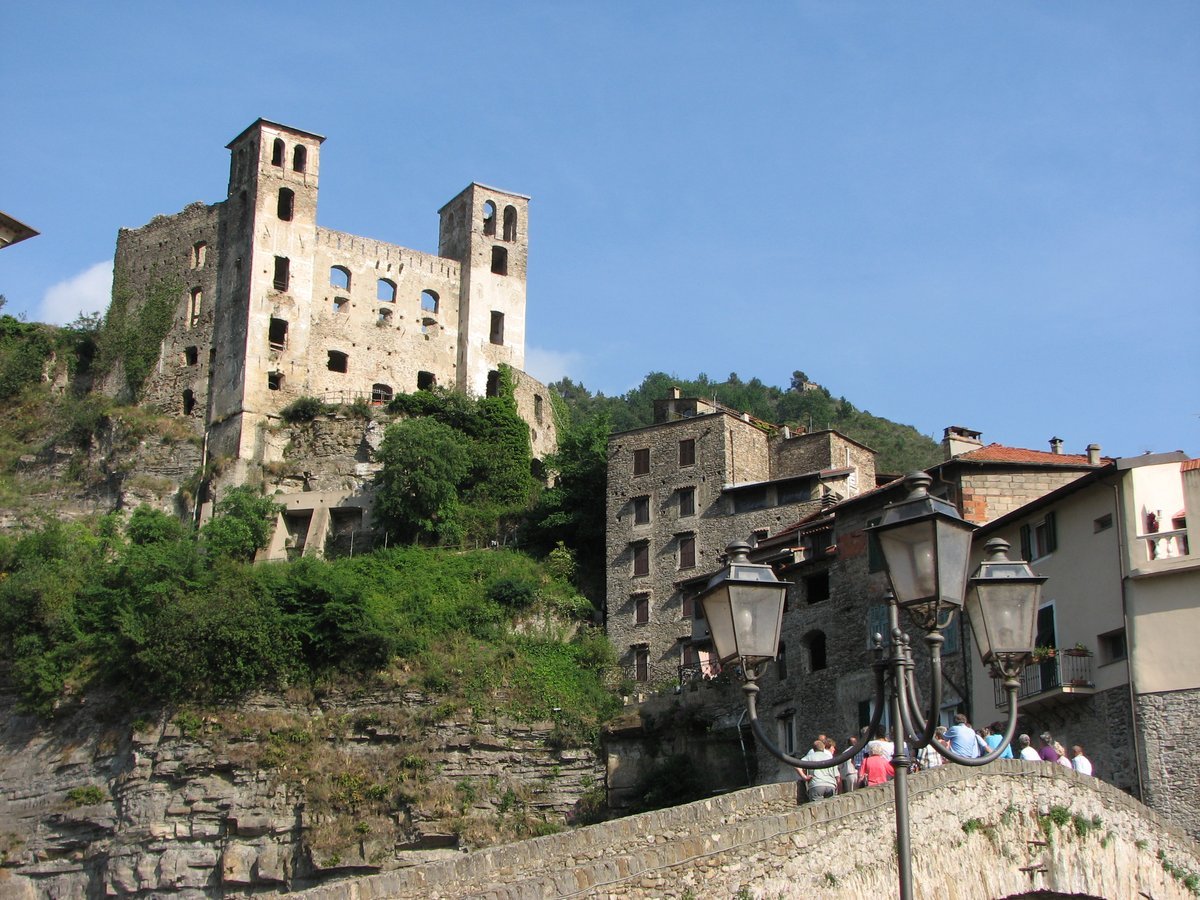
Dolceacqua Castle, also known as the Doria Castle, dominates the medieval village with its imposing structure. Climbing to the top offers a spectacular view of the Nervia valley and the historic center. Admission is free and allows you to explore the ancient walls, towers, and chapel. Perfect for a day trip, the castle is reached by a short climb from the village.
Panoramic view of the valley and the village of Dolceacqua
Free entry and open all year
Path through the ruins with information panels
Linked to the Doria, an ancient Genoese family
Copertina itinerario Dolceacqua Castle: The Doria Fortress Amid History and Scenic Views
A Journey Through Time Within the Walls of the Doria Castle in Dolceacqua, with Breathtaking Views of the Valley and Historical Curiosities

Good to know


Introduction

As soon as you set foot in Dolceacqua, your gaze goes up: Castello dei Doria dominates the village from a hill of olive trees. Climbing up is not a chore, it’s a ritual. Each step brings you closer to a silence broken only by the wind among the stones. At the top, the view takes your breath away: the rooftops of the old village climb up to meet you and the Nervia valley disappears among hills and vineyards. It’s not just a castle, it’s a viewpoint on the soul of the Riviera di Ponente.

Historical Notes

Built by the Counts of Ventimiglia in the 12th century, it passed to the Doria family in 1270. They transformed it into a sophisticated military fortress with towers and moats. In 1564, it withstood a siege by Barbary pirates. Abandoned in the 19th century, it was restored by the municipality and now hosts events and a museum. Key moments:

  • 12th century: original construction
  • 1270: transfer to the Doria family
  • 16th century: defensive upgrades
  • 1884: painted by Claude Monet
  • 20th century: restoration and public opening

A balcony over the valley

The castle terrace is the perfect spot for photographers or just for taking in the view. From up there, your gaze sweeps across the entire village and the mountain skyline. I was there at sunset: the stone houses turn orange, and the silence is broken only by the church bells. Bring binoculars to observe the valley’s details—every corner tells a story of rural life, of olive trees and wine.

Monet and the Light of Dolceacqua

In 1884 Claude Monet stayed here and painted three canvases of the castle. One visit was enough to fall in love with the light: the same light that still filters through the alleys and settles on the walls. If you look closely, you can recognize the compositions of his paintings, especially from the Old Bridge. The castle has become a symbol of how art can be born from a simple but authentic place.

Why Visit

Three concrete reasons: a unique panorama stretching from the sea to the Ligurian Alps; living history with towers and courtyards to explore at a leisurely pace; connection with art, since Monet chose this vista. Plus, the ticket costs just a few euros and the visit isn’t long: perfect for an immersive cultural stop before or after a typical lunch.

When to Go

The best time? Late afternoon in spring or autumn. The light turns golden, the heat is not excessive, and the village is quieter. If you go in summer, try to go up before 5 PM: you’ll have the sun in your face but fewer crowds. In winter, with clear skies, the view reaches the sea. Avoid the midday hours if you don’t want to bake on the stones.

Nearby

A two steps from the castle there is the Ponte Vecchio of Dolceacqua, a 15th-century humpback bridge that Monet made famous. It’s worth a walk through the caruggi of the village, among artisan shops and the scent of focaccia. If you have time, reach Apricale, another perched village a few kilometers away, with a frescoed castle and a square that feels like a medieval living room.

Itineraries nearby


💡 Did You Know…?

Legend has it that the castle is connected to the village by a secret underground passage, used by the Doria to flee in case of siege. It is also said that Count Filippo Doria loved to watch the sunset from the highest tower, and every evening he would have a bonfire lit to signal his position to his men.