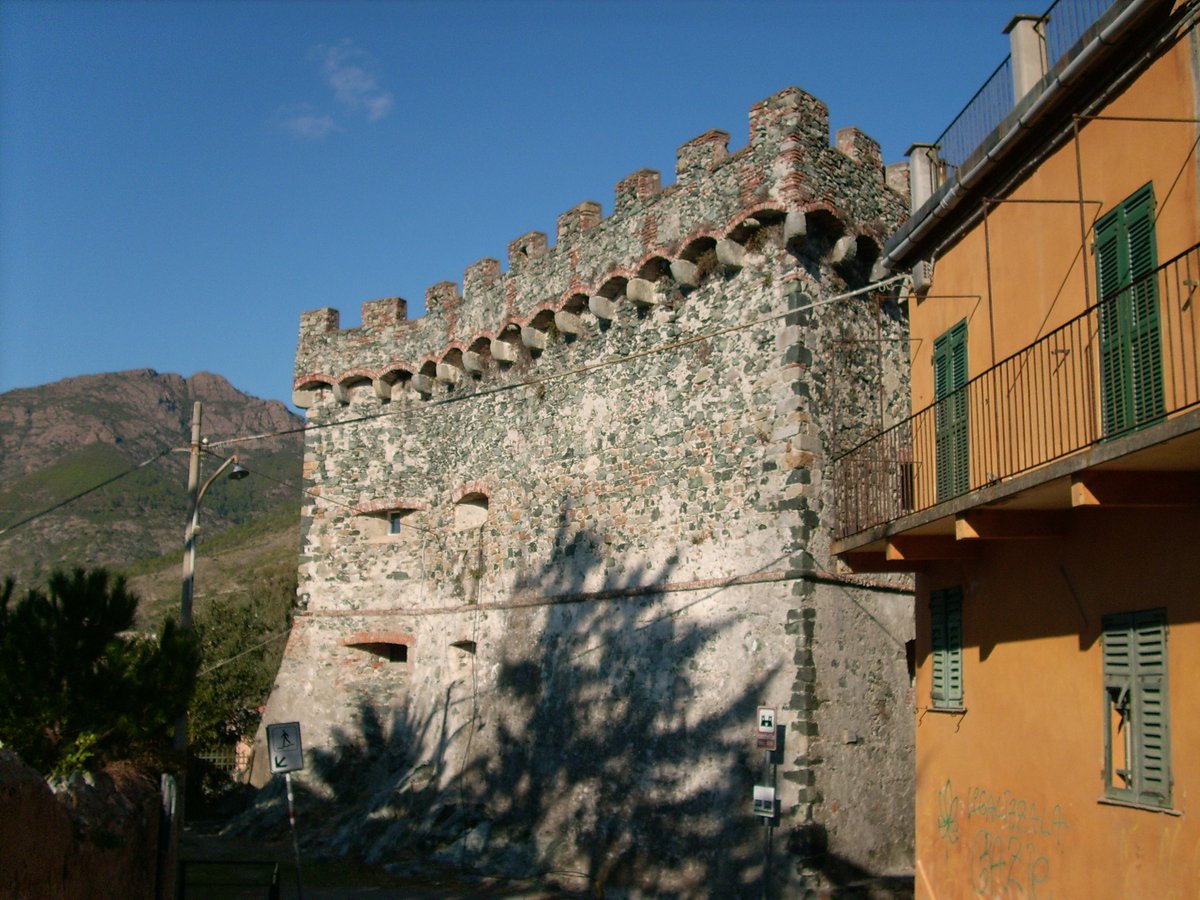
The Castle of Levanto dominates the Ligurian village with its imposing bulk. Built in the 12th century by the Malaspina family and rebuilt by the Genoese in the 1500s, it is now privately owned and can only be visited from the outside. Here’s why it’s worth a stop:
– Admire the quadrangular structure with a round tower and mixed battlements
– Spot the slate bas-reliefs depicting the Annunciation and Saint George
– Immerse yourself in legends of underground passages that connected the castle to the sea
– Enjoy a panoramic view of the village and the coast
Introduction
Perched on a hill in the heart of Levanto, Levanto Castle (or Castello di San Giorgio) is a gem from the Genoese era that overlooks the town and the sea. Stepping into its outer courtyard – the only part open to visitors – is like taking a step back in time. The crenellated walls, the round tower, and the suspended atmosphere make it a must-see for history lovers and breathtaking views. And they say secret passages lie hidden beneath your feet…
Introduction
Perched on a hill in the heart of Levanto, Levanto Castle (or Castello di San Giorgio) is a gem from the Genoese era that overlooks the town and the sea. Stepping into its outer courtyard – the only part open to visitors – is like taking a step back in time. The crenellated walls, the round tower, and the suspended atmosphere make it a must-see for history lovers and breathtaking views. And they say secret passages lie hidden beneath your feet…
Historical Background
As early as
1165, there is mention of a fortification, probably by the
Malaspina family. The current structure was rebuilt by the Republic of Genoa in the
16th century. In
1637 it became the seat of the Captain of Levanto and until
1797 it was used as a prison. Alienated from state property in the 19th century, it is now privately owned. Here is the timeline:
- 1165 – first documented mention
- 13th century – referred to as “Castle of Monale”
- 16th century – Genoese reconstruction
- 1637 – seat of the Captaincy
- 1797 – prison closure
- 19th-20th centuries – restoration and transfer to private ownership
Historical Background
As early as
1165, there is mention of a fortification, probably by the
Malaspina family. The current structure was rebuilt by the Republic of Genoa in the
16th century. In
1637 it became the seat of the Captain of Levanto and until
1797 it was used as a prison. Alienated from state property in the 19th century, it is now privately owned. Here is the timeline:
- 1165 – first documented mention
- 13th century – referred to as “Castle of Monale”
- 16th century – Genoese reconstruction
- 1637 – seat of the Captaincy
- 1797 – prison closure
- 19th-20th centuries – restoration and transfer to private ownership
Architecture and Details
The castle has a quadrilateral layout with a two-story round tower. The walkway is supported by brick arches and sandstone corbels, with Ghibelline merlons on the tower and Guelph on the curtain walls. The gun ports on two levels reveal its 16th-century defensive use. Inside, two precious slate bas-reliefs are preserved: the Annunciation (15th century) and a St. George and the Dragon (16th century), testimonies of the Genoese school.
Architecture and Details
The castle has a quadrilateral layout with a two-story round tower. The walkway is supported by brick arches and sandstone corbels, with Ghibelline merlons on the tower and Guelph on the curtain walls. The gun ports on two levels reveal its 16th-century defensive use. Inside, two precious slate bas-reliefs are preserved: the Annunciation (15th century) and a St. George and the Dragon (16th century), testimonies of the Genoese school.
Legends and Secret Passages
Folklore tells of underground tunnels leading from the castle straight to the beach and the Church of the Santissima Annunziata, possibly dug by prisoners to escape. Although not accessible today, the idea of these hidden passages adds an air of mystery to the visit. Walking along the walls, it’s easy to imagine stories of escapes and ancient plots…
Legends and Secret Passages
Folklore tells of underground tunnels leading from the castle straight to the beach and the Church of the Santissima Annunziata, possibly dug by prisoners to escape. Although not accessible today, the idea of these hidden passages adds an air of mystery to the visit. Walking along the walls, it’s easy to imagine stories of escapes and ancient plots…
Why Visit
It’s not a castle to visit inside (it’s private), but three things make it special: the view – from the hill you can embrace the entire Gulf of Levanto and the surrounding hills; the architecture – a rare example of a blend of Guelph and Ghibelline styles; the legends – the secret passages spark the imagination. It’s ideal for a 15-20 minute stop during a walk through the historic center.
Why Visit
It’s not a castle to visit inside (it’s private), but three things make it special: the view – from the hill you can embrace the entire Gulf of Levanto and the surrounding hills; the architecture – a rare example of a blend of Guelph and Ghibelline styles; the legends – the secret passages spark the imagination. It’s ideal for a 15-20 minute stop during a walk through the historic center.
When to Go
The sunset is the magic moment: the golden light sets the battlements aglow and the sea becomes a palette of colors. Spring and fall offer mild temperatures and fewer crowds. Avoid the midday hours in summer, when the sun beats down hard on the square. An evening visit, when the walls are lit up, is romantic and evocative.
When to Go
The sunset is the magic moment: the golden light sets the battlements aglow and the sea becomes a palette of colors. Spring and fall offer mild temperatures and fewer crowds. Avoid the midday hours in summer, when the sun beats down hard on the square. An evening visit, when the walls are lit up, is romantic and evocative.
Nearby
Two perfect stops: the historic center of Levanto, with the Church of Sant’Andrea and the colorful alleys, and the Levanto beach (reachable on foot). If you love hiking, the Monterosso Trail starts here and takes you into the Cinque Terre, offering spectacular views of the coast. Or, for a more relaxed option, the seafront promenade with its bars and restaurants.
Nearby
Two perfect stops: the historic center of Levanto, with the Church of Sant’Andrea and the colorful alleys, and the Levanto beach (reachable on foot). If you love hiking, the Monterosso Trail starts here and takes you into the Cinque Terre, offering spectacular views of the coast. Or, for a more relaxed option, the seafront promenade with its bars and restaurants.