Introduction
If you pass through Nola, don’t miss the Brick Amphitheater. It is one of the oldest in Campania, dating back to the 1st century BC, and visiting it is a leap into the past. Of the enormous elliptical structure (138×108 m), only about a quarter is visible today, but it’s enough to imagine the 20,000 spectators who watched games and hunts here. Admission is free, but reservation required: a rare opportunity. Entering, you walk through the ancient corridors and can still see traces of painted plaster. A place that speaks for itself, between history and legends.
Introduction
If you pass through Nola, don’t miss the Brick Amphitheater. It is one of the oldest in Campania, dating back to the 1st century BC, and visiting it is a leap into the past. Of the enormous elliptical structure (138×108 m), only about a quarter is visible today, but it’s enough to imagine the 20,000 spectators who watched games and hunts here. Admission is free, but reservation required: a rare opportunity. Entering, you walk through the ancient corridors and can still see traces of painted plaster. A place that speaks for itself, between history and legends.
Historical Notes
Built after 80 BC, when Nola became a Roman colony under Sulla, the amphitheater was built against the late Republican walls. It underwent restorations in the 1st century and between the 2nd and 3rd centuries AD. Abandoned even before the eruption of Pollena (5th-6th century), it was stripped of its seating and marble. Since the 16th century it has been called ‘Laterizio’. Excavations between 1985 and 1997 brought to light three corridors and part of the outer circuit. Today new campaigns aim to recover the entire area.
- 1st century BC: construction
- 95 AD: miracle of Saint Felix
- 1st century AD: first restoration
- 2nd-3rd century AD: second restoration
- 5th-6th century: abandonment
- 1985-1997: archaeological excavations
- 2020: new recovery interventions
Historical Notes
Built after 80 BC, when Nola became a Roman colony under Sulla, the amphitheater was built against the late Republican walls. It underwent restorations in the 1st century and between the 2nd and 3rd centuries AD. Abandoned even before the eruption of Pollena (5th-6th century), it was stripped of its seating and marble. Since the 16th century it has been called ‘Laterizio’. Excavations between 1985 and 1997 brought to light three corridors and part of the outer circuit. Today new campaigns aim to recover the entire area.
- 1st century BC: construction
- 95 AD: miracle of Saint Felix
- 1st century AD: first restoration
- 2nd-3rd century AD: second restoration
- 5th-6th century: abandonment
- 1985-1997: archaeological excavations
- 2020: new recovery interventions
Architecture and Details
The amphitheater is made of tuff, with steps and a parapet clad in white marble. The name ‘Laterizio’ comes from the brick pillars used for the entrances, as noted by the humanist Ambrogio Leone in 1514. Walking through the corridors, one can notice the different masonry styles: the early phases with tuff blocks, then additions in opus reticulatum and vittatum. On the external wall, traces of decorations in the First Pompeian Style are visible, with ochre orthostats and turquoise bands. In 1997, six limestone pillars with reliefs of weapons and a scene of Amazonomachy were found, now at the Archaeological Museum of Nola. The arena parapet is 2.60 m high, a detail that conveys the power of the building.
Architecture and Details
The amphitheater is made of tuff, with steps and a parapet clad in white marble. The name ‘Laterizio’ comes from the brick pillars used for the entrances, as noted by the humanist Ambrogio Leone in 1514. Walking through the corridors, one can notice the different masonry styles: the early phases with tuff blocks, then additions in opus reticulatum and vittatum. On the external wall, traces of decorations in the First Pompeian Style are visible, with ochre orthostats and turquoise bands. In 1997, six limestone pillars with reliefs of weapons and a scene of Amazonomachy were found, now at the Archaeological Museum of Nola. The arena parapet is 2.60 m high, a detail that conveys the power of the building.
The Legend of Saint Felix
In 95 AD, Bishop Felix of Nola was condemned to damnatio ad bestias right in this amphitheater. According to tradition, the beasts refused to tear him apart and he emerged unharmed. Today, walking through the corridors, it’s easy to imagine the scene: the crowded arena, the beasts advancing… and then nothing. An episode that adds charm to a place already steeped in history. Nearby, just outside, a slab with an inscription commemorating the saint was discovered. A mix of archaeology and faith that makes the visit even more intense.
The Legend of Saint Felix
In 95 AD, Bishop Felix of Nola was condemned to damnatio ad bestias right in this amphitheater. According to tradition, the beasts refused to tear him apart and he emerged unharmed. Today, walking through the corridors, it’s easy to imagine the scene: the crowded arena, the beasts advancing… and then nothing. An episode that adds charm to a place already steeped in history. Nearby, just outside, a slab with an inscription commemorating the saint was discovered. A mix of archaeology and faith that makes the visit even more intense.
Why Visit It
Three good reasons. First: it’s free. Yes, entry is free, but by reservation only, so plan ahead. Second: it’s a piece of authentic Roman history, little-known and off the beaten tourist path. While everyone rushes to Pompeii, here you’ll have it almost all to yourself. Third: the visit is short but intense – you can see everything in an hour, and you’ll leave wanting to know more. Plus, the site is wheelchair accessible, so no one is left out. A chance to discover Nola from a different perspective.
Why Visit It
Three good reasons. First: it’s free. Yes, entry is free, but by reservation only, so plan ahead. Second: it’s a piece of authentic Roman history, little-known and off the beaten tourist path. While everyone rushes to Pompeii, here you’ll have it almost all to yourself. Third: the visit is short but intense – you can see everything in an hour, and you’ll leave wanting to know more. Plus, the site is wheelchair accessible, so no one is left out. A chance to discover Nola from a different perspective.
When to Go
The best time? Early morning, when the low light caresses the ancient bricks and plaster, or in autumn, with mild weather and less humidity. Avoid the full summer sun, as there is little shade and you will bake like in a Roman oven. Spring is perfect: everything is in bloom, and the air is fresh. In any case, check availability by booking, because the site is not always open. If you catch an extraordinary opening, such as during the FAI Days, even better.
When to Go
The best time? Early morning, when the low light caresses the ancient bricks and plaster, or in autumn, with mild weather and less humidity. Avoid the full summer sun, as there is little shade and you will bake like in a Roman oven. Spring is perfect: everything is in bloom, and the air is fresh. In any case, check availability by booking, because the site is not always open. If you catch an extraordinary opening, such as during the FAI Days, even better.
Nearby
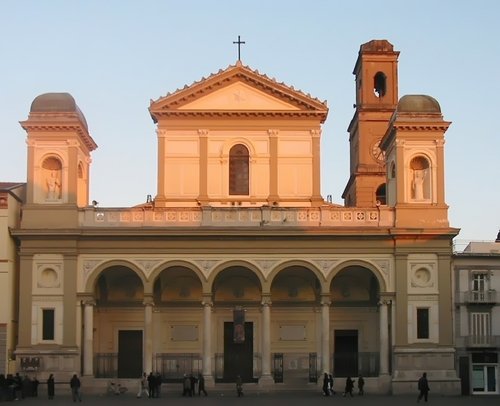
Just a stone’s throw away, the historic center of Nola awaits you with its Cathedral, Duomo, and squares. If you love archaeological finds, stop by the Nola Archaeological Museum, where the carved pillars of the amphitheater and other Roman artifacts are preserved. For a delicious break, taste Nola’s hazelnut or local wine. Just outside the city, the Ancient Wall is worth a visit—the stretch of republican walls that once bordered the amphitheater. Everything is within walking distance, on a route that blends archaeology and daily life.
Nearby
Just a stone’s throw away, the historic center of Nola awaits you with its Cathedral, Duomo, and squares. If you love archaeological finds, stop by the Nola Archaeological Museum, where the carved pillars of the amphitheater and other Roman artifacts are preserved. For a delicious break, taste Nola’s hazelnut or local wine. Just outside the city, the Ancient Wall is worth a visit—the stretch of republican walls that once bordered the amphitheater. Everything is within walking distance, on a route that blends archaeology and daily life.