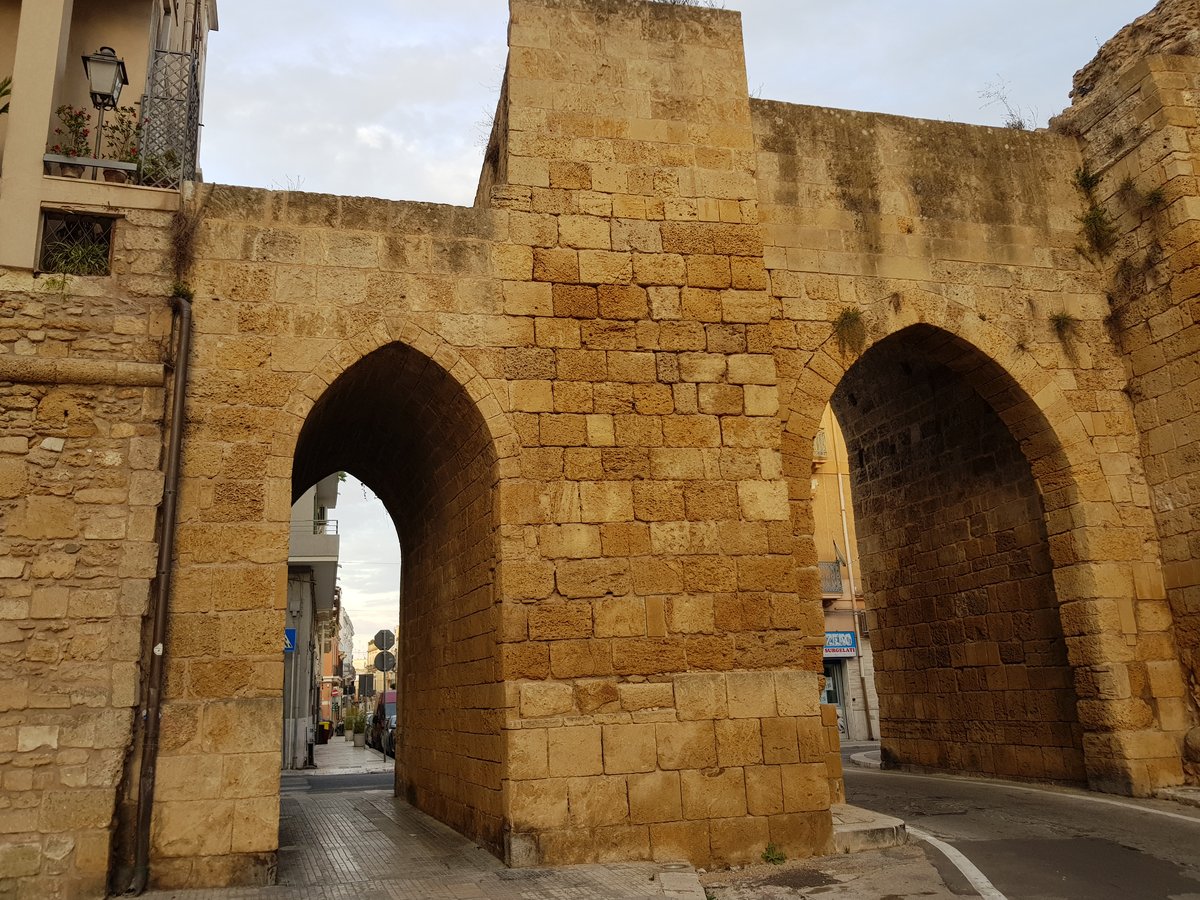
Porta Mesagne is one of the best-preserved medieval gates in Brindisi, part of the 15th-century Aragonese defensive system. Situated in the heart of the historic center, just steps from the Cathedral and the Provincial Archaeological Museum, this gate made of local limestone marks the entrance to the old town and offers an authentic glimpse into Brindisi’s history.
• Perfectly preserved medieval architecture with a pointed arch and traces of the ancient walls
• Strategic location in the historic center, close to major monuments
• Free access and always open, perfect for a brief stop during your city visit
• Ideal starting point for exploring Brindisi’s medieval quarter
Introduction
Have you ever walked through a city and felt catapulted back in time? In Brindisi, Porta Mesagne does exactly that. It’s not just a stone arch in the Aragonese walls; it’s a true gateway that introduces you to the ancient heart of the city. The first time I saw it, I was struck by its solidity, as if it were a silent guardian watching the comings and goings for centuries. It’s located right at the beginning of Via Carmine, one of the most characteristic streets in the center, and walking under it is like starting a journey. Don’t expect a lavish monument, but rather a piece of authentic, somewhat rough history that prepares you for the unique atmosphere of the medieval village that opens up just beyond.
Historical Overview
Porta Mesagne is one of the few medieval gates that survived the city’s transformations. Its construction dates back to the Aragonese period, between the 15th and 16th centuries, when Brindisi was equipped with new defensive walls to protect against sea attacks. The name ‘Mesagne’ likely derives from the homonymous city toward which this gate was oriented. It hasn’t witnessed epic battles, but has been a silent observer of daily life: merchants, pilgrims, soldiers, and ordinary citizens have passed through it for centuries. Interestingly, despite damage over time,
it still retains its original structure made of local limestone, with the pointed arch typical of military architecture from that period. A curious fact? Some sources also call it ‘Porta di Lecce’, creating some confusion with other city gates.
- 15th-16th century: Built during Aragonese rule.
- Subsequent centuries: Served as the main southeastern entrance to the walled city.
- Today: A monument integrated into the urban fabric, a must-pass point for exploring the historic center.
The Atmosphere of the Passage
What I love about Porta Mesagne isn’t just seeing it, but passing through it. The gateway is narrow, almost intimate, and when you walk under it, you have a clear sense of leaving modern Brindisi behind and entering another dimension. Immediately after the gate, the street narrows, the buildings draw closer, and the lighting changes. During the day, sunlight filters in a particular way, creating plays of light and shadow on the weathered stones. In the evening, with the soft lights illuminating the street, the effect is even more evocative. It’s not a place to linger for long; it’s more of a transit experience, but that’s precisely what makes it so meaningful. I recommend looking up when you’re under the arch: you’ll notice the marks of time, the imperfections in the stone, which tell more than any explanatory sign.
The Living Urban Context
Unlike many isolated monuments, Porta Mesagne is perfectly integrated into everyday life. You won’t find it in a deserted square, but at the start of a lively street. Just outside, there’s often a bustle of cars and people, but once you cross the threshold, the pace changes. It becomes the starting point for getting lost among the alleys of the historic center, where artisan workshops, small local businesses, and houses with flower-filled balconies line the streets. Sometimes, as you pass by, you catch the scent of cooking wafting from windows or the sound of voices from televisions. This, in my opinion, is its true value: it’s not a museum relic, but a functional and lived-in element of the city. Just be mindful of the narrow sidewalks when cars are passing through, but that’s part of the place’s somewhat chaotic and genuine character.
Why Visit It
Visiting Porta Mesagne is worth it for at least three concrete reasons. First, it’s the authentic entrance to the historic center: starting your exploration from here gives you the right perspective, like a traveler from times past. Second, it’s an excellent orientation point: once you’ve spotted it, you always know where you are relative to the maze of alleys. Third, it offers a glimpse of unadorned medieval military architecture, perfect for those who appreciate history in its simplest essence. Additionally, since it’s always accessible, you can pass by at any time of day, perhaps multiple times, capturing different atmospheres. It’s not a stop that requires hours, but those few minutes of attention give you the sense of a place that still serves a function, despite the centuries.
When to Go
The best time? Definitely late afternoon, when the sun begins to set. The slanting evening light bathes the stone of the gate in warm, golden tones, and avoids the strong midday sun that can make the area muggy in summer. In winter, however, early morning hours are also fine, with a clearer light. Avoid days of heavy rain, not for the gate itself, but because the narrow sidewalks can become uncomfortable. A personal opinion of mine: it is particularly evocative on summer evenings, when the air is mild and the city lights begin to turn on, creating a magical contrast with the ancient stone. In spring and autumn, then, the weather is almost always perfect for a leisurely stroll.
In the Surroundings
Once past Porta Mesagne, the historic center of Brindisi unfolds with several surprises. Just a few steps away, turning onto Via Carmine, you’ll find yourself in Piazza Duomo, with its Romanesque Cathedral and the distinctive Portico of the Knights Templar—a corner of tranquility and history. Still nearby, I recommend a stop at the ‘F. Ribezzo’ Archaeological Museum, which houses artifacts from prehistory to the Roman era, perfect for delving into the city’s roots. If you’re looking for a more everyday-life experience, wander through the alleys around Via Montenegro, where you’ll discover small taverns and craft shops. All these places are reachable on foot within minutes, with no need for transportation, making the gate the ideal starting point for a compact and rich walking itinerary.