Introduction
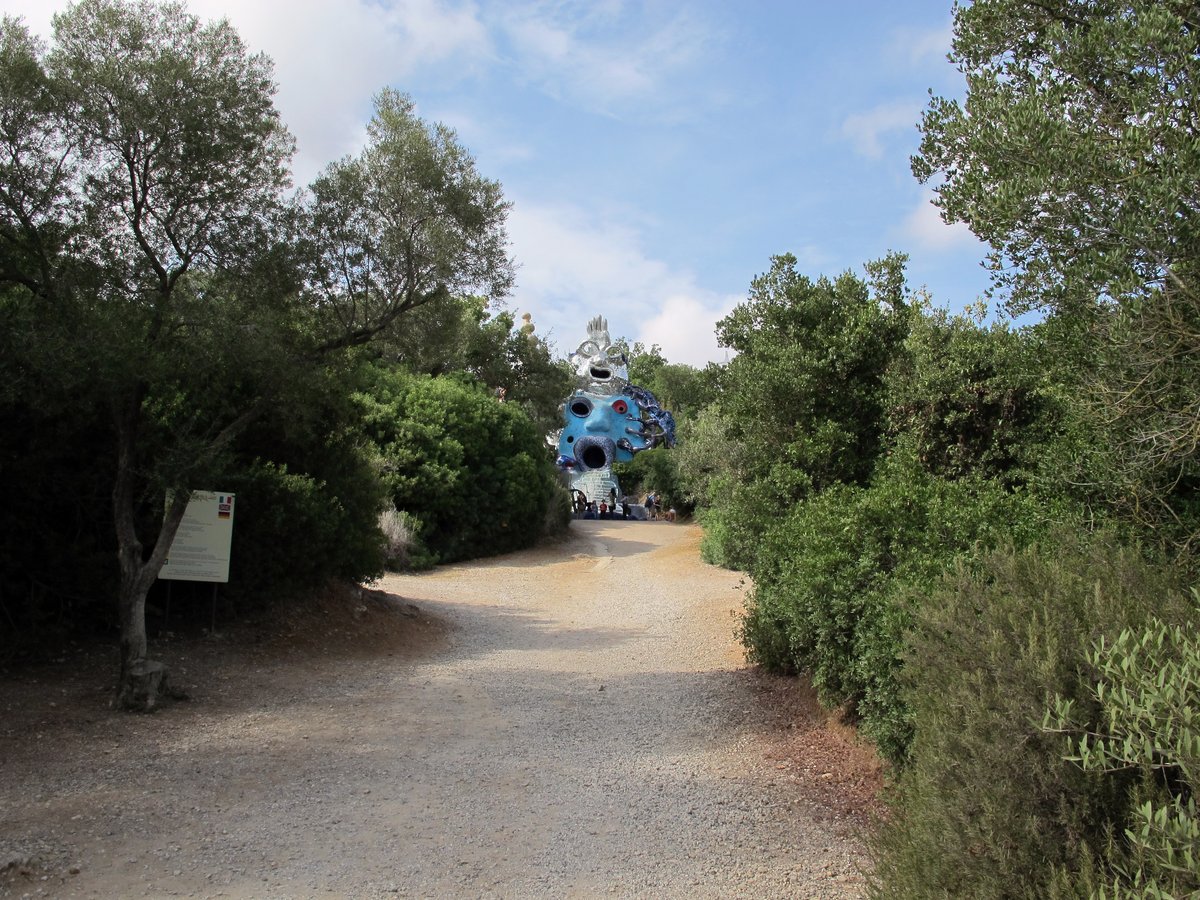
If you think you’ve seen everything in Tuscany, prepare to think again. The Tarot Garden in Capalbio is an explosion of colors and shapes that will leave you breathless. Here Niki de Saint Phalle brought to life a unique art park, where sculptures up to 15 meters high represent the major arcana of the tarot. Glass, mirrors, and ceramics create a luminous effect that changes with the sun. Walking among these works will feel like entering a psychedelic dream, but real. And all immersed in the Mediterranean scrub of the Maremma.
Introduction
If you think you’ve seen everything in Tuscany, prepare to think again. The Tarot Garden in Capalbio is an explosion of colors and shapes that will leave you breathless. Here Niki de Saint Phalle brought to life a unique art park, where sculptures up to 15 meters high represent the major arcana of the tarot. Glass, mirrors, and ceramics create a luminous effect that changes with the sun. Walking among these works will feel like entering a psychedelic dream, but real. And all immersed in the Mediterranean scrub of the Maremma.
Historical Background
Niki de Saint Phalle fell in love with Gaudí’s Park Güell and the Sacro Bosco of Bomarzo, and decided to create her own magical garden. Work began in 1979 on a property in Garavicchio, donated by Marella Agnelli. For 17 years, the artist worked with a team of artists and craftsmen, including her husband Jean Tinguely. The investment was enormous: about 10 billion lire, self-financed. The park opened to the public in 1998, still incomplete. After Niki’s death in 2002, no further sculptures were added. Here are the key moments:
Historical Background
Niki de Saint Phalle fell in love with Gaudí’s Park Güell and the Sacro Bosco of Bomarzo, and decided to create her own magical garden. Work began in 1979 on a property in Garavicchio, donated by Marella Agnelli. For 17 years, the artist worked with a team of artists and craftsmen, including her husband Jean Tinguely. The investment was enormous: about 10 billion lire, self-financed. The park opened to the public in 1998, still incomplete. After Niki’s death in 2002, no further sculptures were added. Here are the key moments:
The Monumental Sculptures
The 22 statues represent the Major Arcana, each with a profound meaning. The Magician, 15 meters tall, is covered in mirrors and symbolizes creation. The High Priestess is a fountain from which water flows to feed the Wheel of Fortune. The Empress-Sphinx is one of the most impressive: it is habitable, housing the artist during work, with a bedroom in the breasts and a dragon-shaped bathroom. Death is a smiling skeleton on horseback, while the Devil is a woman with horns. Each sculpture is a riot of colored glass, ceramics, and mosaics, with symbolic colors: red for strength, gold for spirituality.
The Monumental Sculptures
The 22 statues represent the Major Arcana, each with a profound meaning. The Magician, 15 meters tall, is covered in mirrors and symbolizes creation. The High Priestess is a fountain from which water flows to feed the Wheel of Fortune. The Empress-Sphinx is one of the most impressive: it is habitable, housing the artist during work, with a bedroom in the breasts and a dragon-shaped bathroom. Death is a smiling skeleton on horseback, while the Devil is a woman with horns. Each sculpture is a riot of colored glass, ceramics, and mosaics, with symbolic colors: red for strength, gold for spirituality.
An Initiatory Path
The garden is not just an open-air museum: it is a symbolic journey. The paths rise and fall among the scrubland, and on the cement are carved phrases, thoughts, and messages of hope by Niki. The central square, dominated by the figures of the Magician and the High Priestess, serves as a natural amphitheater. The route continues among the Tree of Life, the Tower of Babel covered in mirrors, and Temperance, an igloo-shaped chapel with mirrored interiors. The entrance, designed by Mario Botta, is a tuff wall with a large circle that separates reality from dream. An experience that engages all the senses.
An Initiatory Path
The garden is not just an open-air museum: it is a symbolic journey. The paths rise and fall among the scrubland, and on the cement are carved phrases, thoughts, and messages of hope by Niki. The central square, dominated by the figures of the Magician and the High Priestess, serves as a natural amphitheater. The route continues among the Tree of Life, the Tower of Babel covered in mirrors, and Temperance, an igloo-shaped chapel with mirrored interiors. The entrance, designed by Mario Botta, is a tuff wall with a large circle that separates reality from dream. An experience that engages all the senses.
Why Visit
1) Absolute uniqueness: there’s nothing like it in Italy. It’s a blend of pop art, organic architecture, and tarot spirituality. 2) Dreamlike photos: the afternoon light creates incredible reflections on mirrors and ceramics. Bring your camera, but be prepared to be amazed. 3) Escape the crowds: in Capalbio, in the Maremma region, tourism is quieter compared to other parts of Tuscany. Ideal for a day trip combining art and nature.
Why Visit
1) Absolute uniqueness: there’s nothing like it in Italy. It’s a blend of pop art, organic architecture, and tarot spirituality. 2) Dreamlike photos: the afternoon light creates incredible reflections on mirrors and ceramics. Bring your camera, but be prepared to be amazed. 3) Escape the crowds: in Capalbio, in the Maremma region, tourism is quieter compared to other parts of Tuscany. Ideal for a day trip combining art and nature.
When to Go
The Tarot Garden is open from April 1 to October 15, daily from 2:30 PM to 7:30 PM. But the best time? Late afternoon, when the low sun brightens the colors and the mirrors sparkle. The light is warmer and more dramatic. To avoid crowds, choose a weekday in late spring or early autumn. In the winter months, entrance is free on the first Saturday of each month (9:00 AM – 1:00 PM), but many sculptures are under maintenance. To fully enjoy the experience, go in spring or early summer.
When to Go
The Tarot Garden is open from April 1 to October 15, daily from 2:30 PM to 7:30 PM. But the best time? Late afternoon, when the low sun brightens the colors and the mirrors sparkle. The light is warmer and more dramatic. To avoid crowds, choose a weekday in late spring or early autumn. In the winter months, entrance is free on the first Saturday of each month (9:00 AM – 1:00 PM), but many sculptures are under maintenance. To fully enjoy the experience, go in spring or early summer.
Nearby
A few kilometers away, the village of Capalbio is worth a visit: medieval walls, historic churches, and panoramic views of the Maremma. If you have time, head to the WWF Oasis of Lake Burano, a nature reserve where you can observe migratory birds and take a peaceful walk. Or, for a dive into history, visit the Vulci Archaeological Park with its Etruscan ruins and the Devil’s Bridge. Another idea: the beautiful Feniglia Beach, a strip of sand between the sea and lagoon, perfect for relaxing after all that art.
Nearby
A few kilometers away, the village of Capalbio is worth a visit: medieval walls, historic churches, and panoramic views of the Maremma. If you have time, head to the WWF Oasis of Lake Burano, a nature reserve where you can observe migratory birds and take a peaceful walk. Or, for a dive into history, visit the Vulci Archaeological Park with its Etruscan ruins and the Devil’s Bridge. Another idea: the beautiful Feniglia Beach, a strip of sand between the sea and lagoon, perfect for relaxing after all that art.