
🧭 What to Expect
- Ideal for a cultural weekend blending art, history and authentic atmosphere.
- Highlights: Arena Sferisterio for opera, Helvia Recina Roman Theater for archaeology and pedestrian historic center.
- Includes interactive map with 9 marked locations, from Palazzo dei Diamanti to the Monument to the Fallen.
- A human-scale experience, away from the crowds of major tourist centers.
Events nearby

The City of Macerata welcomes you with its discreet charm, where every corner tells centuries of history. The Sferisterio Arena is its undisputed symbol, a unique neoclassical amphitheatre in Italy with its crescent shape that hosts prestigious opera seasons. Nearby, the ruins of the Helvia Recina Roman Theatre testify to the city's ancient origins. The historic centre develops around Piazza della Libertà, the beating heart with the Civic Tower and the Diamond Palace with its rusticated façade. Unmissable is the Palazzo Ricci Museum for its modern art collection and the Lauro Rossi Theatre, an eighteenth-century jewel. Macerata surprises with its harmony between past and present, ideal for a cultural weekend.
Overview
Itineraries nearby

Sferisterio Arena
- Go to the page: Arena Sferisterio Macerata: Open-air theatre with perfect acoustics and opera season
- Via Diomede Pantaleoni, Macerata (MC)
- https://www.sferisterio.it/
- Open in Google Maps
- View on Google Images
 The Sferisterio Arena in Macerata is one of those places that leaves you breathless the moment you see it. Built in 1829 from a design by Ireneo Aleandri, this majestic neoclassical building was originally created as a court for the game of pallone al bracciale, a popular sport of the era. Today it has become the premier stage for summer opera, with its perfect acoustics enveloping spectators in a magical atmosphere. The semicircular structure, 18 meters high and 90 meters long, with its 56 Doric columns, creates a unique scenic effect. In summer, when the sun sets, the thousands of people crowding the cavea watch operas like Tosca or Rigoletto in an unparalleled setting. But it's not just opera: concerts, ballets, and cultural events animate the arena all year round. Climbing to the upper terrace offers a breathtaking view of the city and the Sibillini Mountains, especially at sunset. Restoration work has preserved the original elegance, keeping intact the charm of a place that unites history and spectacle. For those visiting Macerata, attending an evening at the Sferisterio is an experience that stays in the heart, a plunge into the pure emotion of live music.
Sferisterio Arena
Helvia Recina Roman Theatre
- Go to the page: Roman Theater of Helvia Recina: 2000-seat cavea in the Potenza Valley
- Borgo Publio Ennio Pertinace, Macerata (MC)
- http://musei.beniculturali.it/musei?mid=414&nome=area-archeologica-di-helvia-recina
- Open in Google Maps
- View on Google Images
- sar-mar@beniculturali.it
- +39 0733 271709
 If you think Macerata is only Renaissance, prepare for a surprise: just a few kilometres from the centre, along the via Potentia, lie the remains of the Helvia Recina Roman Theatre, evidence of a settlement that flourished between the 1st century BC and the 4th century AD. This archaeological site, often overlooked by the more beaten tracks, offers an authentic and intimate atmosphere. The structures visible today – mainly the cavea and part of the stage – give a sense of the theatre's original size, capable of hosting up to 2,000 spectators. Walking among the travertine steps, still well-preserved, means retracing the footsteps of ancient audiences who attended dramatic and musical performances. The area, set in a suggestive landscape among gentle hills, has been the subject of excavation campaigns that have also uncovered artefacts now displayed at the National Archaeological Museum of the Marche. The unique feature? The theatre did not stand in isolation but was part of a larger urban complex, with baths and a forum, traces of which remain in the surroundings. Visiting it is a timeless experience, ideal for those seeking uncrowded places steeped in history. Access is free, and its convenient location makes it a perfect stop even for a brief visit.
Helvia Recina Roman Theatre
Ricci Palace Museum
- Via Domenico Ricci 1, Macerata (MC)
- https://www.palazzoricci.it/
- Open in Google Maps
- View on Google Images
- info@fondazionemacerata.it
- +39 0733 261487;+39 0733 261484
 If you're looking for an authentic cultural experience in Macerata, the Ricci Palace Museum is an unmissable stop. This splendid Renaissance palace, located right in the historic center, houses one of the most significant collections of modern Italian art in the Marche region. What makes this museum special is the perfect fusion between sixteenth-century architecture and works from twentieth-century Italy. The permanent collection, donated by the Ricci family, includes masterpieces by artists such as Carlo Carrà, Giorgio Morandi, and Renato Guttuso, offering a journey that spans from Futurism to Art Informel. The palace's frescoed halls, with their coffered ceilings and original floors, create a unique atmosphere where contemporary art converses with history. Don't miss the Coat of Arms Hall, with its perfectly preserved Renaissance pictorial cycle, and the rooms dedicated to the Scuola Romana. The museum regularly organizes temporary exhibitions that delve into specific artistic movements, making each visit different from the last. The layout is meticulously curated, with lighting that enhances both the artworks and the historic spaces. For art enthusiasts, it represents a unique opportunity to discover a piece of Marche history through the eyes of the great masters of twentieth-century Italian art.
Ricci Palace Museum
Lauro Rossi Theatre
- Piazza della Libertà 20, Macerata (MC)
- http://www.tuttiteatri-mc.net/?page_id=26
- Open in Google Maps
- View on Google Images
- l.rossi@tuttiteatri-mc.net
- +39 0733 233508
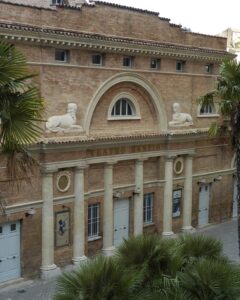
 The Lauro Rossi Theatre stands as one of Macerata's most significant cultural landmarks, an authentic architectural jewel that dominates Piazza della Libertà. Built between 1765 and 1774 to a design by Cosimo Morelli, this theatre represents one of the best-preserved examples of 18th-century theatrical architecture in the Marche region. The building takes its name from the celebrated Macerata-born composer Lauro Rossi, who directed the Milan Conservatory and was among the most influential musicians of 19th-century Italy. The understated, elegant brick facade conceals a richly decorated interior: the horseshoe-shaped auditorium, typical of Italian-style theatres, is adorned with golden stuccowork and a magnificent frescoed ceiling. The royal box, once reserved for authorities, remains one of the venue's most prized features. But what truly sets the Lauro Rossi apart is its perfect acoustics, engineered to enhance every musical note. Today, the theatre hosts a rich programme of drama, opera, and concerts, keeping alive the musical tradition that made Macerata famous. A visit here means immersing yourself in a bygone atmosphere, where every detail speaks of centuries of history and passion for the performing arts.
Lauro Rossi
Macerata Civic Tower
- Piazza della Libertà, Macerata (MC)
- Open in Google Maps
- View on Google Images
 The Macerata Civic Tower, located in Piazza della Libertà, is one of the city's most recognizable landmarks. Standing approximately 64 meters tall, this bell tower dates back to the 17th century and rises imposingly next to the City Hall. Climbing its 135 steps is an experience that offers unique emotions: from the summit, you can enjoy a 360-degree panoramic view of Macerata and the gentle Marche hills that surround it. The tower houses an 18th-century astronomical clock, still functioning, which marks the time with its chimes every hour. Inside, you can admire the historic bells, including the 'Bell of the Fallen', which commemorates significant events for the community. The structure, made of brick and travertine, is an example of Baroque architecture and represents a focal point for city life, especially during events like the Macerata Opera Festival at the Sferisterio, when the tower lights up creating a magical atmosphere. Visiting it means immersing yourself in local history and culture, with the opportunity to take unforgettable photos from above. Access is recommended at sunset, when the warm light enhances the colors of the landscape.
Civic Tower
Liberty Square
- Piazza della Libertà, Macerata (MC)
- Open in Google Maps
- View on Google Images
 Liberty Square is Macerata's elegant living room, the quintessential meeting point where history breathes alongside everyday life. Upon arriving here, the first thing that strikes you is the harmony of the surrounding buildings, with the City Hall dominating the scene with its neoclassical facade. But the element that truly captures attention is the Civic Tower, standing 64 meters tall and built in the 17th century, whose clock marks the city's rhythm. Climbing the tower (when possible) rewards you with a 360-degree view over Macerata and the Marche hills—a panorama worth the visit alone. The square isn't just a monument to photograph: it's alive, frequented by students from the University of Macerata, families strolling, and tourists stopping at the cafes under the arcades. Here, you breathe the authentic atmosphere of an Italian provincial town, where past and present coexist. You'll immediately notice the Loggia dei Mercanti, once the center of commercial exchanges and now an elegant space that completes the square's architecture. During holidays, Liberty Square comes alive with markets and events, while on summer evenings it becomes the gathering spot before a walk along Corso della Repubblica. It's the ideal place to begin exploring Macerata, to get your bearings, and to quickly understand this city's identity.
Liberty Square
Porta Montana
- Porta Montana, Macerata (MC)
- Open in Google Maps
- View on Google Images
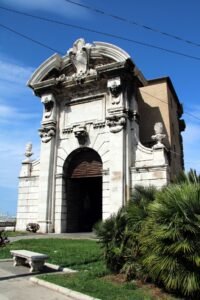
 When you arrive at Porta Montana, you immediately understand you're standing before one of the most authentic symbols of Macerata. This medieval gate, built in the 14th century, isn't just an entrance to the historic center, but a genuine journey back in time. Its massive brick structure, with the pointed arch typical of 14th-century military architecture, welcomes you just as it did centuries ago for travelers and pilgrims. Looking closely, you'll notice the marks of time on the stones and the architectural details that tell stories of sieges and daily life. Its strategic position along the city walls offers a unique perspective on the city: from here you can admire how Macerata unfolds between hills and history. Many visitors stop to photograph the contrast between the ancient gate and the modern city visible beyond. It's interesting to note how Porta Montana has been meticulously restored to preserve its original character intact, becoming today a reference point for those wanting to discover the less touristy but more authentic Macerata. In the evening, when the lights come on, the atmosphere becomes particularly suggestive, with the illumination enhancing the stone textures. It's not uncommon to encounter street artists or small cultural events organized right at its base, demonstrating how this monument continues to live in the present. For photography lovers, the play of light between morning and evening offers memorable shots. Visiting Porta Montana means touching the historical stratification of Macerata, where every stone has a story to tell.
Porta Montana
Palazzo dei Diamanti
- Corso Giacomo Matteotti, Macerata (MC)
- Open in Google Maps
- View on Google Images
 If you're passing through Macerata, you can't miss the Palazzo dei Diamanti, one of the most distinctive buildings in the historic center. Located in Piazza della Libertà, right opposite the Cathedral, this 16th-century palace will immediately strike you with its unique façade: thousands of diamond-shaped ashlars creating an extraordinary chiaroscuro effect, especially when the sun illuminates them at certain times of day. Built between 1522 and 1532 based on a design by Cassiano da Fabriano for the Buonaccorsi family, it represents a perfect example of Marche Renaissance architecture. Today it houses the Mozzi-Borgetti Municipal Library, one of the oldest in the Marche region, with a collection of over 400,000 volumes including manuscripts, incunabula, and rare works. Upon entering, you'll be fascinated by the atrium with its coffered ceiling and the monumental staircase leading to the upper floors. On the first floor you'll find the Sala Castiglioni, dedicated to the Macerata writer, while on the second floor the library preserves treasures like Codex 43 with miniatures by Giovanni da Fano. The palace can be visited free of charge during the library's opening hours, but I recommend always checking the schedule as it may vary. If you're passionate about art history, don't miss the details of the kneeling windows and the Istrian stone portal, which testify to the mastery of local craftsmen. It's a place where architecture dialogues with culture, perfect for a stop between visiting the Cathedral and a walk toward the Sferisterio.
Palazzo dei Diamanti
War Memorial
- Via dei Velini, Macerata (MC)
- Open in Google Maps
- View on Google Images
 The War Memorial of Macerata stands in Piazza della Libertà, right in front of the Town Hall, creating an architectural dialogue between memory and institutions. This memorial, built in the 1920s, is not just a work of art but an emotional landmark for the Macerata community. The structure presents itself as an imposing commemorative altar in white marble, topped by an allegorical figure representing the Winged Victory. What immediately strikes you is the sober elegance of the complex, where rational architecture blends with symbolic elements deeply connected to the territory. The inscriptions on the sides of the monument bear the names of Macerata's fallen in the world wars, creating a list that becomes poetry of remembrance. The central location is no coincidence: this place was historically the beating heart of the city, chosen specifically to keep collective memory alive. Observing the sculptural details up close, you notice references to classical tradition reinterpreted in a modern key, with laurel and oak leaves symbolizing glory and strength respectively. The monument has recently been restored, bringing back the original purity of the Carrara marble used in its construction. During official commemorations, it becomes the focal point of moving ceremonies, but in everyday life it is a place of reflective pause for those crossing the square. The people of Macerata consider it an integral part of their civic identity, a silent witness that has seen the city evolve throughout the twentieth century. Its placement allows you to appreciate the surrounding urban context as well, with the Civic Tower forming a backdrop and creating a perfect visual balance between ancient and modern.
War Memorial