
🧭 What to Expect
- Ideal for: outdoor adventurers and history lovers
- Highlights: Roman archaeological sites, mountain villages, spectacular caves
- Landscapes: from the Gran Sasso plateaus to the Sagittario Gorges
- Experiences: trekking, speleology, local food and wine
- Tip: visit in spring or autumn for mild weather
Events nearby
The province of L'Aquila is a concentration of history and nature. From the Roman ruins of Alba Fucens and Amiternum to medieval villages like Celano and Pescocostanzo, passing through the impressive Fucino drainage system with the Claudian Tunnels. Don't miss the Stiffe Caves, a karst masterpiece, and the majestic Spanish Fort dominating L'Aquila. For trekking enthusiasts, the Gran Sasso and Monti della Laga National Park offers spectacular trails. The province of L'Aquila offers authentic experiences, far from mass tourism, perfect for those seeking adventure and culture. Follow our practical guide to discover the most fascinating places.
Overview
- Basilica of Santa Maria di Collemaggio, symbol of L'Aquila
- Basilica of Santa Maria di Collemaggio, symbol of L'Aquila
- The Spanish Fortress: A Stone Giant Dominating L'Aquila
- Fountain of the 99 Spouts
- Alba Fucens: The Little Pompeii of Marsica
- Alba Fucens: The Little Pompeii of Marsica
- Claudius' Tunnels: The Roman Engineering That Tamed Lake Fucino
- Stiffe Caves: Waterfalls and Silence in the Heart of Abruzzo
- Amiternum: The Roman Heart of Abruzzo
- Corfinium Archaeological Area: Mosaics and Italic History
- Castello Piccolomini: Between History and Breathtaking Views
- Abruzzo National Museum (MuNDA): A Dive into Abruzzese Art
- Roman Amphitheater of Amiternum
- Hercules Curinus Sanctuary: History and Allure in Sulmona
- Lucus Angitiae: The Sacred Grove of the Marsi
- Norman Castle: History and Literature in Anversa degli Abruzzi
- Lace Museum in Pescocostanzo: Threads of History
Itineraries nearby

Basilica of Santa Maria di Collemaggio, symbol of L'Aquila
- Go to the page: Basilica of Santa Maria di Collemaggio: The First Holy Door and the Perdonanza
- Via San Josemaría Escrivà, L'Aquila (AQ)
- Open in Google Maps
- View on Google Images
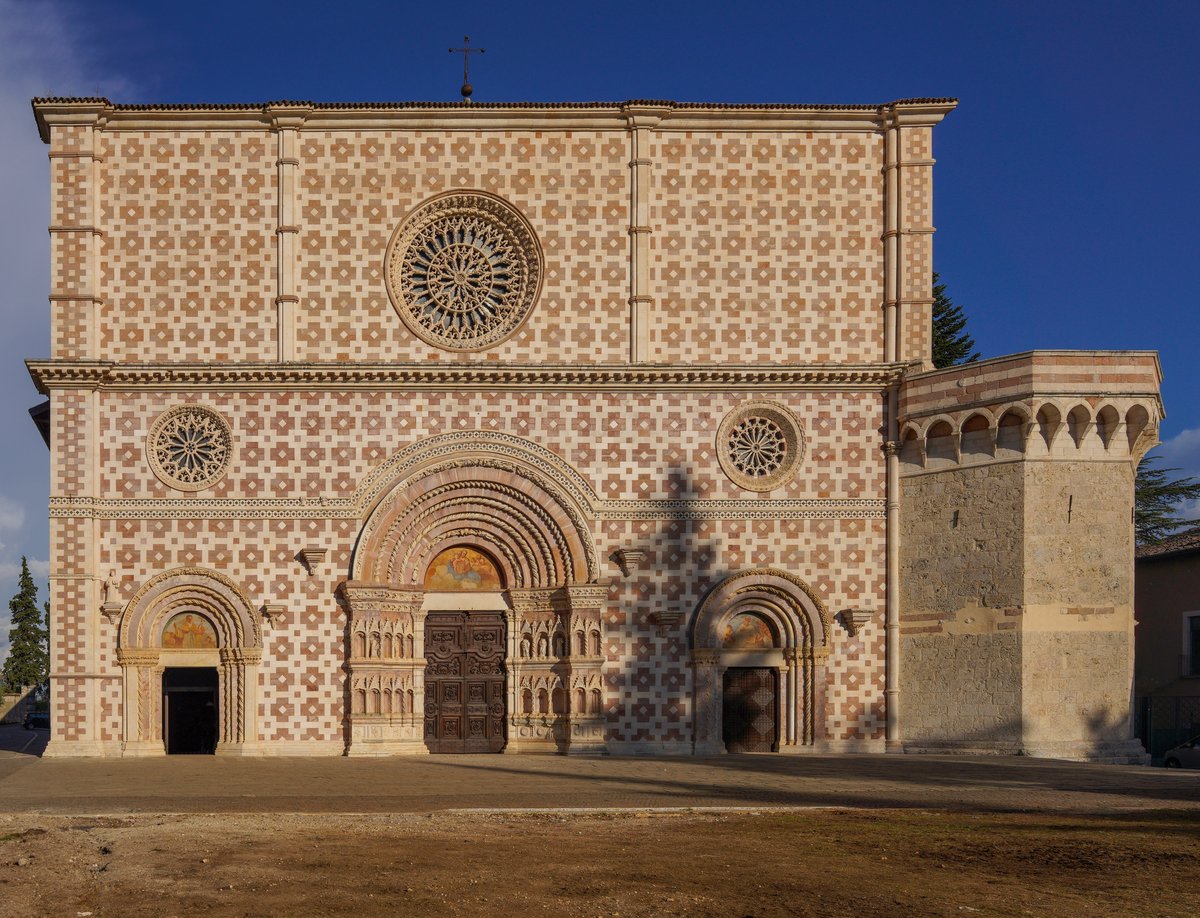 When you arrive at Collemaggio square, the white and pink façade surprises you. It is a masterpiece of geometry: the local stone blocks create a cross design that seems almost contemporary. The basilica is the symbol of L'Aquila, and you immediately understand why. Founded in 1288 by Pietro da Morrone – who was crowned Pope Celestine V here in 1294 – it is considered the highest expression of Abruzzese Romanesque-Gothic. The two-tone façade is divided into two orders: three portals below, three rose windows above. The central one, with 36 arms and 72 branches, is an intricate flower of light. On the left side you find the first Holy Door in history, commissioned by Celestine V with the Bull of Forgiveness in 1294. Every year, from August 28 to 29, it opens for the Celestinian Forgiveness – a jubilee anticipating the 1300 one, now a UNESCO heritage. You enter and the interior with three naves is dominated by octagonal pillars and pointed arches. The floor repeats the geometric pattern of the façade, with a mystical labyrinth. In the right apse there is the Mausoleum of Celestine V, a Renaissance work by Girolamo da Vicenza (1517), which holds his remains in a gilded urn. The basilica has suffered earthquakes, the last one in 2009 destroyed the transept and dome. But the restoration, completed in 2017 and awarded the Europa Nostra Award 2020, returned it to the city. Today it is open every day 9-21, accessible to all. The front lawn offers a view of the Gran Sasso at sunset. A place that unites faith, art, and resilience.
Basilica of Santa Maria di Collemaggio, symbol of L'Aquila
- Go to the page: Collemaggio Basilica in L'Aquila: Holy Door and Romanesque-Gothic Checkered Facade
- Via San Josemaría Escrivà, L'Aquila (AQ)
- Open in Google Maps
- View on Google Images
When you arrive at Collemaggio square, the white and pink façade surprises you. It is a masterpiece of geometry: the local stone blocks create a cross design that seems almost contemporary. The basilica is the symbol of L'Aquila, and you immediately understand why. Founded in 1288 by Pietro da Morrone – who was crowned Pope Celestine V here in 1294 – it is considered the highest expression of Abruzzese Romanesque-Gothic. The two-tone façade is divided into two orders: three portals below, three rose windows above. The central one, with 36 arms and 72 branches, is an intricate flower of light. On the left side you find the first Holy Door in history, commissioned by Celestine V with the Bull of Forgiveness in 1294. Every year, from August 28 to 29, it opens for the Celestinian Forgiveness – a jubilee anticipating the 1300 one, now a UNESCO heritage. You enter and the interior with three naves is dominated by octagonal pillars and pointed arches. The floor repeats the geometric pattern of the façade, with a mystical labyrinth. In the right apse there is the Mausoleum of Celestine V, a Renaissance work by Girolamo da Vicenza (1517), which holds his remains in a gilded urn. The basilica has suffered earthquakes, the last one in 2009 destroyed the transept and dome. But the restoration, completed in 2017 and awarded the Europa Nostra Award 2020, returned it to the city. Today it is open every day 9-21, accessible to all. The front lawn offers a view of the Gran Sasso at sunset. A place that unites faith, art, and resilience.The Spanish Fortress: A Stone Giant Dominating L'Aquila
- Via Raul Manselli, L'Aquila (AQ)
- Open in Google Maps
- View on Google Images
 Let’s be honest: seeing the Spanish Fortress, which locals simply call “the Castle,” makes you feel small. It’s imposing and massive, with walls that seem to defy time. Built starting in 1534 by order of Emperor Charles V, it was meant to keep a rebellious city in check – and not by chance it still bears the inscription “ad reprimendam audaciam Aquilanorum” (to repress the audacity of the Aquilani). An humiliation for the city, which paid for the fortress with heavy taxes and even sold the silver chest of Saint Bernardino. The layout is a perfect square, with four diamond-shaped bastions oriented to the cardinal points. The walls are up to 10 meters thick, and the surrounding moat is wide and deep, but never filled with water. You enter via a stone bridge (once partially a drawbridge) and immediately notice the portal with the Habsburg double-headed eagle. Inside, a courtyard with a Renaissance loggia and a network of casemates and underground tunnels, where they say the spirits of prisoners discovered mummified in 1902 still roam. Never used in battle – the cannons remained silent – the fortress served as residence for the Spanish governor, quarters for French and German soldiers, and a prison. After the 2009 earthquake, it became a symbol of rebirth, although it is still closed for restoration. But you can walk around, stroll in the Parco del Castello, and admire it from outside. And if you're lucky, on special days you can enter to see the skeleton of the Mammuthus meridionalis, a giant from 1.3 million years ago discovered in 1954: it’s the highlight of the National Museum of Abruzzo (MuNDA) that has its seat here and awaits to return home.
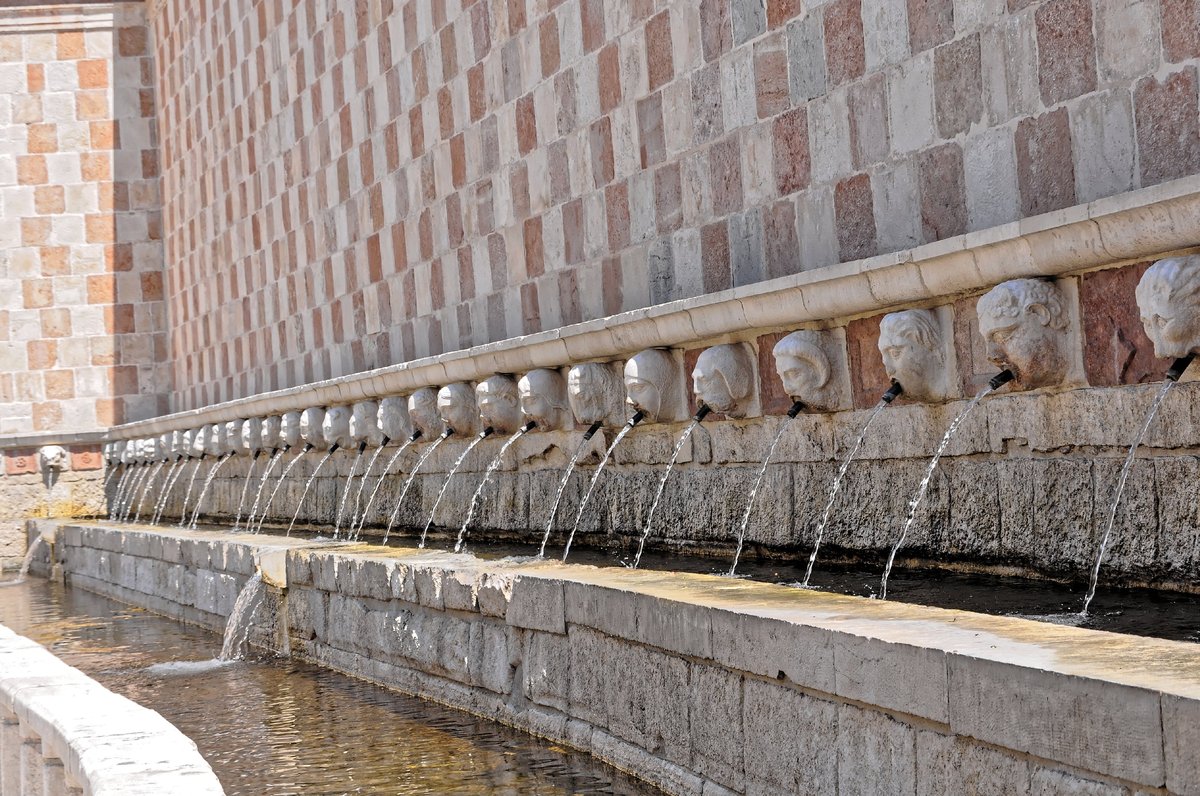
Fountain of the 99 Spouts
- Via Madonna del Ponte, L'Aquila (AQ)
- Open in Google Maps
- View on Google Images
Alba Fucens: The Little Pompeii of Marsica
- Go to the page: Alba Fucens: Journey to the Ancient Latin Colony
- Via Massa d'Albe, Massa d'Albe (AQ)
- Open in Google Maps
- View on Google Images
 If you happen to wander through the hills of Marsica, you can't miss Alba Fucens. Founded by the Romans in 303 BC, this Latin colony is now an archaeological site that many call the "Little Pompeii of Marsica." I discovered it by chance and was fascinated.
As soon as you arrive, what strikes you are the imposing walls, almost three kilometers of defensive perimeter with four gates still visible. You enter and are immediately transported back in time. Here you find a forum, a basilica, a macellum (market), and even a thermopolium, a sort of fast food of the era. But the highlight is the amphitheater, commissioned by the local patrician Quintus Naevius Cordus Sutorius Macro: its acoustics are still so perfect that it hosts summer concerts. Not to be missed is also the Church of San Pietro, built on the remains of a temple of Apollo: climb up to the parvis, and the view over the ruins and the Velino and Cafornia mountains is breathtaking.
Strolling among the ruins, you come across the Sanctuary of Hercules, where the famous statue of the god at a banquet was found, now in the Museo di Chieti. And if you're curious, recent excavations in 2020 unearthed new tabernae with artifacts that speak of an earthquake in the 5th-6th centuries. In short, Alba Fucens is a place that surprises, because it's not just history: it's also nature, with grass growing among the stones and silence broken only by the wind.
Practical info: entry is free, and the site is open daily from dawn to dusk. Convenient parking and asphalted road. No water or electricity available, so bring a bottle.
Alba Fucens: The Little Pompeii of Marsica
- Go to the page: Alba Fucens: Roman Amphitheater with 8000 Seats and Baths in Massa d'Albe
- Via Massa d'Albe, Massa d'Albe (AQ)
- Open in Google Maps
- View on Google Images
If you happen to wander through the hills of Marsica, you can't miss Alba Fucens. Founded by the Romans in 303 BC, this Latin colony is now an archaeological site that many call the "Little Pompeii of Marsica." I discovered it by chance and was fascinated.As soon as you arrive, what strikes you are the imposing walls, almost three kilometers of defensive perimeter with four gates still visible. You enter and are immediately transported back in time. Here you find a forum, a basilica, a macellum (market), and even a thermopolium, a sort of fast food of the era. But the highlight is the amphitheater, commissioned by the local patrician Quintus Naevius Cordus Sutorius Macro: its acoustics are still so perfect that it hosts summer concerts. Not to be missed is also the Church of San Pietro, built on the remains of a temple of Apollo: climb up to the parvis, and the view over the ruins and the Velino and Cafornia mountains is breathtaking.
Strolling among the ruins, you come across the Sanctuary of Hercules, where the famous statue of the god at a banquet was found, now in the Museo di Chieti. And if you're curious, recent excavations in 2020 unearthed new tabernae with artifacts that speak of an earthquake in the 5th-6th centuries. In short, Alba Fucens is a place that surprises, because it's not just history: it's also nature, with grass growing among the stones and silence broken only by the wind.
Practical info: entry is free, and the site is open daily from dawn to dusk. Convenient parking and asphalted road. No water or electricity available, so bring a bottle.
Claudius' Tunnels: The Roman Engineering That Tamed Lake Fucino
- Via Galileo Galilei, Avezzano (AQ)
- Open in Google Maps
- View on Google Images
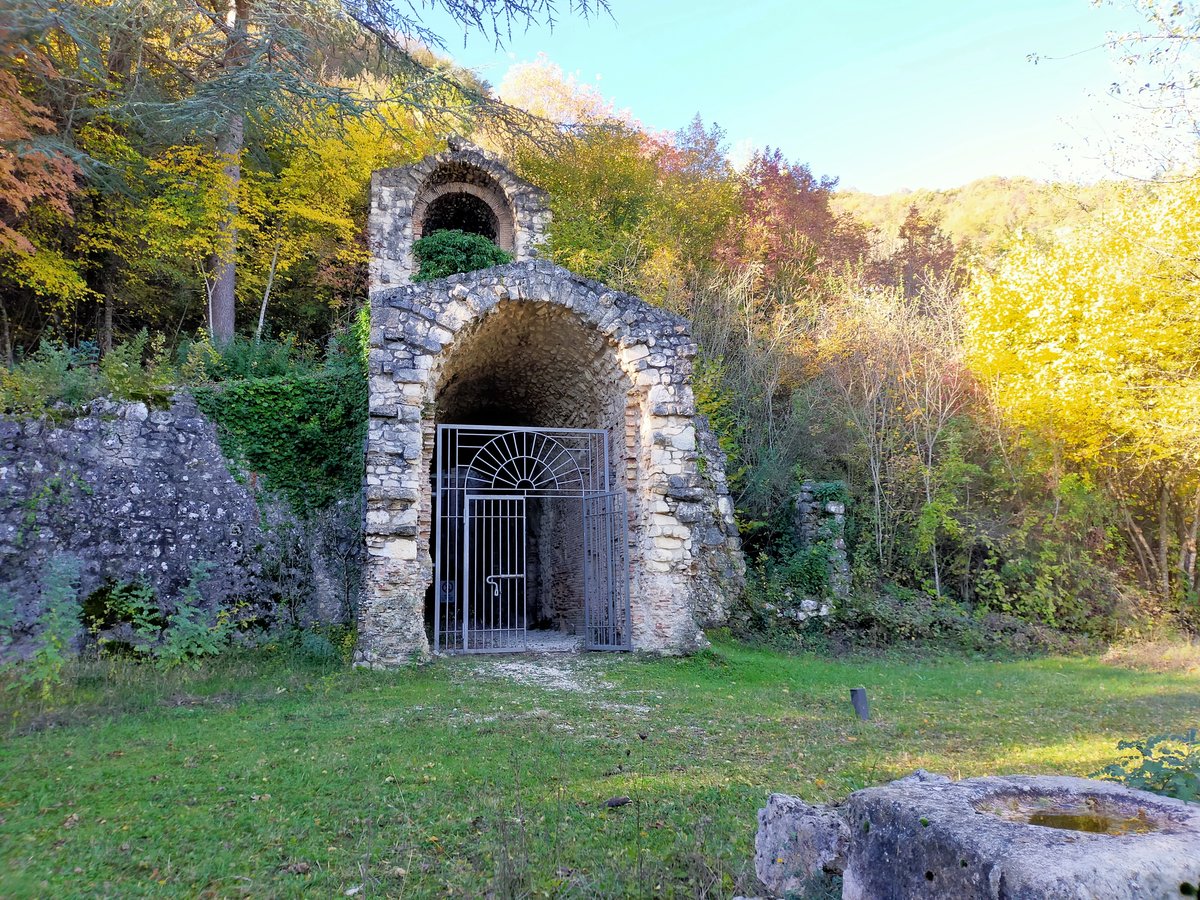 If you love archaeology and monumental works, the Claudius' Tunnels are a must-see. We're in Avezzano, Abruzzo, where Emperor Claudius, between 41 and 52 AD, built a drainage system to dry up Lake Fucino, then the third largest lake in Italy. A titanic undertaking: 25,000 men dug for eleven years an underground gallery over 6 km long, with 32 vertical shafts up to 120 meters deep. Today you can visit the Ferraro Tunnel, about 200 meters of perfectly preserved gallery, with a raised floor in the center and walls in opus latericium. The atmosphere is evocative: you walk where two thousand years ago water flowed toward the Liri River. Visits are only on Saturdays, departing at 9:15 and 11:15, and are free but with mandatory reservation at 0863/455734 (Monday to Friday, 9 am-1 pm). Groups are limited to 15 people, so it's best to plan ahead. From 2026, there are also special openings on April 17 and 28, and May 8. History lovers will be amazed: to think that this work, after centuries of neglect, even inspired the final drainage of Lake Fucino by Duke Torlonia in the 19th century. A place that combines engineering, landscape, and a hint of adventure.
Stiffe Caves: Waterfalls and Silence in the Heart of Abruzzo
- Via del Forno, Stiffe (AQ)
- https://grottedistiffeofficial.it/
- Open in Google Maps
- View on Google Images
 Stiffe Caves are one of the hidden wonders of the province of L'Aquila. They are no ordinary caves: here an active underground river still flows, creating ever-evolving waterfalls, lakes, and formations. I visited them on an autumn day when the water flow was perfect to appreciate nature's power. The entrance is a crack in the rock above the village of Stiffe, and already there you feel small. Once inside, the temperature drops to 10°C – bring a sweatshirt! The 700-meter path is entirely on metal walkways, with stairs and tunnels that bring you face to face with the water. The Hall of Silence is surreal: the stream dries up and the only sound is your breath. Then comes the Hall of the Waterfall, with a drop of over 20 meters that leaves you speechless. Further on, the Hall of Formations with stalactites and stalagmites up to 3 meters high, and Black Lake, so dark it looks like ink. The grand finale is the Last Waterfall, 25 meters plunging into a 5-meter-deep pool. The guided tour lasts about an hour and also tells the thousand-year history of the site: frequented since the Bronze Age, later used for a hydroelectric plant in the early 1900s, and opened to the public only in 1991 after an earthquake and restoration. After exiting, I stopped by the Speleology Museum next door, which houses a cave bear skeleton. I recommend booking online, especially on weekends, and wearing non-slip shoes. Oh, and if you're with children, the path is suitable for them too, but no strollers: better to use a baby carrier.
Amiternum: The Roman Heart of Abruzzo
- Go to the page: Amiternum: 1st Century BC Roman Theater and Ancient Baths in Abruzzo
- Strada Statale 80 del Gran Sasso d'Italia, L'Aquila (AQ)
- Open in Google Maps
- View on Google Images
 If you are passionate about Roman history, Amiternum will surprise you. Just a few kilometers from L'Aquila, in the hamlet of San Vittorino, this archaeological area preserves the remains of an ancient Sabine city that later became a Roman municipium. Here, among meadows and the Aterno River, two gems emerge: the theater (mid-1st century BC), with its white limestone steps and Flavian portico, and the amphitheater (1st century AD), which could seat up to 6,000 spectators. The urban layout was regular, with a forum, baths, domus, and mosaics. In the nearby village of Preturo, the name itself recalls the Praetorium, the governor's seat. Walking among the surviving arches, you breathe a suggestive atmosphere, especially with the Gran Sasso in the background. The site is open from Tuesday to Sunday (08:30-13:30), I recommend a visit in the morning, when the light enhances the details of the opus vittatum and the polychrome mosaics of the peristyle domus. A place that combines history and nature, perfect for a day trip.
Corfinium Archaeological Area: Mosaics and Italic History
- Via San Giacomo, Corfinio (AQ)
- http://www.museocorfinio.it/parcoarcheologico.html
- Open in Google Maps
- View on Google Images
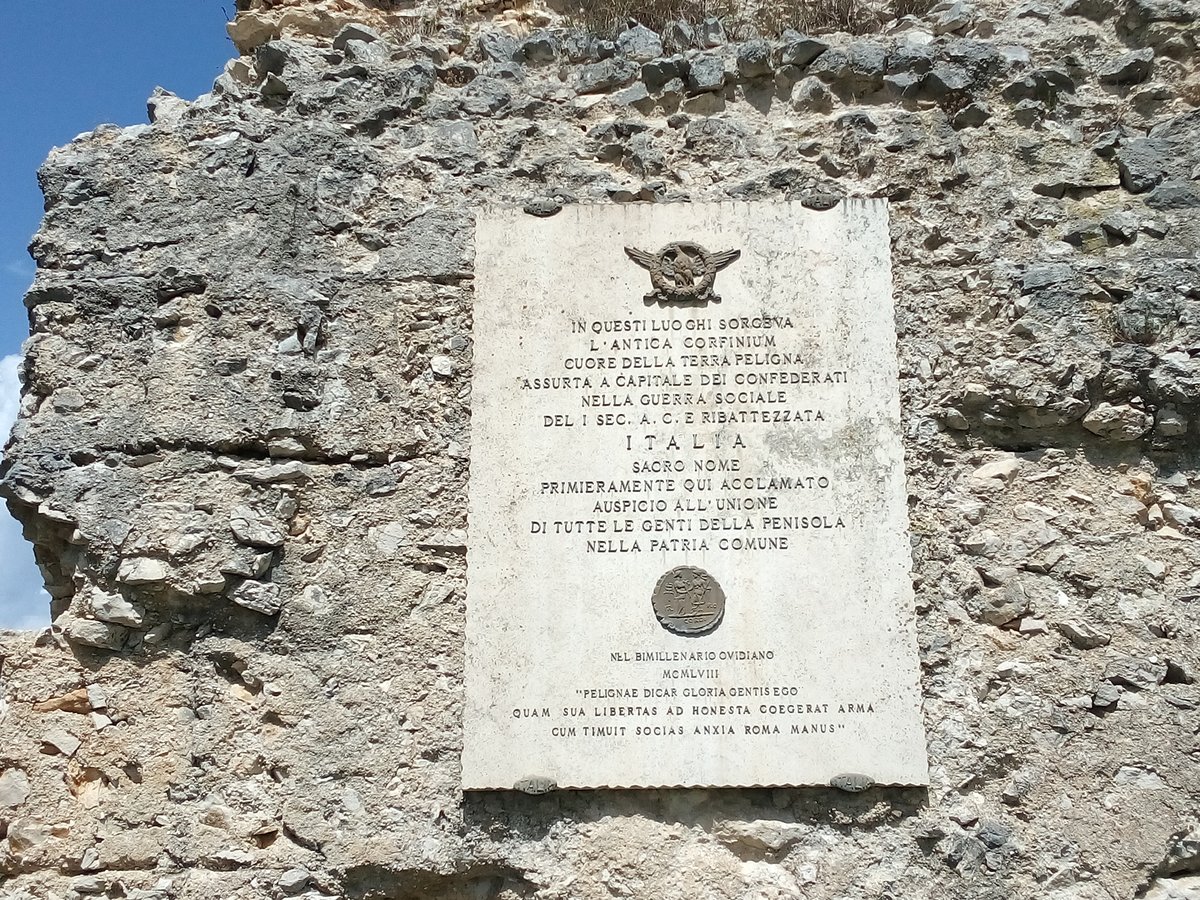 If you're passing through Corfinio, don't miss the archaeological area of Corfinium, a site that tells centuries of history. The park, named after Don Nicola Colella, is divided into three zones. The first is Piano San Giacomo, a Roman quarter with gravel streets, porticoes, and a domus decorated with polychrome mosaics – a feast for the eyes. Here you'll also find tabernae and baths, signs of a lively city. Next is the area of the two temples: the larger temple, built in opus incertus from the 1st century BC, preserves a black-and-white mosaic floor. Nearby, a necropolis from the 4th century BC with tombs carved into gravel. Finally, the Sanctuary of Sant'Ippolito, dedicated to Hercules, with a therapeutic water spring and remains of ritual basins. I noticed here the curious mix of pagan and Christian ex-votos, a sign of continuity of worship. The best artifacts are at the Museo Antonio De Nino, just a short walk from the park. Among them, a silver coin inscribed 'Italia', minted right here during the Social War. In short, a place that combines archaeology and nature, perfect for a day trip.
Castello Piccolomini: Between History and Breathtaking Views
 When you arrive in Celano, the first thing that strikes you is the massive Castello Piccolomini towering over the Fucino plain. Built starting in 1392 by order of Pietro Berardi, this castle is a perfect hybrid between a medieval fortress and a Renaissance residence. Strolling through the inner courtyard, I stopped to admire the double loggia with Gothic arches on the ground floor and Renaissance arches on the first floor – a unique detail in Abruzzo.
History is palpable here: in 1463 Antonio Todeschini Piccolomini, nephew of Pope Pius II, completed the work, transforming it into a noble residence. The 1915 earthquake caused vaults and frescoes to collapse, but restorations (completed in 1960) restored its original appearance. In addition to the spectacular view of the Sirente and Velino mountains, the castle houses the Museum of Sacred Art of Marsica and the Torlonia Collection. Don't miss the Head of Aphrodite (3rd-2nd century BC) and the 2nd-century reliefs depicting the draining of Lake Fucino.
Practical info: open Tuesday to Sunday (8:30 AM–7:30 PM, last entry at 7:00 PM). Full ticket €4, reduced €2 for ages 18–25. Free for under 18 and on the first Sunday of the month. Getting there is easy: take the Aielli-Celano exit on the A25, then 4 km. If you have time, the old town of Celano is worth a walk among churches and artisan shops.
Abruzzo National Museum (MuNDA): A Dive into Abruzzese Art
- Via Tancredi da Pentima, L'Aquila (AQ)
- https://www.musei.abruzzo.beniculturali.it/musei?mid=63&nome=munda-museo-nazionale-dabruzzo
- Open in Google Maps
- View on Google Images
- munda@beniculturali.it
- +39 0862 28420
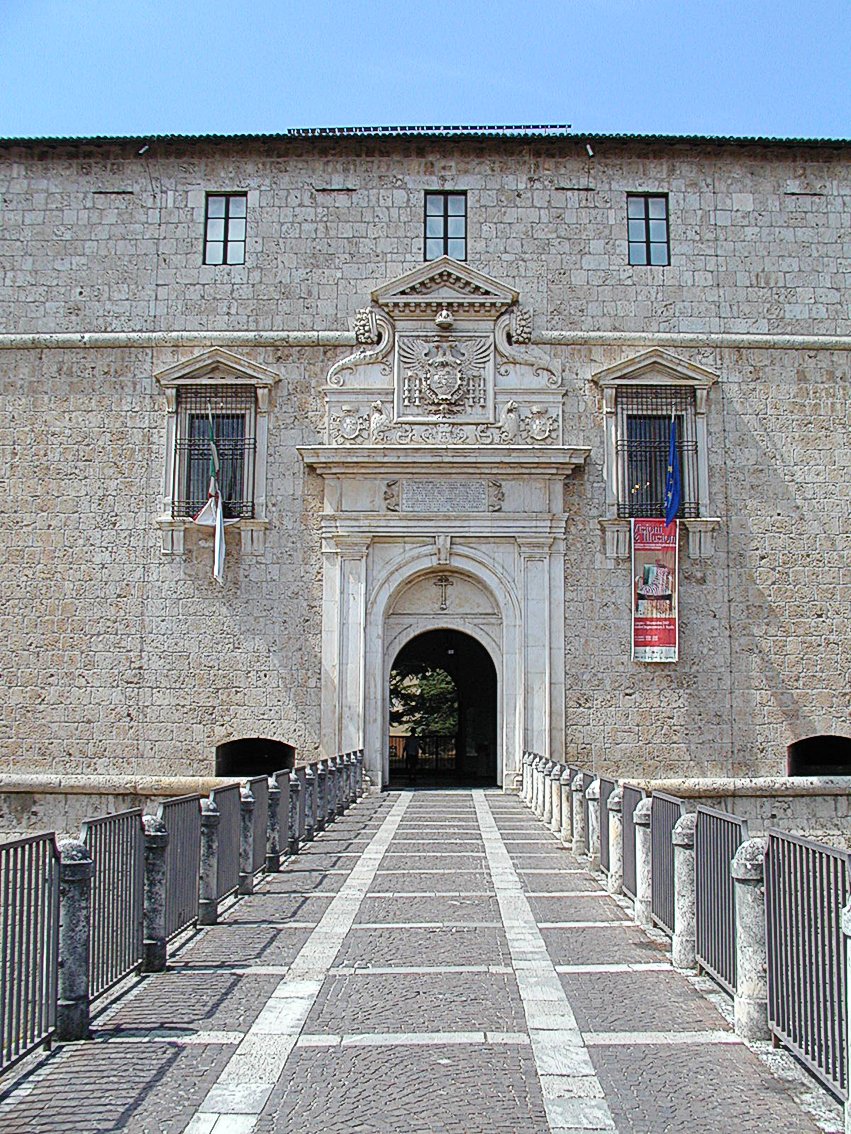 If you're visiting L'Aquila, the Abruzzo National Museum (MuNDA) is a must-see. After the 2009 earthquake, the museum left its historic home at Forte Spagnolo for the former slaughterhouse in Borgo Rivera, reopening in December 2015. Since December 20, 2025, part of the collection has returned to the castle, but the temporary venue remains open. Here you'll find a journey starting from antiquity: in the archaeological hall, standouts include the Amiternum Calendar and reliefs with gladiator fights, artifacts from the Italic and Roman towns of the L'Aquila basin. The Middle Ages are represented by an extraordinary series of wooden Madonnas, including the 12th-century Madonna of Lettopalena and the 13th-century Madonna 'de Ambro'. The 15th century offers the Triptych of Beffi (1410-1415) and the famous San Sebastiano by Silvestro dell'Aquila (1478). For the 17th century, don't miss the canvases of Mattia Preti (Christ and the Adulteress) and Jusepe de Ribera (Mary Magdalene). The 19th-century section, reopened in 2022, displays masterpieces like I morticelli by Francesco Paolo Michetti and La lavandaia by Pasquale Celommi. The museum also offers a tactile section. Admission is free on the first Sunday of the month. Hours: Tue-Sun 8:30 AM-7:30 PM (last entry 7:00 PM); closed Mondays. Weekend booking required. An unmissable journey into Abruzzese art.
Roman Amphitheater of Amiternum
- Via Amiternina, Pizzoli (AQ)
- Open in Google Maps
- View on Google Images
 If you're passing through Pizzoli, a few kilometers from L'Aquila, don't miss the Roman amphitheater of Amiternum. Dating back to the 1st century AD, it could hold up to 6,000 spectators. It's an ellipse measuring 68 by 53 meters, with 48 arches on two levels, all in brickwork. Today the supporting structures remain, while the seating was stripped over the centuries. Walking among the ruins, you can still see the bases of columns made of shaped bricks and large stone blocks with inscriptions. A plaque found here tells of gladiatorial shows funded by Caius Sallius Proculus: Roman life comes alive for a moment. The area is free and open with variable hours (Monday, Wednesday, Thursday, Saturday and Sunday 8:30-13:30; Tuesday and Friday 14:30-19:30). Next to the amphitheater are also the remains of a public villa, and nearby, an Augustan-era theater and a domus with mosaics. In short, a dive into history without spending a euro.
Hercules Curinus Sanctuary: History and Allure in Sulmona
- Via Badia, Sulmona (AQ)
- Open in Google Maps
- View on Google Images
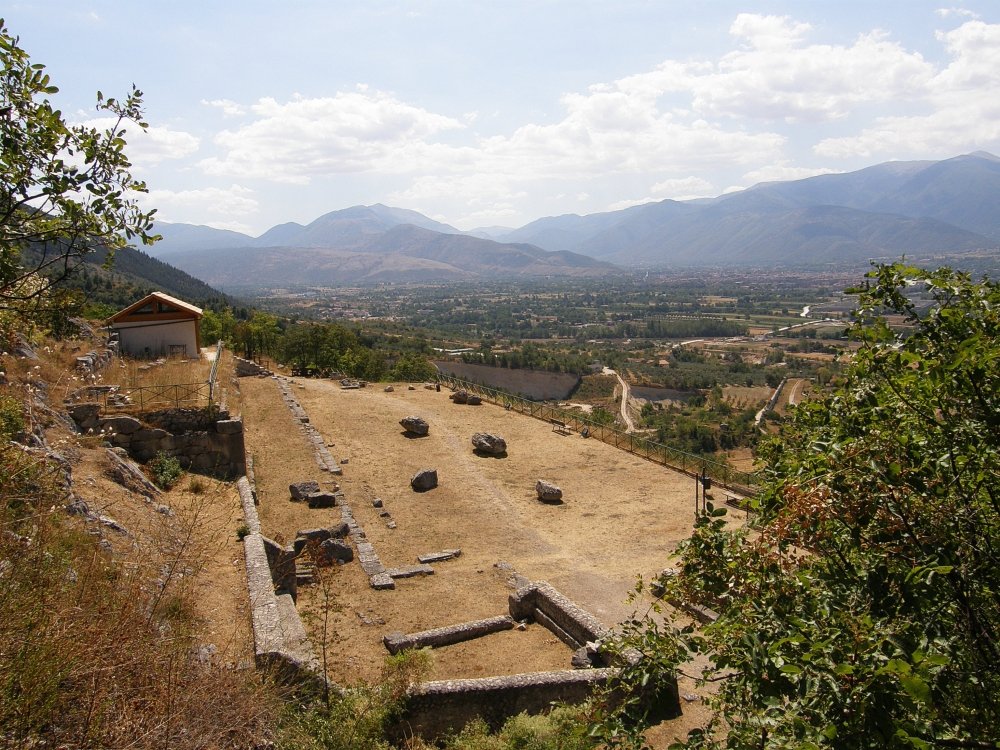 If you find yourself in Sulmona, don't miss the Hercules Curinus Sanctuary, an archaeological gem that tells centuries of history. Located on the slopes of Mount Morrone, in the Badia area, this Italic sanctuary dates back to the 4th century BC and was frequented until the 2nd century AD. Until 1957, it was thought to be the ruins of Ovid's villa, but excavations revealed an important place of worship. The structure is arranged on two artificial terraces: the lower one houses 14 barrel-vaulted rooms, while the upper one is dominated by the sacellum with a refined polychrome mosaic in Hellenistic motifs and frescoed walls imitating the First Pompeian Style. In front of the entrance is an altar covered with bronze plates, a unique example with a dedicatory inscription by Gaius Septimius Popilianus. Among the artifacts, a statuette of Hercules at rest stands out, considered an author's replica of Lysippus, now in the Chieti Museum. The site is free to visit and offers a breathtaking view of the Peligna Valley. The atmosphere is charged with mystery: close your eyes and imagine pilgrims climbing the steps to purify themselves at the fountain before entering the temple. A place that combines nature, history, and legend, perfect for those who love traveling off the beaten path.
Lucus Angitiae: The Sacred Grove of the Marsi
- Strada Provinciale 22 Circonfucense, Luco dei Marsi (AQ)
- Open in Google Maps
- View on Google Images
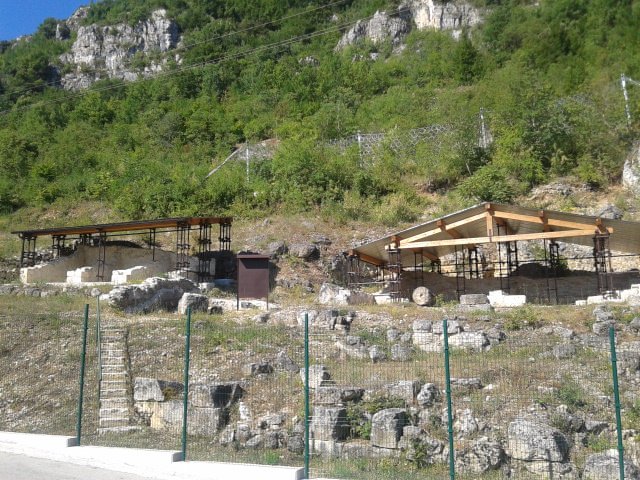 If you are in the L'Aquila area and want to breathe in the most authentic history, Lucus Angitiae is a stop that will not disappoint you. This archaeological site, located in Luco dei Marsi on the slopes of Monte Penna, was the sacred grove dedicated to the goddess Angizia, an Italic deity of snakes and healing. The Marsi, a people known for their skills in antidotes, worshiped the goddess here with ancient rites. Today, walking among the ruins, you can discover three temples from different eras: the oldest, Temple B (4th-3rd century BC), built on a podium in polygonal masonry, and Temple A from the Augustan age, with its high podium in opus caementicium. Curious? Temple C is smaller, with three rooms and mosaic floors. Don't miss the Orlando's Cave, a natural cavity in the park, linked to legends of treasures hidden by brigands – the name perhaps derives from "screaming cave" for the wind that whistles through it. The site has yielded incredible artifacts: a terracotta statue of the goddess Angizia (3rd century BC) and two in marble, now displayed at the Paludi Museum in Celano. The excavations, conducted between 1998 and 2003, also brought to light kilns and early medieval burials. Open to visitors since 2014, the area is protected by the San Leonardo Natural Park. For info, contact the municipality at 0863 5061. A tip: look out over the Fucino basin and imagine the disappeared lake. A place full of mystery and devotion.
Norman Castle: History and Literature in Anversa degli Abruzzi
- Via Palazzo, Anversa degli Abruzzi (AQ)
- Open in Google Maps
- View on Google Images
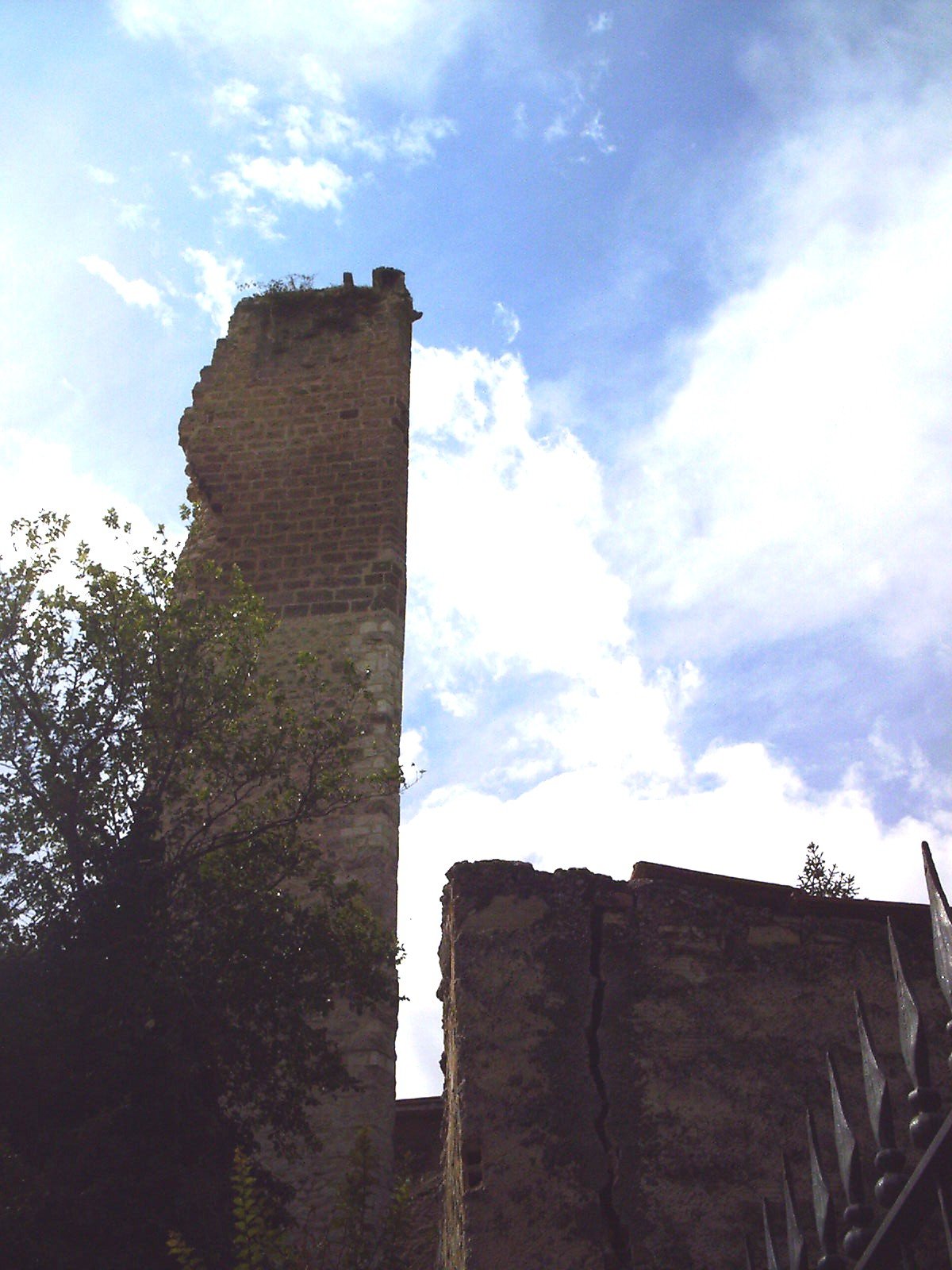 Perched atop the village, the Norman Castle dominates Anversa degli Abruzzi with its ruined tower. Built in the 12th century by the Normans to control access to the Valle Peligna, it was long the residence of the powerful Counts of Sangro and later the Belprato family, who turned it into a lively cultural hub. Torquato Tasso and botanist Fabio Colonna stayed here, but the most famous visit remains that of Gabriele D’Annunzio in 1896, who was so captivated that he set his tragedy The Torch Under the Bushel (1905) there.
Today, only a few remains of the ancient fortress survive: the pentagonal tower-bastion (partially collapsed after the 1706 earthquake), a stretch of walls, the 18th-century palace, and the post-Renaissance garden on two levels with a charming spiral turret. The Chapel of San Michele Arcangelo, once adorned with the precious Triptych of Anversa (stolen in 1981 and replaced by a copy in the parish church), completes the scene. The property is private but can be visited by appointment: the garden is also accessible to people with disabilities.
The Norman Castle is not just a ruin: it is a concentrate of centuries of history, art, and literature that still moves those who venture here, among the medieval alleys of Anversa and the wild scenery of the Sagittario Gorges. A plunge into the past that smells of D’Annunzio's verses.
Lace Museum in Pescocostanzo: Threads of History
- Piazza Municipio, Pescocostanzo (AQ)
- Open in Google Maps
- View on Google Images
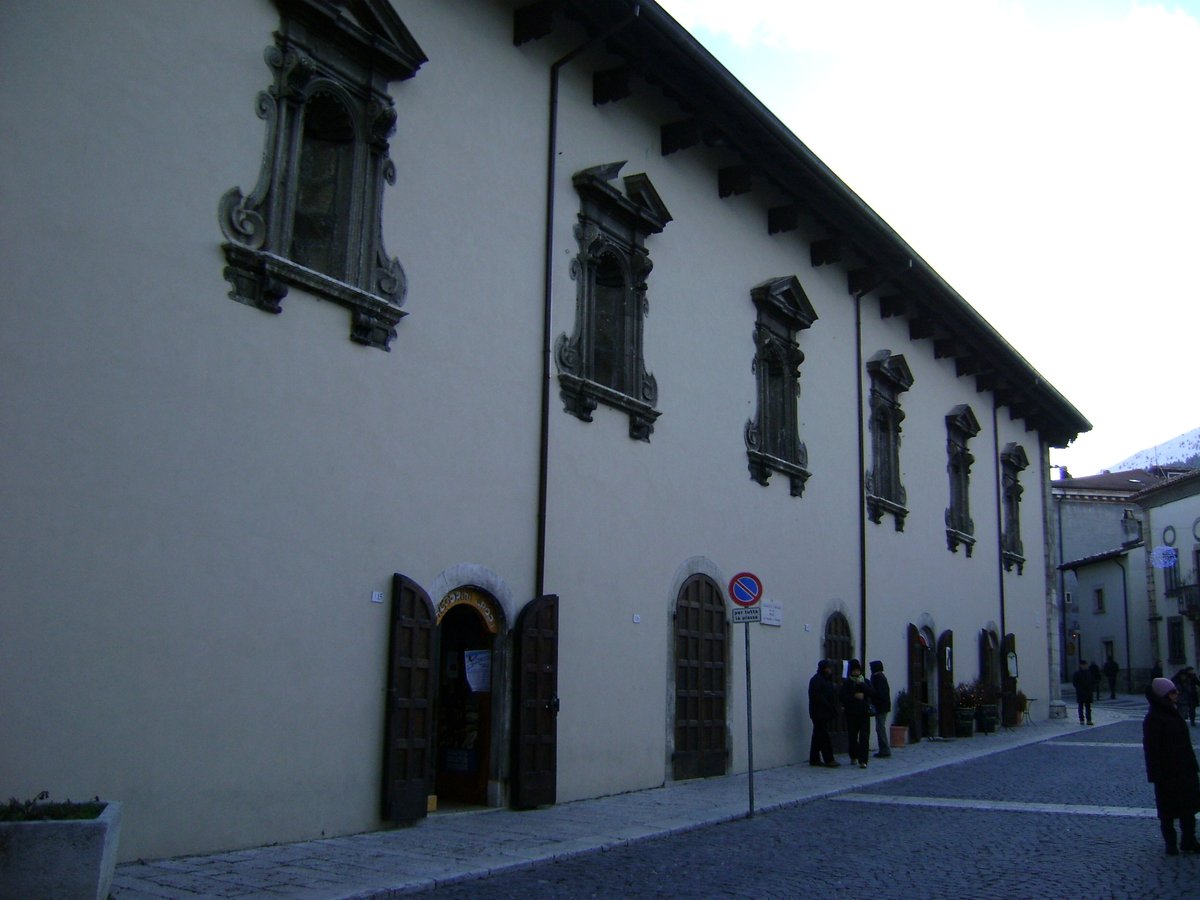 If you pass through Pescocostanzo, you can't miss the Lace Museum, housed in the splendid 17th-century Palazzo Fanzago. Here, you breathe an air of times gone by: the art of bobbin lace arrived in the village after the 1456 earthquake, brought by Lombard craftsmen. Since then, local lacemakers have passed down this refined technique, using a pillow (tombolo) and wooden bobbins. The museum displays 18th-century antique laces from private collections and ecclesiastical vestments, alongside modern creations like "The Prince's Breakfast", a table set with bobbin lace tablecloth, Castelli ceramics, and silver filigree. On the first floor, you'll find other local crafts: carpets, wrought iron, carved wood. I found it fascinating, especially because here the Lace School (founded in the 1990s) operated, training new generations of artisans. It's a pity the school is no longer active in the palace, but the museum remains a gem. Visiting hours? Open Saturday, Sunday, and holidays, and every day in August, Christmas, and Easter. Admission is by donation, and if you're lucky, you might see a lacemaker at work. My advice: take your time and let yourself be enchanted by the details. Piazza Municipio, 67033 Pescocostanzo – you can't go wrong.