
🧭 What to Expect
- Ideal for those seeking a holiday blending culture, sea, and fun
- Highlights: well-preserved Roman monuments, equipped seafront, quality theme parks
- Suitable for families, couples, and solo travelers
- Tip: visit the historic center in the morning and the beach in the afternoon
- Must-see: the Arch of Augustus at sunset and the illuminated Tiberius Bridge
- Gastronomy: try Romagna piadina at one of the beach kiosks
Events nearby
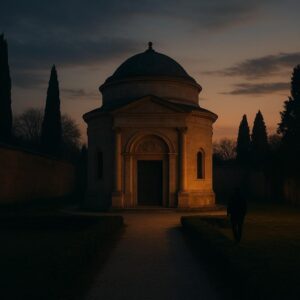
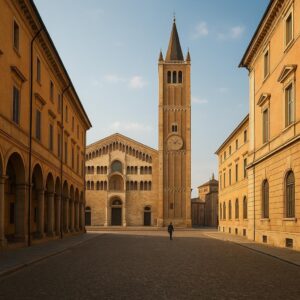
Rimini is much more than beaches and nightlife: it is a city rooted in ancient Rome, with monuments like the Arch of Augustus and the Tiberius Bridge telling two thousand years of history. But beyond its cultural heritage, Rimini surprises with theme parks like Italy in Miniature and Fiabilandia, perfect for families. This article guides you through the city's must-see stops, from the historic center to the seafront, offering practical tips to organize your visit. Whether you are a history enthusiast, a beach lover, or looking for fun for the kids, Rimini has something for everyone. Discover the iconic places, museums, and attractions that make this city on the Romagna Riviera a complete destination.
Overview
- The Arch of Augustus, Symbol of Rimini
- Ponte di Tiberio: A Leap into Ancient Rome
- Castel Sismondo: the Malatesta fortress that today houses the Fellini Museum
- Luigi Tonini City Museum: A Journey Through Time in Rimini
- Teatro Amintore Galli: A Neoclassical Gem Not to Be Missed
- Piazza Cavour: The Historic Heart of Rimini
- Pinecone Fountain: A Symbol of History and Living Water
- Surgeon's House: A Dive into Roman Rimini
- Roman Amphitheater of Rimini: History Between Gladiators and the Sea
- Porta Montanara: Rimini's Ancient Roman Gate
- Palazzo dell'Arengo: Symbol of the Free Commune of Rimini
- Gambalunga Civic Library: A Hidden Gem Among Books
- Rimini Lighthouse: A Symbol Between History and Sea
- Italy in Miniature: A Journey in Miniature Scale
- Fiabilandia: The Fairytale Park in Rimini
Itineraries nearby

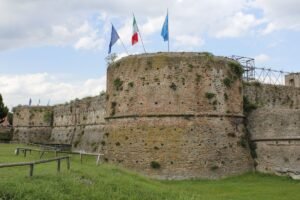
The Arch of Augustus, Symbol of Rimini
- Go to the page: Arch of Augustus: The Oldest Roman Arch in Italy
- Corso d'Augusto, Rimini (RN)
- Open in Google Maps
- View on Google Images
 As you stroll through the center of Rimini, you come across a monument nearly two thousand years old: the Arch of Augustus. Built in 27 BC by the Roman Senate in honor of Octavian Augustus, it is the oldest Roman arch preserved in northern Italy. It marked the end of the Via Flaminia, the road connecting Rimini to Rome, and remains one of the city's symbols today, alongside the Tiberius Bridge.
The first thing that catches your eye is the width of the archway: so wide it couldn't be closed with doors. It was a political message: the Pax Augusta, the peace achieved after centuries of war. Made of Istrian stone, the arch is decorated with four clipei (medallions) depicting deities: Jupiter and Apollo look toward Rome, Neptune and the goddess Roma toward the city. On both sides, two ox heads stand out, symbols of strength and power.
As your gaze rises, you notice the medieval brick crenellations, added around the 10th century after the original attic collapsed, possibly due to an earthquake. Originally, a bronze statue of Augustus stood atop it, now lost. The arch was part of the city walls, but in the 1930s it was isolated by demolishing surrounding buildings to enhance it as a monument. Fortunately, during World War II an explosion did not severely damage it.
Visiting is free and can be done at any time. It is located in Largo Giulio Cesare, at the start of Corso d'Augusto. One detail that fascinated me: on the pavement at the center of the arch, there is a nail marking the intersection of the Via Flaminia and Via Emilia. A small secret for those who love ancient stories.
Ponte di Tiberio: A Leap into Ancient Rome
- Go to the page: Tiberius Bridge: A 1st-Century Roman Bridge Still Walkable in Rimini
- Viale Tiberio, Rimini (RN)
- Open in Google Maps
- View on Google Images
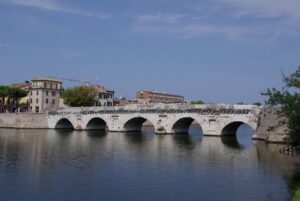
 If there's one place in Rimini that takes you back in time without needing a time machine, it's the Ponte di Tiberio. Built in Istrian stone between 14 and 21 AD under Emperors Augustus and Tiberius, this Roman bridge is still perfectly walkable today. With its five arches and length of 74 metres, it looks like something out of a period film. The highlight? The pillars with oblique breakwater spurs, designed to tame the current of the Marecchia River. And guess what? It has survived earthquakes, wars, and even a Nazi demolition attempt during World War II. Today it is pedestrianised and connects the historic centre to the characteristic Borgo San Giuliano, famous for its murals dedicated to Fellini. Nearby, Piazza sull'Acqua offers a spectacular view, and if you visit in the evening, admire the new lighting that enhances every detail. In short, an unexpected dive into history.
Castel Sismondo: the Malatesta fortress that today houses the Fellini Museum
- Go to the page: Castel Sismondo: Malatesta Fortress and Fellini Museum
- Piazza Malatesta, Rimini (RN)
- Open in Google Maps
- View on Google Images
 If you're passing through Rimini, you can't miss Castel Sismondo, the imposing fortress commissioned by Sigismondo Pandolfo Malatesta starting in 1437. Possibly designed by Filippo Brunelleschi, this fortress-palace is a Renaissance jewel: square towers, sloping walls, and an atmosphere that takes you back in time. The building covers 3,300 sqm divided into four parts: Palazzo di Isotta, central body, large courtyard, and Maschio with spiral staircase. But it's not just history: since 2021, its halls house a wing of the Fellini Museum, an immersive museum where you can relive the sets of the director's most iconic films. Among the installations, the Trevi Fountain from La dolce vita and the fog from Amarcord. The castle is only visitable with the museum ticket (full €12, reduced €8), and hours change with the seasons: from June to August open Tue-Sun 10am-7pm; from September to May Tue-Fri 10am-1pm and 4pm-7pm, Sat-Sun 10am-7pm. Parking nearby and accessibility for the disabled. Tip: book a guided tour (€8 extra) to discover the secrets of the prison past and ancient frescoes. A place that combines history, art, and film in a surprising way.
Luigi Tonini City Museum: A Journey Through Time in Rimini
- Go to the page: Luigi Tonini City Museum of Rimini: Roman Mosaics and the Surgeon's Domus
- Via Luigi Tonini, Rimini (RN)
- https://museicomunalirimini.it/
- Open in Google Maps
- View on Google Images
 If you think Rimini is all about beaches and nightlife, the Luigi Tonini City Museum will change your mind. Housed in the former Jesuit College, an elegant 18th-century building designed by Alfonso Torreggiani, this museum is the keeper of the city's millennia-long history. Strolling through its halls – opened in 1990 – you immerse yourself in a narrative that spans from prehistory to the 20th century.
On the underground floor, the archaeological section is a true gem: it holds artifacts from the Surgeon's House, discovered in 1989 in Piazza Ferrari, with over 150 Roman surgical instruments, one of the most complete medical kits in the world. Alongside are stunning floor mosaics, such as one depicting ships arriving at the port of Ariminum. Climbing the 18th-century staircase, the art gallery awaits with masterpieces of the 14th-century Rimini School, influenced by Giotto, and works by Giovanni Bellini, Domenico Ghirlandaio, Guercino, and Guido Cagnacci. Unmissable are Bellini's Pietà and Ghirlandaio's altarpiece of Saint Vincent Ferrer.
The museum also dedicates space to the 20th century: the Book of Dreams room displays two original albums by Federico Fellini, filled with sketches and notes that inspired his films, while a section is reserved for graphic artist René Gruau. In the courtyard garden, the Roman lapidary with inscriptions from the 1st century BC to the 5th century AD is a charming corner where civil weddings sometimes take place.
Visiting is easy: hours vary between winter (Tue-Fri 10am-1pm and 4pm-7pm, Sat-Sun 10am-7pm) and summer (always 10am-7pm, with evening openings on Wednesdays and Fridays in July-August). Full ticket €7, reduced €5, free on the first Sunday of the month. The same ticket also grants access to the nearby Surgeon's House. An insider tip: don't miss the Last Judgment fresco in the hall of the same name, used for cultural events.
Teatro Amintore Galli: A Neoclassical Gem Not to Be Missed
- Go to the page: Teatro Amintore Galli: History, Restorations, and Visits in Rimini
- Piazza Cavour, Rimini (RN)
- https://www.teatrogalli.it/
- Open in Google Maps
- View on Google Images
 If you're passing through Rimini, the Teatro Amintore Galli is absolutely worth a visit. Inaugurated in the summer of 1857 as the Teatro Nuovo, it immediately became the stage for a unique event: Giuseppe Verdi personally conducted the world premiere of the opera Aroldo, composed especially for the occasion. A distinction that makes this theatre special (the only one in Italy to have hosted a Verdi premiere). Designed by the Modenese architect Luigi Poletti, it is a masterpiece of neoclassicism, with an imposing façade, Corinthian columns, and a wide portico. Inside, the horseshoe-shaped auditorium features four tiers of boxes (23 per tier) and no royal box—a deliberate choice to give the space a democratic feel. After the bombings of December 28, 1943, the theatre remained a ruin for decades: only the façade and foyer survived. Reopened on October 28, 2018, after a long and meticulous reconstruction, it is once again the cultural heart of the city, with a season spanning opera, theatre, music, and dance. As you visit, notice the restored details, such as the stuccoes and paintings in the foyer (just touched up in 2025). You can also access the archaeological area beneath the theatre, where excavations uncovered the remains of an early Christian basilica, now part of a small multimedia museum. The theatre is located in Piazza Cavour, easily reachable on foot from the station (20 minutes) or by bus (routes 11, 124, 20, METROMARE). It is accessible with ramps and services for the disabled. In short, a piece of Rimini's history worth discovering.
Piazza Cavour: The Historic Heart of Rimini
- Piazza Cavour, Rimini (RN)
- Open in Google Maps
- View on Google Images
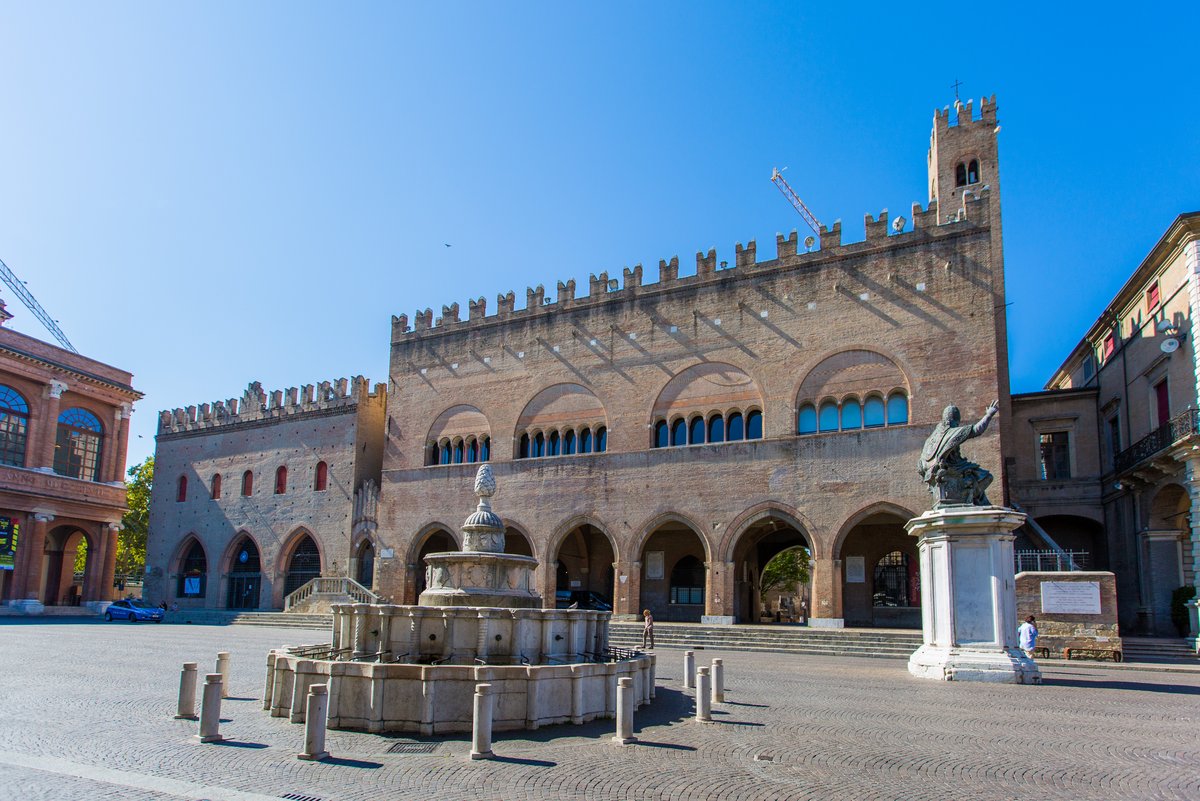 If there's one place that captures the soul of Rimini, it's Piazza Cavour. Since the Middle Ages, it has been the center of city life, and it still retains that timeless charm. At its heart stands the Fountain of the Pinecone, commissioned in 1543 and admired by Leonardo da Vinci (yes, he is said to have stopped to listen to the sound of its fifteen spouts!). Nearby, the statue of Pope Paul V dominates the scene: erected in 1614, during the Napoleonic occupation it was disguised as Saint Gaudentius to avoid being melted down.
Surrounding it are the power palaces: the Palazzo dell'Arengo (1204) with its mullioned windows, the Palazzo del Podestà, and the elegant Teatro Galli, inaugurated by Verdi in 1857 and reopened in 2018 after a long closure. On the opposite side, the Old Fish Market from 1747: a loggia with benches in Istrian stone, where fish was once sold. Today it is surrounded by cafes and bars, and is the favorite meeting spot for young people in the evening.
The square is pedestrianized and easily reached on foot from Corso d'Augusto. If arriving by car, park at Parcheggio Gramsci-Santa Rita (€1.20/hour) or at the free Viale Valturio. By bus, lines 1, 14, and 29 stop a few minutes away. In short, you can't miss it: whether for a morning coffee or an aperitif, Piazza Cavour is the true living room of Rimini.
Pinecone Fountain: A Symbol of History and Living Water
- Go to the page: Pigna Fountain in Rimini: Renaissance basin from 1543 in Verona marble
- Piazza Cavour, Rimini (RN)
- Open in Google Maps
- View on Google Images
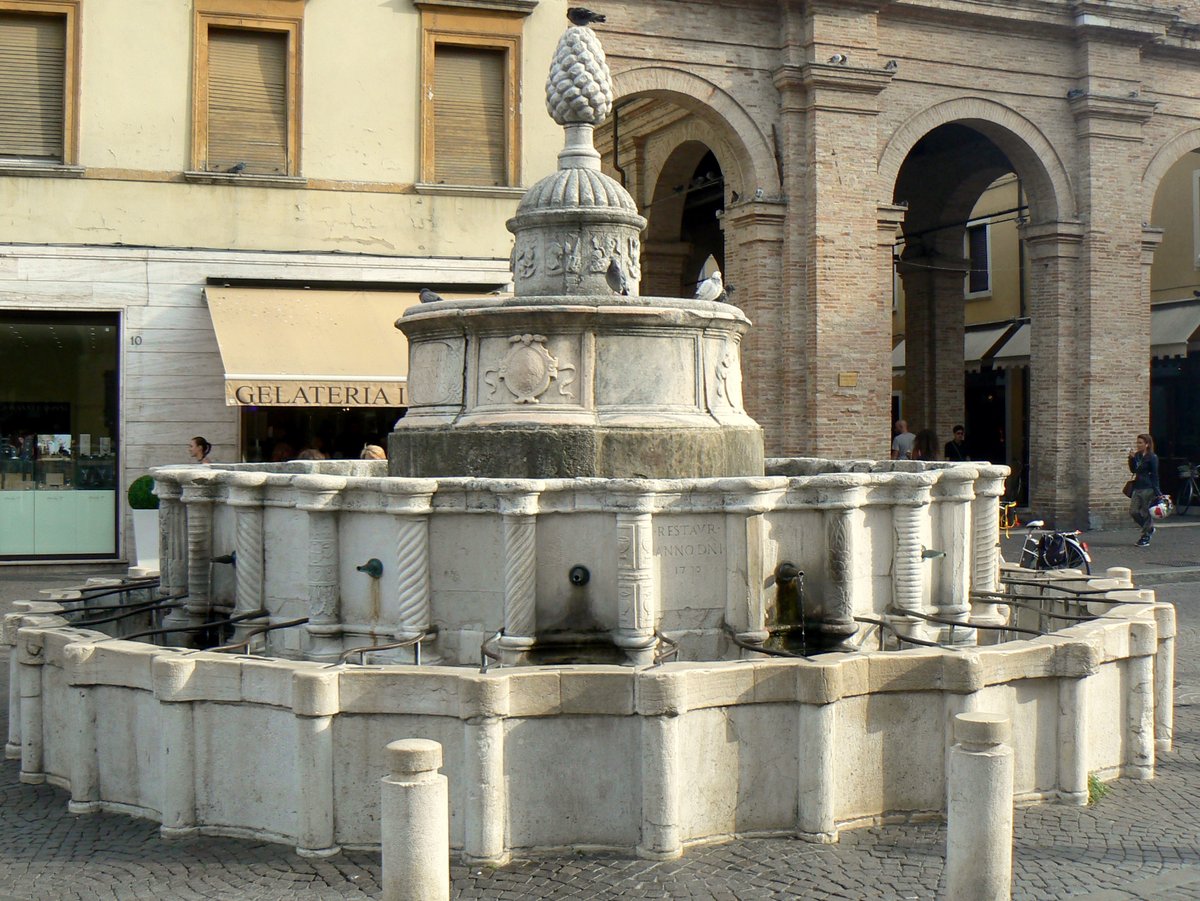 In Piazza Cavour, the heart of Rimini's historic center, stands the Pinecone Fountain, a monument blending Roman heritage with Renaissance taste. The structure is a triumph of white marble: two 15th-century polygonal basins encircle a central drum dating back to Roman times, covered in bas-reliefs. Fifteen spouts pour water into the second basin, creating a harmony that once enchanted even Leonardo da Vinci. During a visit in 1502, he noted: "A harmony is created by the different falls of water, as you saw at the Rimini fountain." Today, the phrase is engraved on the monument, recalling that genius. The fountain was the only source of drinking water for the city until 1912, when the public aqueduct was inaugurated. The water comes from a well 900 meters away: the conduit was once stone, then cast iron, and finally underground through Castel Sismondo. The pinecone at the top is not original: it replaced a statue of St. Paul in 1809, damaged during the Napoleonic period (now preserved in the City Museum). Recent restorations (2002) cleaned the stone and redid the water system, but the essence remains intact. Even today, many Rimini residents stop to refill water bottles: the water is good and fresh. Visiting is free, always accessible; by car, take the A14 Rimini Sud exit and park in nearby areas. If you're in the center, take a stroll: the fountain is a dive into history that still flows.
Surgeon's House: A Dive into Roman Rimini
- Go to the page: Domus del Chirurgo in Rimini: 150 Original Roman Surgical Instruments from the 3rd Century
- Piazza Luigi Ferrari, Rimini (RN)
- https://www.domusrimini.com/
- Open in Google Maps
- View on Google Images
 If you think Rimini is only about beaches and nightlife, get ready to change your mind. Beneath Piazza Ferrari, in the heart of the historic center, lies an archaeological gem of exceptional value: the Surgeon's House. Discovered almost by chance in 1989 during urban renewal works, this Roman dwelling from the 2nd century AD was brought to light after a long excavation, giving us a glimpse of daily life in ancient Ariminum. Its name comes from the discovery of over 150 surgical instruments in bronze and iron, along with mortars and containers for medicines: a unique collection in the world, now displayed at the City Museum. The owner, a physician of Greek origin named Eutyches, as suggested by a graffito, lived and worked here in a taberna medica with rooms for consultations and patient recovery. The two-story house was sumptuous: highlights include the triclinium with a kantharos mosaic and a rare glass panel depicting fish, and the room with the mosaic of Orpheus among the animals, a symbol of the doctor soothing pain. Around 257 AD, a violent fire, likely during Alemanni incursions, destroyed the house, but the rubble preserved intact mosaics, frescoes, and furnishings. In later centuries, the area was reused: a late antique residence, then burials, and finally medieval homes. Today, the site is protected by a modern glass and steel cover, and visited via transparent walkways that let you literally walk above history. Entry is combined with the City Museum (single ticket), where you can admire the surgical instruments and a reconstruction of the doctor's room. Hours: Tuesday–Sunday 10 am–1 pm and 4–7 pm (with summer evening openings). One hour is enough to be amazed.
Roman Amphitheater of Rimini: History Between Gladiators and the Sea
- Go to the page: Roman Amphitheatre Rimini: 2nd Century Arena with Free Entry in the City Centre
- Percorso ciclo-pedonale Margherita Zoebeli, Rimini (RN)
- Open in Google Maps
- View on Google Images
 If you think of Rimini, you think of the sea, fun, and nightlife. Yet, just a stone's throw from the beach, there's a piece of Roman history that few know: the Roman Amphitheater. Built in the 2nd century AD under Emperor Hadrian (a coin bearing his likeness was found in the masonry), this venue could hold between 10,000 and 12,000 spectators. Enormous dimensions, comparable to those of the Colosseum: the arena measured 76.40 x 47.40 meters, and the outer structure featured 60 arches about 16-17 meters high. Today, only the remains of the northern sector survive – two arches still standing, part of the arena walls, and a few steps – but the atmosphere is still magical. Walking among the ruins, you can almost hear the roar of the crowd and the clash of gladiators. And knowing that the amphitheater stood almost right on the seafront – creating a breathtaking scenic effect for arriving ships – makes the site even more evocative. After centuries of neglect (during the Middle Ages there was even a leper colony here), the area was rediscovered in the 19th century, but damage from World War II and the construction of the CEIS facility hid much of it. Even today it is not fully accessible, but what you can see offers a unique plunge into the past. And the best part? Admission is free and the site is always open: perfect for an impromptu stop between a day at the beach and a walk downtown. Don't expect a perfect reconstruction, but let yourself be surprised by the traces of an ancient Rimini that still endures.
Porta Montanara: Rimini's Ancient Roman Gate
- Go to the page: Porta Montanara: Rimini's Only Roman Gate on Via Garibaldi
- Via Giuseppe Garibaldi, Rimini (RN)
- Open in Google Maps
- View on Google Images
 Strolling along Via Garibaldi, just steps from Piazza Mazzini, you'll come across a monument that seems out of place among the shop windows and cafes: Porta Montanara, the southern entrance to Roman Rimini. It's not just an ancient stone, but a piece of lived history. Built around 82 BC by order of Sulla, it is the only example in northern Italy of a city gate from the Sullan era that has survived to the present day. Originally with two arches, today we see only one: the other arch was walled up as early as the 1st-2nd century AD, and its outline is still visible in the pavement, marked by flint cubes.
The gate has had a turbulent life. In 1943, bombings severely damaged it, and six years later, it was decided to demolish it. Fortunately, it was instead dismantled stone by stone and rebuilt first in the courtyard of the Tempio Malatestiano, then in a parking lot, and finally in 2004 it returned almost to its original spot, about 40 meters further south. The yellowish sandstone blocks, almost 6 meters high, tell of endurance through time. Today it is freely accessible, always open, and offers a fascinating contrast with modern traffic.
If you come to Rimini, don't miss this corner of history: it's the ideal starting point for the city's Roman itinerary, which continues towards the Arch of Augustus and the Tiberius Bridge. Porta Montanara is also a symbol of Borgo Sant'Andrea, the district that developed beyond the cardo maximus. In short, a dive into the past just a stone's throw from the sea.
Palazzo dell'Arengo: Symbol of the Free Commune of Rimini
- Go to the page: Palazzo dell'Arengo in Rimini: Fourteenth-Century Frescoes and Medieval Heart in Piazza Cavour
- Vicolo San Martino, Rimini (RN)
- Open in Google Maps
- View on Google Images
 Overlooking Piazza Cavour, Palazzo dell'Arengo is the oldest and most imposing of the three historic palaces framing the square. Built starting in 1204 at the behest of Podestà Modio de' Carbonesi, it was the political heart of the free commune: on the ground floor, under the pointed-arch portico (among the first in Romagna), notaries held court and justice was administered. Here stood the lapis magnum, a large stone on which insolvent debtors were sentenced to bare-bottomed spanking three times – a humiliating punishment that still makes visitors smile today. Climbing the external staircase leads to the Salone dell'Arengo, a huge 565 sqm hall with a truss ceiling and beautiful mullioned windows. From 1681 to 1857, the hall was converted into a theater: it was here that young Carlo Goldoni, a student in Rimini, attended performances that influenced his work. The bell tower, added in 1296, was used to announce meetings and sentences but also served as a prison. After 19th-century restorations and a major intervention between 1919 and 1923 that restored its medieval appearance, the palace – together with the nearby Palazzo del Podestà – now houses the Palazzi dell'Arte Rimini (PART), a contemporary art museum. Unfortunately, it is currently closed for renovations, but it is still worth admiring from the outside: the Ghibelline swallowtail merlons and the portico make it an unmissable stop on a walk through Rimini.
Gambalunga Civic Library: A Hidden Gem Among Books
- Go to the page: Gambalunga Civic Library: Italy's First Public Library
- Via Alessandro Gambalunga 27, Rimini (RN)
- https://bibliotecagambalunga.it/
- Open in Google Maps
- View on Google Images
- gambalunghiana@comune.rimini.it
- +39 0541704486;+39 0541704483
 If you think Rimini is only about the beach and nightlife, think again. In the historic center, among ancient palaces, there's a place that smells of paper and history: the Gambalunga Civic Library. It is Italy's first public library, founded in 1619 by Alessandro Gambalunga, a lawyer who loved books so much that he bequeathed his collection and his palace to the city. A revolutionary act for the time: open to all, without distinction. Today, you can still feel that atmosphere. You step inside, and time slows down. The courtyard with a well made of Istrian stone, the rooms with original 17th-century walnut shelves, and then two wooden globes from the 1600s where there is no trace of Australia – because it hadn't been discovered yet. Amazing, right? The library holds over 286,000 volumes, including 1,350 illuminated manuscripts. And don't worry: admission is free. If you come on a Saturday morning, you can visit the historic rooms. It is a place that speaks of culture, but also of daily life: students studying, children reading comics in the new section, families. You wouldn't expect it, but it's one of the most genuine things about Rimini. Address: via Gambalunga 27. Hours: Mon-Fri 8:00-19:00, Sat 8:00-13:00; in summer only mornings. Info: 0541 704486, bibliotecagambalunga.it.
Rimini Lighthouse: A Symbol Between History and Sea
- Go to the page: Rimini Lighthouse: 1933 White and Red Structure Overlooking the Fishing Village
- Via Destra del Porto, Rimini (RN)
- Open in Google Maps
- View on Google Images
 The Rimini Lighthouse, over 27 meters high, is much more than a simple maritime signal: it is a piece of history standing on the canal port. Built in 1764 – although some documents indicate completion in 1754 – it was originally a watchtower against pirate raids before becoming a landing lighthouse in 1862. During World War II it was heavily damaged and then rebuilt in 1947. Its white quadrangular tower on a truncated pyramidal base and the terrace make it unmistakable. Climbing three flights of stairs leads to the upper floors, where the keeper once rested; today modern equipment is there. A spiral staircase leads to the lantern, with Fresnel lenses and a reserve lamp. From the top you enjoy a breathtaking view of the sea, the port, and the hills with Mount Titano. The lighthouse is generally closed, but opens on special occasions such as Sea Day (April 11) or events like the Biennale of the Sea. To visit, contact urp@marina.difesa.it or the association "Il mondo dei fari APS". The canal port around is perfect for walks, among boats and the statue of the "Bride of the Sailor".
Italy in Miniature: A Journey in Miniature Scale
- Go to the page: Italy in Miniature Rimini: 270 Scale Monuments with Sound Effects and Interactive Attractions
- Via Popilia 239, Rimini (RN)
- https://www.italiainminiatura.com/
- Open in Google Maps
- View on Google Images
- +390541736736
 Stepping into Italy in Miniature means crossing the threshold of a dream: since 1970, Ivo Rambaldi has transformed 85,000 square meters into a 1:25 scale Italy, where you can stroll from Venice to Pompeii in minutes. The reproductions are meticulous: the Colosseum, Milan Cathedral, the Leaning Tower of Pisa, and over 270 monuments, all with incredible detail. The Venetian Grand Canal is navigable by gondola (and Casanova serves as your guide), while the Venice in Miniature attraction features real water. For the little ones, the Interactive Driving School teaches road rules with talking cars – and at the end, they get a mini driver's license. There are also rides: the Rainbow Monorail offers a panoramic view, the Old Sawmill is a descent on log-shaped canoes down artificial rapids, and at Castel Sismondo you can battle with water cannons. Under the scorching sun, the shade of the bonsai trees (there are 5,000!) provides some coolness. Watch the times: the park opens at 10 am, but the attractions close 45 minutes before the park. The ticket costs €23, reduced to €17 for children under 140 cm, and is valid for two days. Wear comfortable shoes: it takes at least 4 hours to see everything, but time flies between a selfie at the Trevi Fountain and a stroll among the parrots at Pappamondo. In short, it's the perfect place to tire out the kids (and amaze the adults).
Fiabilandia: The Fairytale Park in Rimini
- Go to the page: Fiabilandia: The Magical Family Fun Park in Rimini
- Via Gerolamo Cardano 15, Rimini (RN)
- https://www.fiabilandia.it/
- Open in Google Maps
- View on Google Images
- +39 0541 372064
 Fiabilandia is a historic amusement park in Rimini, opened in 1965. It covers 150,000 square meters of greenery, with a central lake inhabited by ducks and turtles. It is divided into themed areas: medieval, oriental, pirates, far west, and magic village. The attractions are designed for families with children aged 2 to 10, but older kids can also have fun.
Merlin's Castle is the park's icon: a dark ride on board owls that takes you into an enchanted world. The Gold Mine is a family coaster on mine carts, perfect for little adventurers. For the more daring, there is Spacemouse, a spinning coaster with a minimum height of 130 cm. And in summer, don't miss the water area with slides and the Captain Nemo Adventure, a splash battle.
Peter Pan's Bay is a pedestrian path through scenery, while the Valley of the Gnomes is a caterpillar ride for the little ones. There are also live shows and a 4D cinema. The park is environmentally conscious: it collaborates with WWF and organizes educational workshops.
Practical information: full ticket €26 at the gate (€23 online), reduced for children €18 (€15 online). Paid parking. Open from March to October with variable hours. Bring swimsuits and a change of clothes for the kids, because water is tempting! I recommend arriving early to enjoy everything calmly. Fiabilandia is an experience that combines fantasy and nature: my grandchildren loved the little train and the lake. A place where fairytales come to life.