Noto Antica is the fascinating archaeological site of the ancient city destroyed by the 1693 earthquake, located on Mount Alveria 8 km from present-day Noto. Admission is free and the site is always open, but there are no services: bring comfortable shoes, water, and a hat. The main path takes about 2 hours through Greek, Norman, and Baroque remains. Royal Castle with prisoner graffiti; Grotto of the Hundred Mouths, early Christian catacomb; Greek Gymnasium and Heroa Hellenistic; Panoramas of the Carosello Valley.
Introduction
Climbing up to Noto Antica is a leap into the past. After leaving your car at Porta della Montagna, you immediately find yourself immersed in silence broken only by the wind among the ruins. It’s a place that strikes you: no ticket, no opening hours, just the freedom to explore among collapsed walls and vegetation. The ancient capital of the Val di Noto, destroyed by the 1693 earthquake, is still here, suspended among the clouds on Monte Alveria. Time has stopped here, and every step reveals a piece of history – from the Siculi to the Normans, from the Arabs to the Baroque. A lost city worth discovering.
Introduction
Climbing up to Noto Antica is a leap into the past. After leaving your car at Porta della Montagna, you immediately find yourself immersed in silence broken only by the wind among the ruins. It’s a place that strikes you: no ticket, no opening hours, just the freedom to explore among collapsed walls and vegetation. The ancient capital of the Val di Noto, destroyed by the 1693 earthquake, is still here, suspended among the clouds on Monte Alveria. Time has stopped here, and every step reveals a piece of history – from the Siculi to the Normans, from the Arabs to the Baroque. A lost city worth discovering.
Historical Notes
Noto Antica has very ancient origins: the first settlements date back to the Bronze Age (18th century BC). In the 5th century BC, the Sicel leader Ducetius moved the population there. It became a Greek colony under Hieron II and then an ally of Rome in 214 BC, with its own senate (SPQN). Under the Arabs (9th century), it prospered as a capital of the valley. The Normans fortified it in the 11th century.
The earthquake of January 11, 1693 razed it to the ground, causing over 60,000 victims. The city was rebuilt 8 km downstream, in the current Baroque Noto. Today the site is a free archaeological park.
- 18th-15th century BC: Sicel settlements
- 5th century BC: Ducetius founds the city
- 263 BC: passes to Hieron II
- 214 BC: city allied with Rome
- 864 AD: Arab conquest
- 1091: Normans and construction of the castle
- 1693: earthquake destroys the city
Historical Notes
Noto Antica has very ancient origins: the first settlements date back to the Bronze Age (18th century BC). In the 5th century BC, the Sicel leader Ducetius moved the population there. It became a Greek colony under Hieron II and then an ally of Rome in 214 BC, with its own senate (SPQN). Under the Arabs (9th century), it prospered as a capital of the valley. The Normans fortified it in the 11th century.
The earthquake of January 11, 1693 razed it to the ground, causing over 60,000 victims. The city was rebuilt 8 km downstream, in the current Baroque Noto. Today the site is a free archaeological park.
- 18th-15th century BC: Sicel settlements
- 5th century BC: Ducetius founds the city
- 263 BC: passes to Hieron II
- 214 BC: city allied with Rome
- 864 AD: Arab conquest
- 1091: Normans and construction of the castle
- 1693: earthquake destroys the city
Among Ruins and Nature
The main path crosses the heart-shaped plateau of Monte Alveria. Il Cassaro, the ancient main street, is still recognizable. On either side, ruins of churches and palaces: the Cathedral of San Nicolò, the Church of the Crucifix, the Jesuit College. Every corner is a blend of history and nature: aromatic herbs perfume the air, among prickly pears and oaks. Grotta del Carciofo holds engravings of Jewish menorahs, testimony to a medieval community. A little further on, the Grotta delle Cento Bocche, an early Christian catacomb with canopy tombs. A wild site where you’ll get your shoes dirty, but one that offers authentic emotions.
Among Ruins and Nature
The main path crosses the heart-shaped plateau of Monte Alveria. Il Cassaro, the ancient main street, is still recognizable. On either side, ruins of churches and palaces: the Cathedral of San Nicolò, the Church of the Crucifix, the Jesuit College. Every corner is a blend of history and nature: aromatic herbs perfume the air, among prickly pears and oaks. Grotta del Carciofo holds engravings of Jewish menorahs, testimony to a medieval community. A little further on, the Grotta delle Cento Bocche, an early Christian catacomb with canopy tombs. A wild site where you’ll get your shoes dirty, but one that offers authentic emotions.
The Castle and Its Secrets
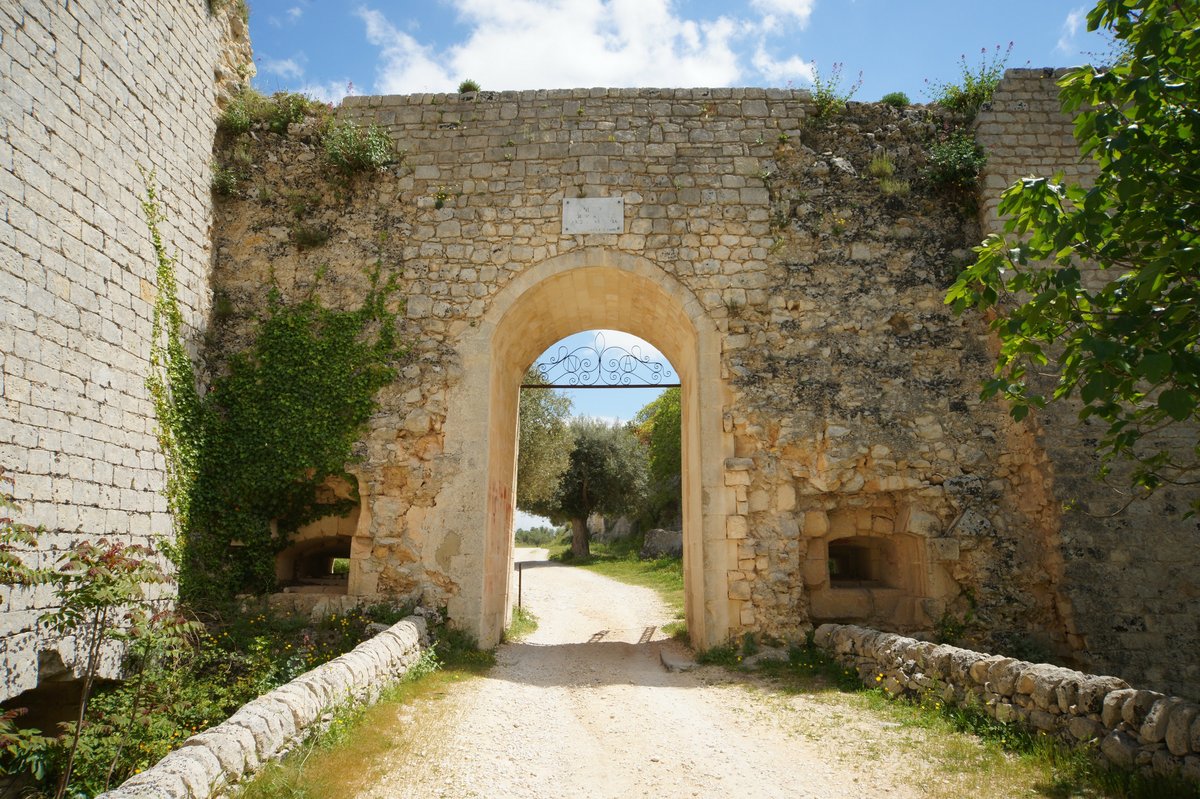
Dominating everything, the Norman Royal Castle (11th century) is the symbol of the site. Of the fortress remain the main tower (enlarged in 1430 and 1600) and sections of walls. Inside, the prisons with graffiti of convicts: ships, games, names carved in stone. A journey through time that lets you imagine medieval life. Next to it, the Porta della Montagna, the main entrance with arch and arrow slits. Climbing the walls, you enjoy a breathtaking view of the Carosello valley, where once stood Arab tanneries with basins and water mills. The castle was never conquered by force: only the earthquake managed to tame it.
The Castle and Its Secrets
Dominating everything, the Norman Royal Castle (11th century) is the symbol of the site. Of the fortress remain the main tower (enlarged in 1430 and 1600) and sections of walls. Inside, the prisons with graffiti of convicts: ships, games, names carved in stone. A journey through time that lets you imagine medieval life. Next to it, the Porta della Montagna, the main entrance with arch and arrow slits. Climbing the walls, you enjoy a breathtaking view of the Carosello valley, where once stood Arab tanneries with basins and water mills. The castle was never conquered by force: only the earthquake managed to tame it.
Why Visit
1. It’s free and always open: no ticket, no schedule. You can arrive whenever you want and stay as long as you like. 2. An uncrowded archaeological park: often you’re the only visitor among the ruins. Perfect for those seeking an authentic experience away from tourist circuits. 3. Layered history: in a few hours you walk through prehistory, Greeks, Romans, Arabs, Normans, and Baroque. A condensed millennia at your fingertips. Plus, unspoiled nature and panoramic views provide the ideal backdrop.
Why Visit
1. It’s free and always open: no ticket, no schedule. You can arrive whenever you want and stay as long as you like. 2. An uncrowded archaeological park: often you’re the only visitor among the ruins. Perfect for those seeking an authentic experience away from tourist circuits. 3. Layered history: in a few hours you walk through prehistory, Greeks, Romans, Arabs, Normans, and Baroque. A condensed millennia at your fingertips. Plus, unspoiled nature and panoramic views provide the ideal backdrop.
When to Go
In my opinion, the best time is spring: wildflowers color the ruins, the climate is mild, and the dawn light makes everything magical. Autumn is also perfect, with warm vegetation colors and ideal temperatures for walking. In summer, avoid the midday hours: the sun beats down hard and there is no shade. If you wake up early, the site is deserted in the morning and the atmosphere is almost mystical. Still, bring a hat and plenty of water.
When to Go
In my opinion, the best time is spring: wildflowers color the ruins, the climate is mild, and the dawn light makes everything magical. Autumn is also perfect, with warm vegetation colors and ideal temperatures for walking. In summer, avoid the midday hours: the sun beats down hard and there is no shade. If you wake up early, the site is deserted in the morning and the atmosphere is almost mystical. Still, bring a hat and plenty of water.
Nearby
A few kilometers away, baroque Noto is a must: UNESCO World Heritage, with its limestone architecture that glows at sunset. Don’t miss Corso Vittorio Emanuele, the Cathedral, and the Teatro Comunale. If you love mosaics, Villa Romana del Tellaro (4th century AD) is a hidden gem: the floor mosaics depict mythological scenes and are extraordinarily well-preserved. For a dip in nature, the Vendicari Nature Reserve offers wild beaches and pink flamingos.
Nearby
A few kilometers away, baroque Noto is a must: UNESCO World Heritage, with its limestone architecture that glows at sunset. Don’t miss Corso Vittorio Emanuele, the Cathedral, and the Teatro Comunale. If you love mosaics, Villa Romana del Tellaro (4th century AD) is a hidden gem: the floor mosaics depict mythological scenes and are extraordinarily well-preserved. For a dip in nature, the Vendicari Nature Reserve offers wild beaches and pink flamingos.