Caidate Castle: Trekking and History Above the Arno Valley

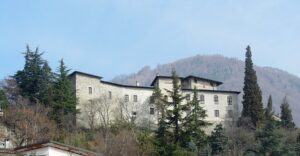
Caidate Castle is a 14th-century manor rising on a hill in Sumirago, in the province of Varese, and it commands the Arno Valley. Privately owned and not open to visitors, it can be admired from the outside and reached on foot via a 7.5 km loop starting from S. Alessandro di Castronno. On clear days, the view stretches as far as Monte Rosa.

• Quadrangular plan with a central courtyard and a square tower of late Roman origin
• 18th-century English landscape park by Balzaretto, among lindens, horse chestnuts and red pines
• Visconti, Bigli and Confalonieri history, up to the Barbiano di Belgiojoso counts (since 1977)
• 7.5 km loop through woods, wash-houses, hay barns and small springs


Events nearby


Copertina itinerario Caidate Castle: Trekking and History Above the Arno Valley
Caidate Castle in Sumirago commands the Arno Valley: a 14th-century Visconti manor, later a Confalonieri villa with an English landscape park. A 7.5 km loop reaches it on foot from CAI Varese.

Good to know


Introduction

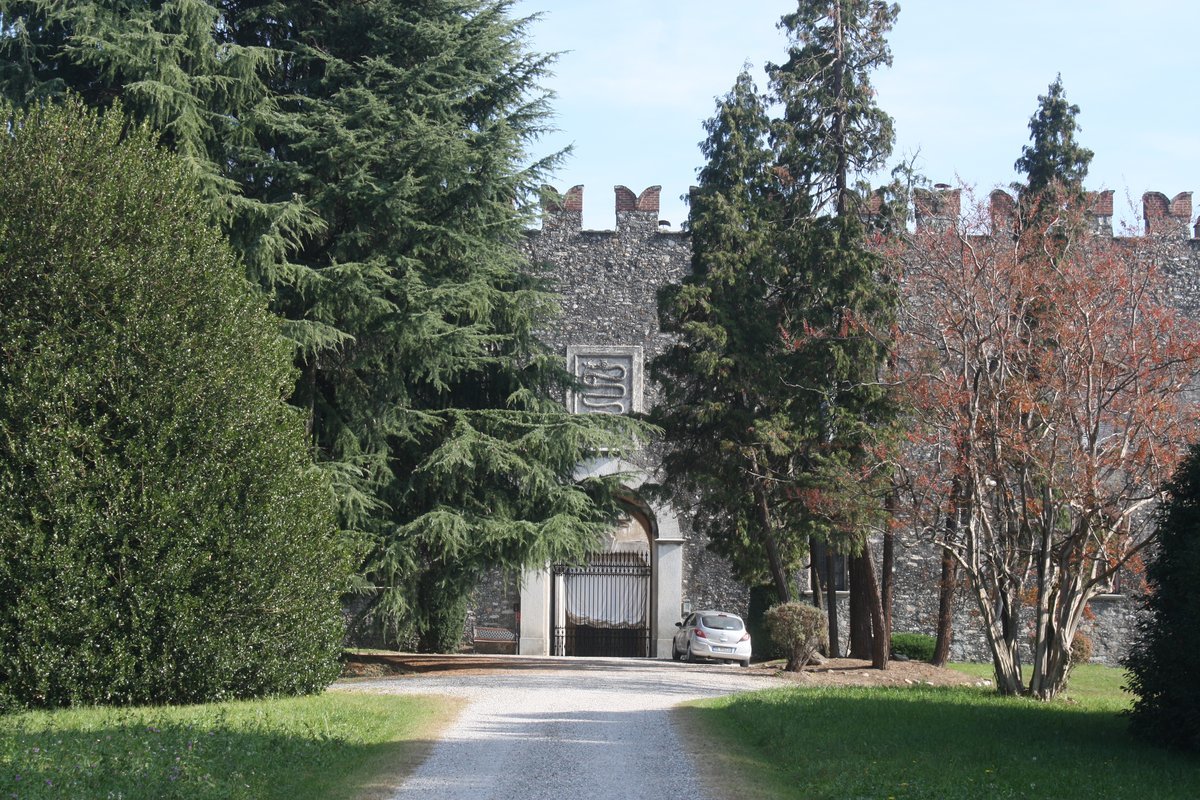
Caidate Castle isn’t one of those manor houses you expect just a stone’s throw from Varese. It stands off to one side of the village of Sumirago and from a rise looks down over the whole Arno Valley. The first thing you notice is the tower: square, massive, of late Roman origin, planted right on the corner that commands the valley. Then the rough-stone façade, the inner courtyard, the battlements. It still looks like a fortress, but in fact it began as a Visconti hunting lodge in the fourteenth century. Today it is privately owned and not open to visitors: it is meant to be admired from outside, with a little respect. The nice thing is that you reach it on foot, via a 7.5 km loop that starts from the hamlet of S. Alessandro in Castronno. Woods, wash-houses, courtyards with old hay barns. And on clear days, behind the manor, Monte Rosa peeks out.

Historical notes

The castle was built in the 14th century as a hunting retreat, commissioned by a branch of the Visconti family tied to the Albizzate fiefs. The corner tower, however, is older: of late Roman origin, it was part of the north-western Alpine defensive system. The Visconti remained owners until 1614, when the castle passed to the Bigli family, counts of Saronno, through the marriage of Baldassare Bigli to Giustina Visconti. In the 17th century, its transformation into a residential villa began. In 1775 Anna Bigli married Eugenio Confalonieri Strattman: the property passed to the Confalonieri family, the family of the Milanese patriot Federico. Further modifications followed in the 18th century and the second half of the 19th century. Since 1977 it has belonged to the Counts Barbiano di Belgiojoso, who inherited it from Maria Confalonieri.

  • 14th century: hunting residence of the Visconti
  • 1614: passed to the Bigli, counts of Saronno
  • 17th century: transformation into a residential villa
  • 1775: marriage of Anna Bigli and Eugenio Confalonieri
  • mid-19th century: west façade in exposed stone
  • 1977: inherited by the Barbiano di Belgiojoso

The architecture: tower, battlements and exposed stone

The castle has a quadrilateral layout with a large central courtyard. On the corner overlooking the valley stands the square tower of late Roman origin, the oldest part of the complex. The main facade, facing west, dates to the mid-19th century: two above-ground floors, finished in exposed stone, a material that gives a rough, honest tone. Despite later transformations, castle features remain: the round turrets and the battlements on the roof, 19th-century additions attributed to the architect Balzaretto. Within the villa itinerary there is also a portico with paired columns, a sign of the transition from fortress to residence. Looking at it from outside, this dual character comes across clearly: half manor, half villa. A detail I like: the west facade catches the afternoon light, and that’s where it really shines in photographs.

The English landscape park and the farmsteads

The English landscape park is one of the surprises of the complex. It was designed in the mid-18th century by the architect Balzaretto, following the fashion for the landscape garden. Inside are lindens, horse chestnuts, and red pines: trees that create shaded areas and clearings, the opposite of the Italian garden, all geometry. The complex also includes three farmsteads, Pianca, Villanova, and former Chinetti: examples of eighteenth-century rural architecture, with simple lines and functional interiors, designed for work in the fields. I like these buildings almost more than the castle, because they tell the everyday life of those who lived on this hill. The park and farmsteads are, however, private property: they can be admired by walking along the ring, without entering. On clear days, above the trees, you can glimpse the Monte Rosa range.

The CAI Varese Loop: 7.5 km Through Woods and Courtyards

The hike is organized by CAI Varese, with local guides sharing stories about the area. We start from the parking lot of the “Materia” Center at Via Confalonieri 5 in Castronno, hamlet of S. Alessandro; the meeting point is the parking lot of Castronno cemetery, with your own transport. The route is a loop of about 7.5 km, elevation gain 100 meters, difficulty T (tourist): doable for anyone who walks a little, with no special training. Along the way you pass through woods and come across washhouses, old courtyards with ancient hay barns, and small water springs. Practical note nobody tells you: there is no water along the route, so bring it from home. The castle cannot be visited inside, but walking up beneath its walls after the woods has a whole different flavor.

Why visit it

1. The view over the Arno Valley. The castle sits off to the side, up high: from there, your gaze sweeps across the valley and, on clear days, all the way to Monte Rosa. 2. The CAI Varese loop. 7.5 easy km, 100 metres of elevation gain, through woods, washhouses and old courtyards: a way to combine walking and history, with guides explaining what you’re looking at. 3. A rare rural landscape. The English-style park and the Pianca, Villanova and former Chinetti farmsteads show how a 14th-century stronghold became, over the centuries, a country villa. I’ll add a very practical reason: it’s an outing you can do in half a day, with no special gear. Watch out, though: the castle is private and not open to visitors: you come here for the exterior and the walk, not for a guided tour of the interiors.

When to Go

There’s no need to pick an exact date; what matters is the day itself. The castle is at its best under clear skies, when the Monte Rosa range appears behind the tower: that’s the moment worth stopping and looking. For the walk, it’s best to avoid the middle hours of the hottest days, since the loop passes through woods but also open stretches. Autumn is probably the most evocative season: the park’s colors change and the west facade in exposed stone takes on a warm tone. Spring works well too, with blossoms and springs more visible along the route. If you go in the afternoon, the light falls on the main facade: perfect for a photo before heading back toward Castronno.

In the Surroundings

Two real ideas to extend the day. The first is Rile Tenore Olona Park, a natural area between Castronno and Sumirago, with trails along the waterways: perfect for staying on the theme of ‘walking and landscape’. The second is the Sacro Monte di Varese, a UNESCO World Heritage Site: the climb among the chapels and the village is a different experience, more contemplative, but it pairs well with a visit to the castle for those who want to combine history and walking. Alternatively, the hamlet of S. Alessandro in Castronno, where the loop starts, with its courtyards, is worth a stroll before or after the trek. These are real places, not tourist stops built to order. The advice is to combine the castle with a waterway or a village, without rushing through everything.

Itineraries nearby


💡 Did You Know…?

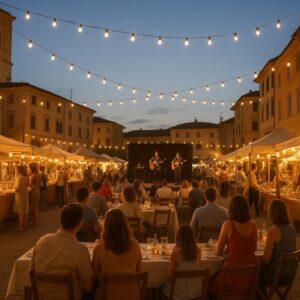
Although the castle itself cannot be visited, its rustic surroundings are vibrant: in June 2019 it hosted the theatrical performance “IO” from the ArtisticA-Mente project and an acoustic concert by the Famousa Balcon Band. Along the CAI Varese loop, local guides accompany walkers, sharing anecdotes about the valley, amid wash-houses, old courtyards with ancient hay barns and small springs.