
🧭 What to Expect
- Ideal for travelers who love history, sea, and nature in one destination
- Highlights: the Fortress of Civitella del Tronto, the coastal towers, the authentic villages
- Activities: trekking on Gran Sasso, swimming at the beach, visits to archaeological museums
- Gastronomy: arrosticini, pecora alla callara and Montepulciano d’Abruzzo wines
- Recommended period: spring and autumn for mild weather, summer for the sea
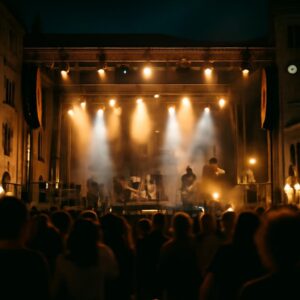
Events nearby


The Province of Teramo is a concentration of authentic Abruzzo: from the Adriatic coast with its medieval towers and sandy beaches, to the hilltop villages of Gran Sasso and Monti della Laga. Here you will find the famous Fortress of Civitella del Tronto, one of the largest in Europe, and the evocative Castel Manfrino, surrounded by nature. Don't miss the Torre di Cerrano in Pineto, a symbol of the coast, and the Archaeological Museum of Campli with Picene and Roman artifacts. Stroll through the alleys of Borgo Faraone and discover textile craftsmanship at the Nina Museum. The province offers a perfect mix of history, sea, and mountains, ideal for a journey of discovery. Every corner tells centuries of cultures: from the Romans to the Bourbons, let yourself be surprised.
Overview
- Civitella del Tronto Fortress: History and Breathtaking Views
- Torre di Cerrano: history, nature, and breathtaking views
- Cathedral Basilica of Santa Maria Assunta and San Berardo
- Castel Manfrino: The Swabian Fortress Between Sky and History
- National Archaeological Museum of Campli
- Torre del Salinello: Between History and Local Flavors
- Roman Amphitheater: An Underground Giant in the Heart of Teramo
- Roman Theatre of Teramo
- Splendore Art Museum: A Treasure Between Sacred and Contemporary
- Borgo Faraone: a ghost village between history and nature
- Vibrata Tower
- Charles V Tower in Martinsicuro
- Nina - Museum of Creative Textile Arts: A Dive into the Elegance of the Past
- Fortellezza Park: A Garden Suspended Over the Sea
- Castello Bonifaci: a neo-Gothic dream in Vallenquina
Itineraries nearby
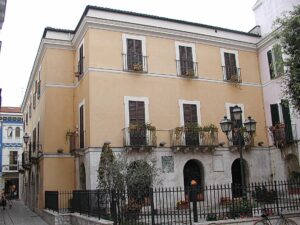


Civitella del Tronto Fortress: History and Breathtaking Views
- Via Alberto del Bono, Civitella del Tronto (TE)
- Open in Google Maps
- View on Google Images
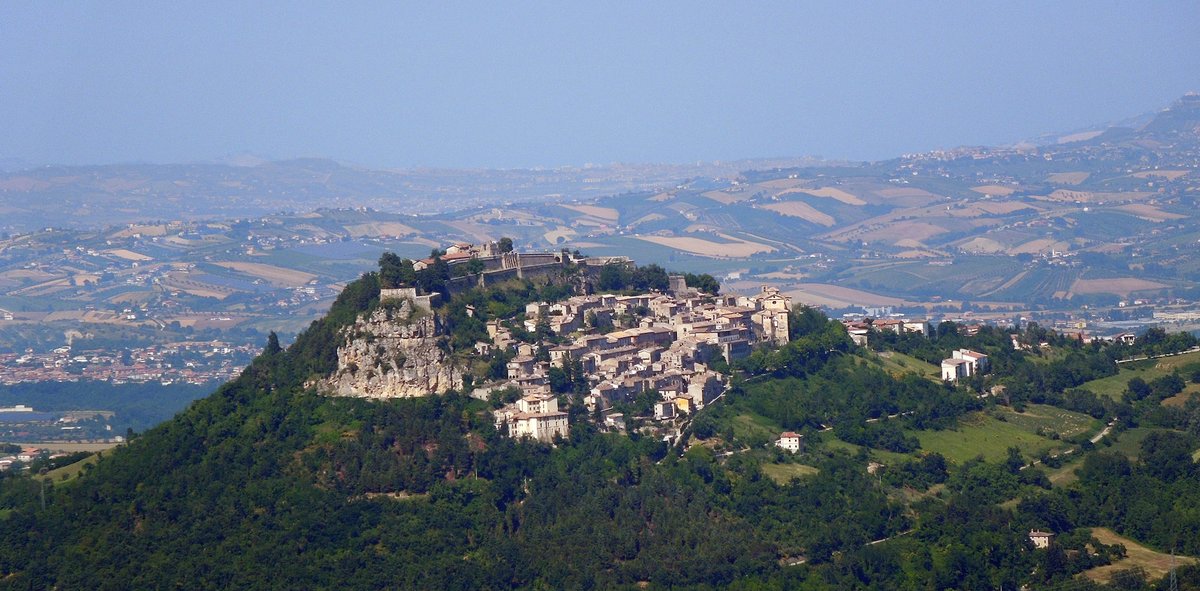 If there's one place in Abruzzo that tells epic pages of the Risorgimento, it's the Civitella del Tronto Fortress. Perched on a travertine spur over 600 meters high, it's one of the largest fortresses in Europe: 500 meters long, 25,000 square meters of surface area. Mind-blowing stuff. Built between 1564 and 1576 by the Spanish, it was the border between the Papal States and the Kingdom of Naples for centuries. But its fame is tied to the siege of 1860-1861: while Italy was unifying, here the Bourbon soldiers held out until March 20, three days after the proclamation of the Kingdom. Walking through the parade grounds, the bastions of St. Peter and St. Andrew, and the Governor's Palace (1574), you can still hear the echo of those cannon shots. Don't miss the Church of San Giacomo (1604) and the Museum of Arms, where helmets, flintlock pistols, and ancient maps tell the story of garrison life. And then there's the view: from the ramparts, the gaze spans from the Gran Sasso to the Adriatic Sea, passing through the Tronto and Vibrata valleys. After restorations (1975-1985 and 2022), the fortress is more accessible than ever. A tip? Take your time to explore the walkways and imagine the soldiers on guard. And if you have children, ask about visits with birds of prey and wolves (Wild in Fortezza), by reservation.
Torre di Cerrano: history, nature, and breathtaking views
- Ciclovia Adriatica, Pineto (TE)
- Open in Google Maps
- View on Google Images
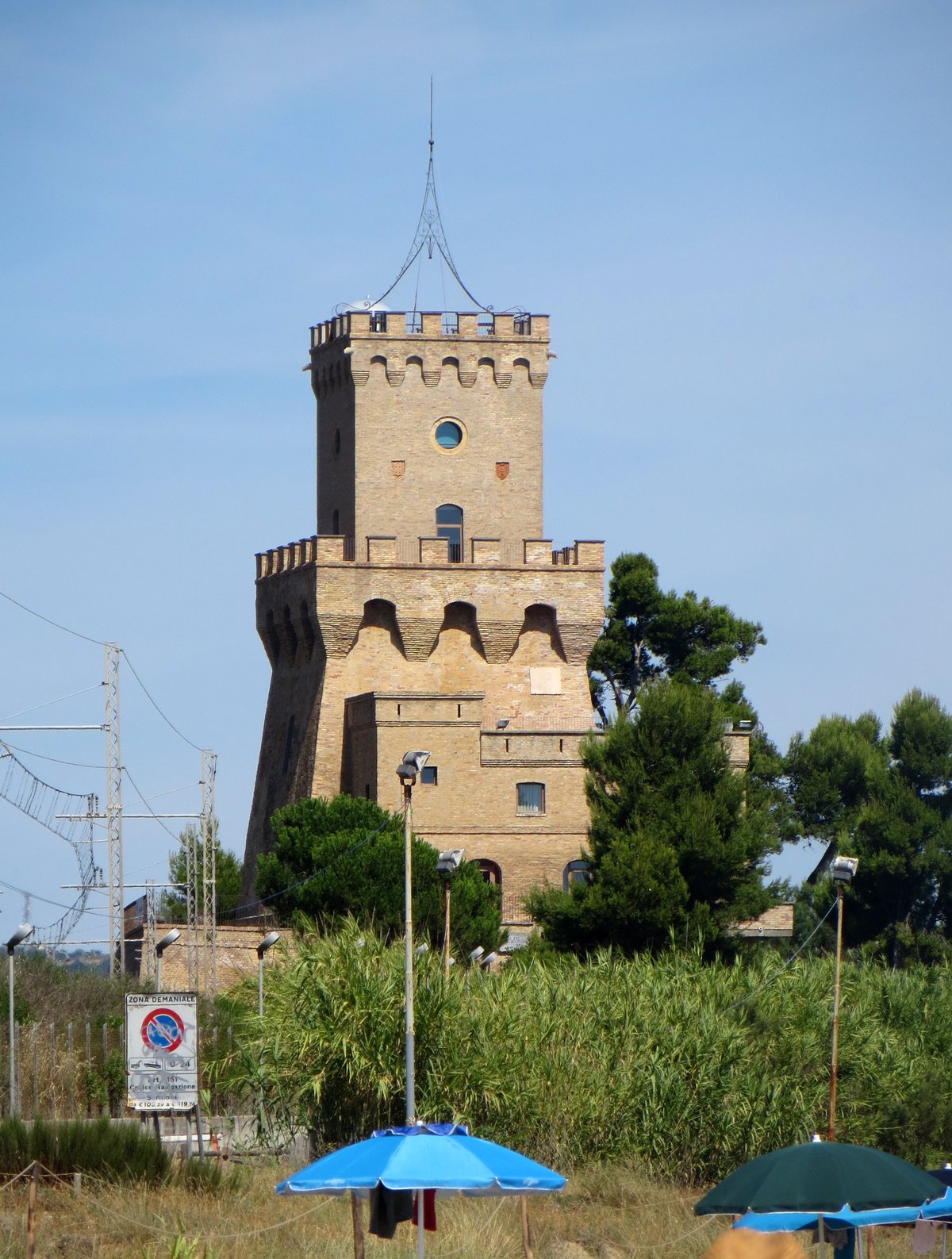 The Torre di Cerrano in Pineto is much more than a simple coastal tower. Built in 1568 by order of the Kingdom of Naples, it was part of a defensive network against Saracen raids. Standing 12.60 meters tall, with a square brick base measuring 12.80 meters per side, it is one of the few remaining intact towers. Climbing to the terrace, the view stretches from the coast of Pineto and Silvi to the Gran Sasso on clear days. Today, the tower is the heart of the Torre del Cerrano Marine Protected Area, established in 2009, which protects 7 km of coastline with sandy dunes and coastal pine forest. Inside, you'll find the Museo del Mare (still being set up) and the MPA Info-point. On the seabed in front lie the remains of the ancient Roman port of Atri, dating back to the colonial era. The tower is easily reached by bike from the Adriatic Cycle Path, but if you come by car, be prepared for limited parking along the SS16. In summer, guided tours take you to discover every corner, from the shell room to the terrace. The sunset here is magical: the sun slowly sinks into the sea, while the tower turns orange. Tip: bring binoculars to observe the birds nesting in the dunes. A place that combines history, nature, and unforgettable panoramas.
Cathedral Basilica of Santa Maria Assunta and San Berardo
- Go to the page: Teramo Cathedral: A Romanesque-Gothic Masterpiece and Silver Altarpiece
- Piazza Ercole Vincenzo Orsini, Teramo (TE)
- Open in Google Maps
- View on Google Images
 The Cathedral Basilica of Santa Maria Assunta and San Berardo, better known as Teramo Cathedral, is a gem that surprises you. Built starting in 1158 at the behest of Bishop Guido II, it rises on the remains of the Roman theater and amphitheater – the stones of those monuments are still visible in the walls. The building's dual nature is immediately apparent: the lower part is Romanesque, the upper Gothic, a result of the 14th-century expansion by Bishop Niccolò degli Arcioni. Climbing the staircase, you'll notice the magnificent Cosmatesque portal from 1332, signed by Deodato di Cosma, with statues of the Angel and the Virgin attributed to Nicola da Guardiagrele. Inside, the interior has three naves, sober after the 1930s restorations that removed Baroque decorations. The real eye-catcher is the high altar with the gilded silver altarpiece by Nicola da Guardiagrele (1433-1448): 35 panels telling the story of Christ, a masterpiece of goldsmithing. Don't miss the polyptych by Jacobello del Fiore in the Chapel of San Berardo, with a view of ancient Interamnia. The chapel, the only surviving Baroque element, houses the patron saint's relics. Below, the crypt and grotto of San Berardo, discovered during the 2007 restorations. The bell tower, almost 50 meters high, has a Romanesque base and an octagonal spire by Antonio da Lodi (1493). Free admission, open daily 8:00-13:00 and 15:30-19:30. A place that unites history, art, and spirituality.
Castel Manfrino: The Swabian Fortress Between Sky and History
- Strada Provinciale 52 di Macchia da Sole, Valle Castellana (TE)
- Open in Google Maps
- View on Google Images
 Perched on a rocky spur at 963 meters above sea level, Castel Manfrino dominates the Salinello Gorges and the southern slopes of the Monti della Laga. Built by Manfred of Swabia between the 12th and 13th centuries on earlier Roman and Lombard foundations, this castle was the key point of the Swabian defensive system along the border between the Papal States and the Kingdom of Sicily. Even today, its name evokes the legend of a secret tunnel linking it to the fortress of Civitella del Tronto. The walls, 120 meters long and up to 20 meters wide, follow the profile of the rocky ridge and are built with smooth river pebbles. Inside, three towers can be identified: the Angevin Tower (the largest, up to 12 meters high), the Swabian Tower overlooking the Salinello, and the central Keep, the castellan's dwelling. On the central tower, a sooty hood is still visible: it is believed to have been used for boiling oil to pour on attackers, and two cauldrons found in the Rivolta stream seem to confirm this. Inside the enclosure, the remains of a probable chapel retain traces of frescoes. The site offers a breathtaking panorama stretching from the Adriatic coast to the Gemelli Mountains. Accessible only on foot from Macchia da Sole, this place is a dive into medieval history and the wild nature of the Monti della Laga. No ticket or schedule: you are free to explore and imagine life in times past.
National Archaeological Museum of Campli
- Corso Umberto Primo 1, Campli (TE)
- https://www.musei.abruzzo.beniculturali.it/musei?mid=67&nome=museo-archeologico-nazionale-di-campli
- Open in Google Maps
- View on Google Images
- pm-abr.museocampli@beniculturali.it
- +39 0861 569158
 If you're in Campli, you can't miss the National Archaeological Museum, housed in a charming corner of the ancient convent of San Francesco (late 13th century). Opened in 1988, this small but incredibly rich museum holds the treasures of the Campovalano necropolis, a site that yielded over 600 tombs of the Italic Pretuzi people, dating from the 9th to the 3rd century BC. Upon entering, you're greeted by a portico with mullioned windows and a polylobed portal: you can already feel the history. The exhibition unfolds across three rooms with over 30 display cases, showcasing exceptional funerary goods. The earliest tombs, from the Orientalizing period, were princely tumuli with stone circles: you'll find weapons, bronze vessels, and even war chariots. One of the highlights is the reconstruction of Tomb 2, known as the 'King of Campovalano', with its imposing tumulus. For women, there are amber jewelry, glass paste, and precious pendants, such as the necklace with a human mask of Phoenician-Punic origin. Anthropological details are not missing: a dedicated section analyzes bone remains, revealing diseases, traumas, and lifestyle habits. The museum also tells the decline of the Pretuzi, with grave goods that progressively become poorer until the arrival of the Romans. Among the most curious objects, a sword with a wooden sheath and a bronze oinochoe of Etruscan workmanship. In short, it’s a fascinating journey into a little-known civilization. The visit takes a couple of hours but leaves a lasting impression. And if you're lucky, you can also reach the necropolis just a few kilometers away.
Torre del Salinello: Between History and Local Flavors
- Via Galileo Galilei, Giulianova (TE)
- Open in Google Maps
- View on Google Images
 If you're in Giulianova and want to combine history and good food, Torre del Salinello is a must. Built around 1568 as a coastal watchtower, it was part of a system of 15 towers to defend against Saracens. Standing 10 meters tall with a square layout, brick construction, corbels, and machicolations, it is one of the few still intact today. After years of neglect, it was purchased by the Migliori family, restored in the 1920s and again in 2003. Since 2021, it has reopened to the public as Bottega Migliori: an exhibition and sales space for the Tenuta Cerulli Spinozzi farm. Here you can buy wine, oil, and local specialties. Visits are free during shop hours: Monday–Saturday 10–1 and 4–8. The entrance is wheelchair accessible and suitable for children. In short, a perfect stop for those who love discovering authentic corners with a glass of Montepulciano d'Abruzzo in hand.
Roman Amphitheater: An Underground Giant in the Heart of Teramo
- Go to the page: Roman Amphitheatre of Teramo: Brick Arches and Underground Galleries from the 1st Century AD
- Via Vincenzo Irelli, Teramo (TE)
- Open in Google Maps
- View on Google Images
 While strolling through Teramo, don’t expect to see the amphitheater like the Colosseum. Here it’s underground, buried six meters below street level. Yet, just by peering into Via San Berardo or to the left of the Cathedral, you’ll come across its powerful brickwork. The layout is elliptical: a perimeter of 208 meters, with a major axis of 74 and a minor of 56. Enough to leave you speechless.
Built between the 1st and 2nd centuries AD – sources disagree whether under Augustus or between Trajan and Hadrian – the amphitheater has lived a thousand lives. In the 1500s, Bishop Giulio Ricci had it cleared of earth, but until 1937 the remains were still confused with those of the nearby theater. Then, with the demolition of some buildings, its true form emerged. Too bad that in the Middle Ages it was used as a quarry for the Duomo (12th century) and that in the 1700s the Seminary was built on top of it, erasing the internal tiers.
Today, just under half of the ellipse remains, with arches and radial passages that once channeled spectators. In the area, you can see three arches side by side on the major axis and one arch on the minor side. The underground tunnels? Perhaps they served as a fortress in late antiquity. Entry is free and always open (but groups should book at 0861 324418). One tip: look at the right wall of the Duomo – there you’ll find carved stones stolen from the amphitheater. History is right before your eyes; you just need to know how to read it.
Roman Theatre of Teramo
- Go to the page: Roman Theatre of Teramo: 3,000-seat cavea in the historic heart
- Largo Anfiteatro, Teramo (TE)
- Open in Google Maps
- View on Google Images
 If you're passing through Teramo, don't miss the Roman Theatre, a monument enjoying a second youth. Built in the Augustan age (the stage decorations date back to 30 BC), it was the beating heart of ancient Interamnia. Today, its remains emerge about 2.5–3 meters below street level, between Via Teatro Antico and Via Luigi Paris, a stone's throw from the Duomo. The semicircular cavea, with a diameter of 78 meters, could hold up to 3,000 spectators (some say even 4,500). Of the original structure, two arches of the travertine outer facade, fourteen steps, and part of the paved orchestra are still visible. For centuries, the theatre was hidden by 19th-century buildings (Adamoli and Salvoni), and only in 2021 did their demolition begin. The renovation works, funded with over 19 million euros from ministerial, regional, and Pnrr funds, aim to return it to the city by 2027, with performances and a new cavea. In the meantime, the construction site is open to visitors and tells the story of this place: there are panels, audio guides, and even a podcast. I saw it from Via Irelli, and I admit the thrill of peeking through the scaffolding is immense. Free admission, but it's best to call ahead (0861 324418) to find out if there are guided tours. A piece of history gradually coming back to light.
Splendore Art Museum: A Treasure Between Sacred and Contemporary
- Via Crucia, Giulianova (TE)
- Open in Google Maps
- View on Google Images
 If you find yourself in Giulianova, don't miss the Splendore Art Museum, a hidden gem within the complex of the Sanctuary of Madonna dello Splendore. Inaugurated in 1997 at the behest of Father Serafino Colangeli, it spans three floors covering about 1200 sqm and serves as a meeting point between sacred and contemporary art. On the ground floor, you'll find the Art Collection of the Capuchin Friars of Abruzzo, relocated from L'Aquila after the 2009 earthquake: a striking 13th-century wooden Madonna del Latte stands out. Moving up to the second floor, once home to the Bindi Collection (377 19th-century Neapolitan works, now under restoration), today it hosts temporary exhibitions by artists like Aligi Sassu, Giorgio Morandi, and Marc Chagall, who have exhibited here. The third floor is dedicated to contemporary art: a conference room with a panoramic terrace overlooking the Adriatic and works by Mimmo Paladino, Francesco Messina, and others. The atmosphere is intimate, almost meditative, blending spirituality and creativity. Admission is free (or by donation, but it's wise to bring some change), and hours should be checked: according to sources, it's open daily from 5 to 8 PM, but times may vary, so check the website or call. Truly a place off the tourist trail, where you can marvel at the mix of frescoes and modern installations.
Borgo Faraone: a ghost village between history and nature
- Sant'Egidio alla Vibrata (TE)
- Open in Google Maps
- View on Google Images
 If you love abandoned villages and the decaying charm of 'ghost towns', Borgo Faraone will win you over at first glance. Perched on a hill at 318 meters, this ancient Lombard village (the name derives from 'fara', encampment) has remained intact over time, despite the signs of the 1950 earthquake that caused its abandonment. Today you access it through the Porta di Faraone, a crenellated arch with a bas-relief by Ghino Sassetti depicting the Madonna and Child and St. John: a gesture of protection for the village. As soon as you cross the threshold, you find yourself in a small square where the Church of Santa Maria della Misericordia stands, dating back to the 15th century but heavily damaged. A little further on, the ruins of the Baronial Palace (17th century) and a small building from 1844 with frescoed interiors tell a story of nobility and daily life. Among cobblestone alleys and vegetation enveloping the walls, there are about 25 buildings, once inhabited by about a hundred families. Today the silence is broken only by the wind and birdsong. Recommendation: visit at dawn or dusk, when the soft light enhances the colors of the stone. But be careful: the village is dilapidated, so move cautiously and do not venture inside the buildings. Bring water and comfortable shoes, and prepare for a timeless experience. To reach it, from Sant'Egidio alla Vibrata follow SP2 to Faraone Nuovo, then take via Faraone Antico. Parking is just before the entrance. There are no services, but the magic of the place rewards every step.
Vibrata Tower
- Via Cavour, Alba Adriatica (TE)
- Open in Google Maps
- View on Google Images
 If you're passing through Alba Adriatica, don't miss the Vibrata Tower, a massive brick tower in the shape of a truncated pyramid that unexpectedly rises among modern houses. Built between 1568 and 1569 by order of the viceroy of Naples, it served as a lookout against Saracen raids. With its 10-meter sides at the base and sloping walls, it looks like something out of a history book. Each side is crowned with sturdy corbels and three projecting machicolations, once topped by Guelph merlons that have now disappeared. Climbing up, you reach a terrace with a defensive turret, which commanded a wide view of the coast. Over time, it lost its military function and underwent various alterations, but the surprise comes when you discover that today it houses a restaurant: dining within these 17th-century walls is a unique experience. It's a pity that it's private property and not always open to the public inside, but it's still worth seeing from the outside. It is located at via Cavour 14, right near the mouth of the Vibrata stream. For info, contact the Alba Adriatica Tourism Office (0861719331, turismo@comune.alba-adriatica.te.it).
Charles V Tower in Martinsicuro
- Strada Statale 16 Adriatica, Martinsicuro (TE)
- Open in Google Maps
- View on Google Images
 In Martinsicuro, a few steps from the sea, stands the Torre di Carlo V, a sixteenth-century gem worth a visit. Built in 1547 to defend the coast from Saracen pirates, this three-story quadrangular brick tower differs from other Abruzzo towers: it recalls the style of Lazio and Campania, with its stone frames and the niche enclosing the Habsburg double-headed eagle. Here passed the border between the Kingdom of Naples and the Papal States, and the building next door was the customs house. Today the tower houses the Antiquarium of Castrum Truentinum, a small museum with Roman and protohistoric artifacts, and Legambiente's Blue School. In summer there are unmissable events: every Thursday in August children can become 'little archaeologists' with free workshops (reservation required), while on August 5 and 12 there are theatrical guided tours in costume. The ticket costs only 3 euros and the view from the top of the coast and the Tronto river is fantastic. In short, a stop that combines history, archaeology, and an authentic atmosphere.
Nina - Museum of Creative Textile Arts: A Dive into the Elegance of the Past
- Largo Rosati, Civitella del Tronto (TE)
- Open in Google Maps
- View on Google Images
 In Civitella del Tronto, just inside the walls of the fortress town, there's a museum that takes you back in time. It's called Nina - Museum of Creative Textile Arts, and if you love vintage fashion or are just curious, it's a must-see. Opened in 2013 thanks to Guido Scesi (who wanted to dedicate it to his grandmother Gaetana, known as 'Nina'), it houses one of the largest Italian collections of textile history: over 500 pieces (some say 3000, but what matters is they are many and all beautiful) from the late 1700s to after World War II. Women's, men's, and children's clothing, military uniforms, and sacred vestments, but also accessories, sewing machines, a vintage washing machine, and even a 1930s Giordani baby carriage. The exhibit is set up in medieval rooms that once served as the town bakery and a garage, restored with minimal intervention to leave the original structures visible. I was fascinated by the green silk blanket commemorating Ferdinand II of Bourbon's visit in 1832 and the 16th-century Turkish Ushak carpet. Every object has a story, and the museum tells it with passion. Hours and tickets vary by season: in summer it's open daily 10 am–8 pm, in winter only Saturday and Sunday 11 am–5 pm. Full ticket is €5, reduced €1, and if you've already visited the Fortress of Civitella, you get a discount. I recommend checking the official website (museonina.it) before you go, as hours often change. One tip: take your time to read the captions—they're full of details that make the visit even more interesting.
Fortellezza Park: A Garden Suspended Over the Sea
- Tortoreto (TE)
- Open in Google Maps
- View on Google Images
 If you come to Tortoreto Alta, 227 meters above sea level, don't miss Fortellezza Park. This panoramic garden, once a lookout point against pirates, now offers views stretching from the coast of Pescara to San Benedetto del Tronto, and on clear days all the way to Gran Sasso. It's the perfect spot for a break, perhaps sitting on the special bench donated by the association “Il Dono di Errico,” crafted by master Nino De Simone. A gesture that turns the park into a place of memory and sharing. Fun fact: a femur of Elephas meridionalis over 2 meters long was found here—one of the oldest artifacts in Tortoreto. The park is wheelchair accessible, but be aware: the uphill road is quite steep, and parking is along the slope. The surface is dirt and gravel. Unfortunately, the Fortellezza Belvedere (the panoramic terrace) is currently closed for safety reasons, following an order from Mayor Domenico Piccioni. Restoration work is hoped to soon make it accessible again. In the meantime, the park remains open and still offers wonderful views. A tip: visit the park at sunset, when the light brings out the colors of the medieval village and surrounding hills. It's one of those places that makes you fall in love with Abruzzo.
Castello Bonifaci: a neo-Gothic dream in Vallenquina
- Strada Provinciale 52 di Macchia da Sole, Valle Castellana (TE)
- Open in Google Maps
- View on Google Images
 Perched on the ridge of the village of Vallenquina, at 869 meters above sea level, Castello Bonifaci is one of the most fascinating surprises in the province of Teramo. Built between the mid-19th century and 1907 at the behest of Professor Vincenzo Bonifaci – lawyer, notary, and philosopher – the building is a perfect example of neo-Gothic style, complete with a crenellated turret, pointed windows, and corbels that recall ancient medieval fortresses. The materials are varied: sandstone, spongy travertine, and brick create a pleasant chromatic contrast. The castle incorporates pre-existing houses: below a vaulted passage opens the main entrance, where the coat of arms with the Ghibelline eagle of the Bonifaci family stands out. The interior has about thirty rooms, now owned by the Angelini family, descendants of the Bonifaci. Beside it is the 17th-century church of San Nicola di Bari, with a bell gable. The view over the Castellano valley is breathtaking: woods, Lake Sbraccia, and in the background, the Monti Gemelli. Unfortunately, the earthquake has left its mark: the state of preservation is mediocre, but the charm remains intact.