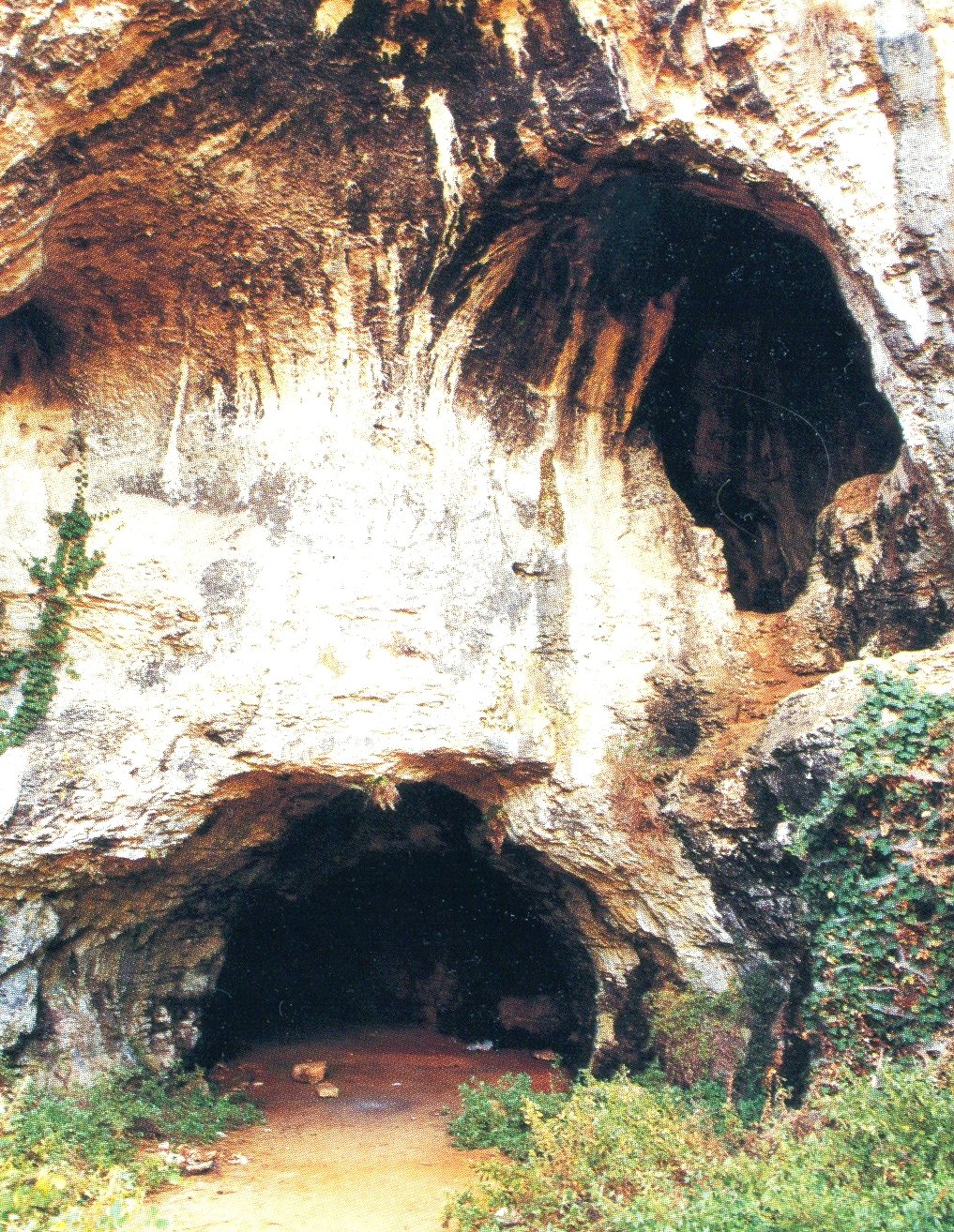
The Santa Croce Caves, in Bisceglie, are an archaeological site of international importance. Discovered in the 1930s, they yielded unique artifacts such as a Neanderthal femur and a Neolithic mat. Reopened to the public in 2022, they offer guided tours immersed in nature.
Highlights:
– Archaeological finds: Neanderthal femur (50,000 years old), plant fiber mat (6,500 years old)
– Karst formation: caves carved by an ancient underground river
– Recent reopening: 2022 after consolidation works
– Scout management: guided tours by the Bisceglie Scout Group
Introduction
Imagine walking in a place where time stopped 50,000 years ago. The Santa Croce Caves, in Bisceglie, are exactly that: a dive into prehistory, among Neanderthals and Neolithic mats. After years of closure, they are finally open again. And the feeling is that of discovering a secret guarded by the rock. There is nothing artificial: it’s all real, authentic, exciting. A place that makes you feel small, but also incredibly lucky to be able to enter it.
Introduction
Imagine walking in a place where time stopped 50,000 years ago. The Santa Croce Caves, in Bisceglie, are exactly that: a dive into prehistory, among Neanderthals and Neolithic mats. After years of closure, they are finally open again. And the feeling is that of discovering a secret guarded by the rock. There is nothing artificial: it’s all real, authentic, exciting. A place that makes you feel small, but also incredibly lucky to be able to enter it.
Historical Notes
Discovered in 1934 by Francesco Saverio Majellaro, the caves have been continuously inhabited from the Middle Paleolithic to the Bronze Age. The most important find? A Neanderthal femur from 1955, but also a Neolithic vegetable fiber mat from 6500 years ago, unearthed during excavations by the University of Siena. After a decade of closure (2012-2022), the Bisceglie Scout Group restored the site, reopening it to the public on April 3, 2022. Here is a timeline:
Historical Notes
Discovered in 1934 by Francesco Saverio Majellaro, the caves have been continuously inhabited from the Middle Paleolithic to the Bronze Age. The most important find? A Neanderthal femur from 1955, but also a Neolithic vegetable fiber mat from 6500 years ago, unearthed during excavations by the University of Siena. After a decade of closure (2012-2022), the Bisceglie Scout Group restored the site, reopening it to the public on April 3, 2022. Here is a timeline:
- 1934: caves discovered by Majellaro
- 1955: Neanderthal femur found
- 1975: Scout group begins enhancement
- 1997: University of Siena excavations uncover Neolithic mat
- 2012: closed for safety reasons
- April 3, 2022: reopened to the public
- 1934: caves discovered by Majellaro
- 1955: Neanderthal femur found
- 1975: Scout group begins enhancement
- 1997: University of Siena excavations uncover Neolithic mat
- 2012: closed for safety reasons
- April 3, 2022: reopened to the public
What to See: The Femur and the Mat
The highlight? The Neanderthal femur, one of the few human remains from that era in Apulia. But there’s also the Neolithic mat, preserved intact: it’s astonishing to think it was woven 6,500 years ago. Then there are the parietal paintings, pottery fragments, stone tools. Every object tells a story. It’s an open-air museum, but inside the earth. A guided tour is a must: without it, you’d miss the most fascinating details.
What to See: The Femur and the Mat
The highlight? The Neanderthal femur, one of the few human remains from that era in Apulia. But there’s also the Neolithic mat, preserved intact: it’s astonishing to think it was woven 6,500 years ago. Then there are the parietal paintings, pottery fragments, stone tools. Every object tells a story. It’s an open-air museum, but inside the earth. A guided tour is a must: without it, you’d miss the most fascinating details.
Visiting the Caves: Practical Tips
The caves are open with guided tours (I recommend booking). The site has free parking, restrooms, a bar, and a snack area. The atmosphere is evocative: the silence, the humidity, the smell of earth. Bring a sweatshirt, even in summer: it’s cool inside. The guides are super knowledgeable, often the same scouts who worked on the restoration. If you want to see the more delicate artifacts (like the mat), go to the Maiellaro Civic Archaeological Museum in the center, which displays the original pieces.
Visiting the Caves: Practical Tips
The caves are open with guided tours (I recommend booking). The site has free parking, restrooms, a bar, and a snack area. The atmosphere is evocative: the silence, the humidity, the smell of earth. Bring a sweatshirt, even in summer: it’s cool inside. The guides are super knowledgeable, often the same scouts who worked on the restoration. If you want to see the more delicate artifacts (like the mat), go to the Maiellaro Civic Archaeological Museum in the center, which displays the original pieces.
Why Visit
First: it’s one of the few Neanderthal sites you can visit in Italy. Second: the story of its recovery is a great tale of volunteering – the Scout Group did an enormous job. Third: the surrounding landscape is still wild, with Mediterranean scrub that looks like it stepped out of a painting. You don’t need to be an archaeology enthusiast: the experience is for everyone. A tip? Bring the kids: the guides know how to engage them with stories and activities.
Why Visit
First: it’s one of the few Neanderthal sites you can visit in Italy. Second: the story of its recovery is a great tale of volunteering – the Scout Group did an enormous job. Third: the surrounding landscape is still wild, with Mediterranean scrub that looks like it stepped out of a painting. You don’t need to be an archaeology enthusiast: the experience is for everyone. A tip? Bring the kids: the guides know how to engage them with stories and activities.
When to Go
Early morning is the best time: the light filters through the trees and the air is still fresh. In spring or autumn, you’ll avoid the heat and the crowds. In winter, if it rains, the path might be slippery; better to check conditions. But even in summer, if you arrive early, you can enjoy the site in peace. Don’t forget a flashlight: some areas are dark, and the guide turns them off to show the effect of the paintings.
When to Go
Early morning is the best time: the light filters through the trees and the air is still fresh. In spring or autumn, you’ll avoid the heat and the crowds. In winter, if it rains, the path might be slippery; better to check conditions. But even in summer, if you arrive early, you can enjoy the site in peace. Don’t forget a flashlight: some areas are dark, and the guide turns them off to show the effect of the paintings.
Nearby
A few kilometers away, still in Bisceglie, don’t miss the Maiellaro Civic Archaeological Museum: it displays the original mat and other artifacts from the caves. Then there are the Dolmens, ancient megalithic tombs scattered across the countryside – another prehistoric stop. If you have time, take a stroll through the historic center of Bisceglie: it’s small but full of churches and old palaces. All in half a day, without rushing.
Nearby
A few kilometers away, still in Bisceglie, don’t miss the Maiellaro Civic Archaeological Museum: it displays the original mat and other artifacts from the caves. Then there are the Dolmens, ancient megalithic tombs scattered across the countryside – another prehistoric stop. If you have time, take a stroll through the historic center of Bisceglie: it’s small but full of churches and old palaces. All in half a day, without rushing.