Udine Castle: Civic Museums, Frescoed Halls, and Alpine Views

Udine Castle, built on a morainic hill, offers a complete cultural experience with the Civic Museums and breathtaking views. Its strategic position, utilized since Roman times, makes it a privileged observation point over Udine and Friuli.

  • Civic Museums with archaeological collections and Renaissance works by artists like Pordenone
  • Parliament Hall, frescoed to transport you to the 16th century
  • 360-degree panoramic view over the Friulian hills and, on clear days, as far as the Alps
  • Access through the Bollani Arch, a walk that is part of the experience
Copertina itinerario Udine Castle: Civic Museums, Frescoed Halls, and Alpine Views
Udine Castle houses the Civic Museums with archaeological collections and Renaissance artworks, frescoed halls like the Parliament Hall, and a 360-degree panorama over the Friulian hills to the Alps.

Good to know


Introduction

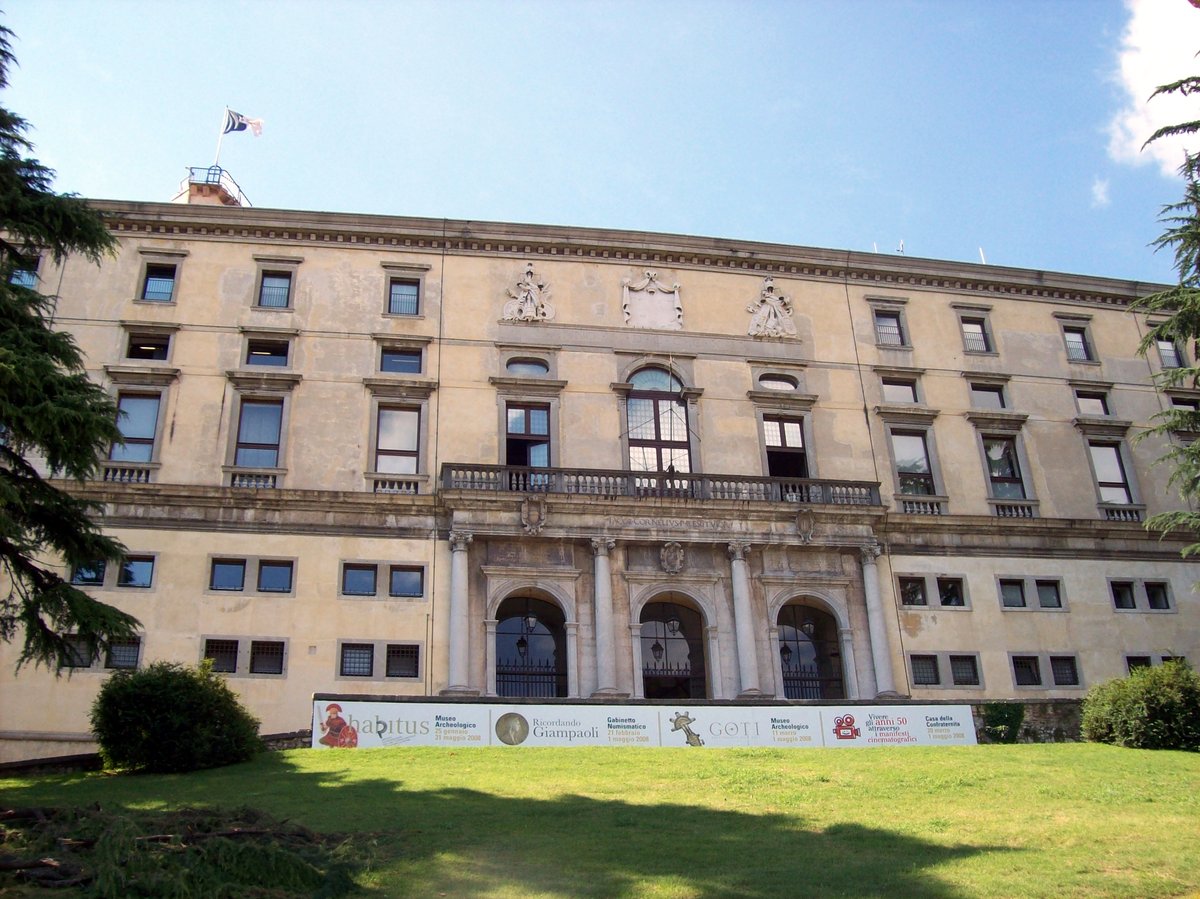
The Castle of Udine is not just a monument: it is the privileged vantage point over the city and the entire Friuli region. Perched on a hill of morainic origin, it welcomes you with its imposing bulk that dominates the urban panorama. Climbing up here means immersing yourself in centuries of history, but also treating yourself to a unique photographic glimpse, with the Julian Alps providing a backdrop to the rooftops of the historic center. It is the perfect place to understand the soul of Udine, a blend of power, art, and everyday life that you can feel between its walls and from its ramparts.

Historical Overview

The history of the castle is deeply intertwined with that of Udine. Legend has it that the hill was erected by Attila to watch Aquileia burn, but the first reliable records date back to 983. However, the current structure is the result of reconstruction commissioned by the Republic of Venice after the 1511 earthquake. For centuries, it served as the center of patriarchal and Venetian power, housing the Lieutenant of the Patria del Friuli. Today, freed from military functions, it is a vibrant cultural hub.

  • 983: First documented mention of the hill.
  • 1511: Earthquake that destroyed the medieval castle.
  • 1547: Start of reconstruction in Renaissance style under Venice.
  • 1906: The Municipality of Udine purchases the castle.
  • Today: Home to the Civic Museums and a venue for events.

The Civic Museums: A Journey Through Time

Inside the castle, you’ll find the Civic Museums of Udine, a complex that alone is worth the visit. This is no ordinary museum: it’s a layered narrative of the city and its territory. The Archaeological Museum takes you from prehistoric origins to the Roman era, with local artifacts that seem to speak. The Art Gallery, on the other hand, is a concentration of art, featuring works from the Middle Ages to the 19th century, including masterpieces by Giambattista Tiepolo and Pietro Novelli. Walking through these often frescoed halls is like flipping through a book of Friulian art history. The setup is modern and clear, perfect even for those who aren’t experts.

The Parliament Hall and the Panorama

Two absolutely unmissable experiences. The Parliament Hall (or Council Hall) is the ancient political heart of the castle, a majestic space with a gilded coffered ceiling and painted coats of arms. Here, the Council of the Homeland of Friuli used to convene. But the real icing on the cake is stepping out onto the Lippomano Loggia. From this belvedere, protected by elegant Renaissance arches, the view embraces the whole of Udine: you’ll recognize the bell tower of the Cathedral, Piazza Libertà (known as ‘Italy’s most beautiful drawing room’), and, on clear days, the Alpine arc. It’s the moment where history and landscape merge.

Why Visit It

For three concrete reasons. First: it’s a 360-degree cultural hub. With a single ticket, you gain access to archaeological museums, an art gallery, and historic halls—a rich and concentrated offering. Second: the panoramic view is guaranteed and spectacular. You don’t need to be a skilled photographer to capture unforgettable glimpses of the city and the plain. Third: its hilltop location makes it an ideal starting or ending point for exploring Udine’s historic center, reachable with a short and pleasant downhill walk.

When to Go

The magical moment is at sunset. Watching the sun dip behind the mountains, painting the city’s rooftops and the facade of the Church of Santa Maria di Castello in shades of pink and orange, is a breathtaking experience. Autumn mornings, when the air is crisp and the light is clear, are also perfect for leisurely museum visits and enjoying exceptional visibility from the viewpoint, without the summer heat.

In the Surroundings

Descending from the hill, you find yourself directly in Piazza Libertà, considered one of the most harmonious examples of Venetian architecture on the mainland, with the Loggia del Lionello and the Clock Tower. For a thematically related experience, visit the Diocesan Museum and Tiepolo Galleries, a few minutes’ walk away, which houses an extraordinary cycle of frescoes by Giambattista Tiepolo, the same artist featured in the castle’s art gallery.

💡 Did You Know…?

A legend says that the hill on which the castle stands was created by Attila’s soldiers, who carried the earth with their helmets after the siege of Aquileia. Historically, the central keep is what remains of the 14th-century fortress, while the current palace is a Renaissance reconstruction commissioned by the Venetian Lieutenant. In the Chapel of San Giovanni, inside the castle, there is a detached 14th-century fresco depicting a Madonna and Child, among the oldest in the region. Climbing the tower, besides the panorama, you’ll notice the ancient bells: one, cast in 1525, is still functional.