
🧭 What to Expect
- Ideal for Roman and medieval history enthusiasts, with Trajan's Arch and the Roman Theatre of Benevento.
- Highlights: hilltop villages like Sant'Agata de' Goti, Norman castles, and archaeological museums in Sannio.
- Includes nature and engineering with the Carolino Aqueduct Area and Monte Mutria for hiking.
- Offers authentic food and wine experiences with Strega liqueur, torrone, and local cheeses.
The Province of Benevento is a territory rich in history and traditions, where Roman heritage blends with medieval charm. Trajan's Arch dominates Benevento's historic center, one of the best-preserved Roman monuments in Italy. The Rocca dei Rettori offers a panoramic view of the city and surrounding hills. Outside the capital, Sant'Agata de' Goti enchants with its perched village and Bishop's Palace, while Montesarchio houses the Castle and the National Archaeological Museum of Sannio Caudino. The landscapes of Monte Mutria in Cusano Mutri are ideal for hiking, and the Natural Area of the Carolino Aqueduct in Sant'Agata de' Goti combines nature and Bourbon engineering. The province is famous for Strega, the local liqueur, and for typical products such as torrone and Sannio cheeses.
Overview
- Arch of Trajan
- Rocca dei Rettori
- Bishop's Palace of Sant'Agata de' Goti
- Montesarchio Castle
- Monte Mutria
- National Archaeological Museum of Samnium Caudino
- Telesia Amphitheatre
- Ceppaloni Castle
- Ducal Castle of Faicchio
- Dolphin Fountain
- Carolino Aqueduct Natural Area
- Tower Clock Museum
- Sannio Museum
- Roman Theatre
- Leprous Bridge
Arch of Trajan
- Go to the page: Trajan's Arch in Benevento: Intact Marble Reliefs and Free Admission
- Via Port'Aurea, Benevento (BN)
- Open in Google Maps
- View on Google Images
 The Arch of Trajan in Benevento stands as one of the best-preserved Roman monuments in the world, erected between 114 and 117 AD to celebrate the opening of the Via Traiana. This triumphal arch, standing approximately 15 meters high and crafted from Pentelic marble, is distinguished by the richness of its reliefs depicting the deeds of Emperor Trajan. The carved panels showcase scenes of battles, sacrifices to the gods, and public works, offering a unique testimony to Roman imperial propaganda. Its strategic location along the ancient Appian Way underscores its importance as a gateway to the city, while the architectural details reveal the high artistic level achieved by the master stonemasons of the era. Today, the arch dominates Piazza Papiniano with its majestic presence, attracting visitors from around the world. The perfect preservation of the inscriptions and bas-reliefs allows for a clear reading of the empire's political and celebratory messages. The nighttime illumination further enhances the monument's beauty, creating a suggestive atmosphere that transports you back in time. A visit to the Arch of Trajan is an essential experience for fully understanding the Roman legacy in Samnium.
Rocca dei Rettori
- Piazza Castello, Benevento (BN)
- Open in Google Maps
- View on Google Images
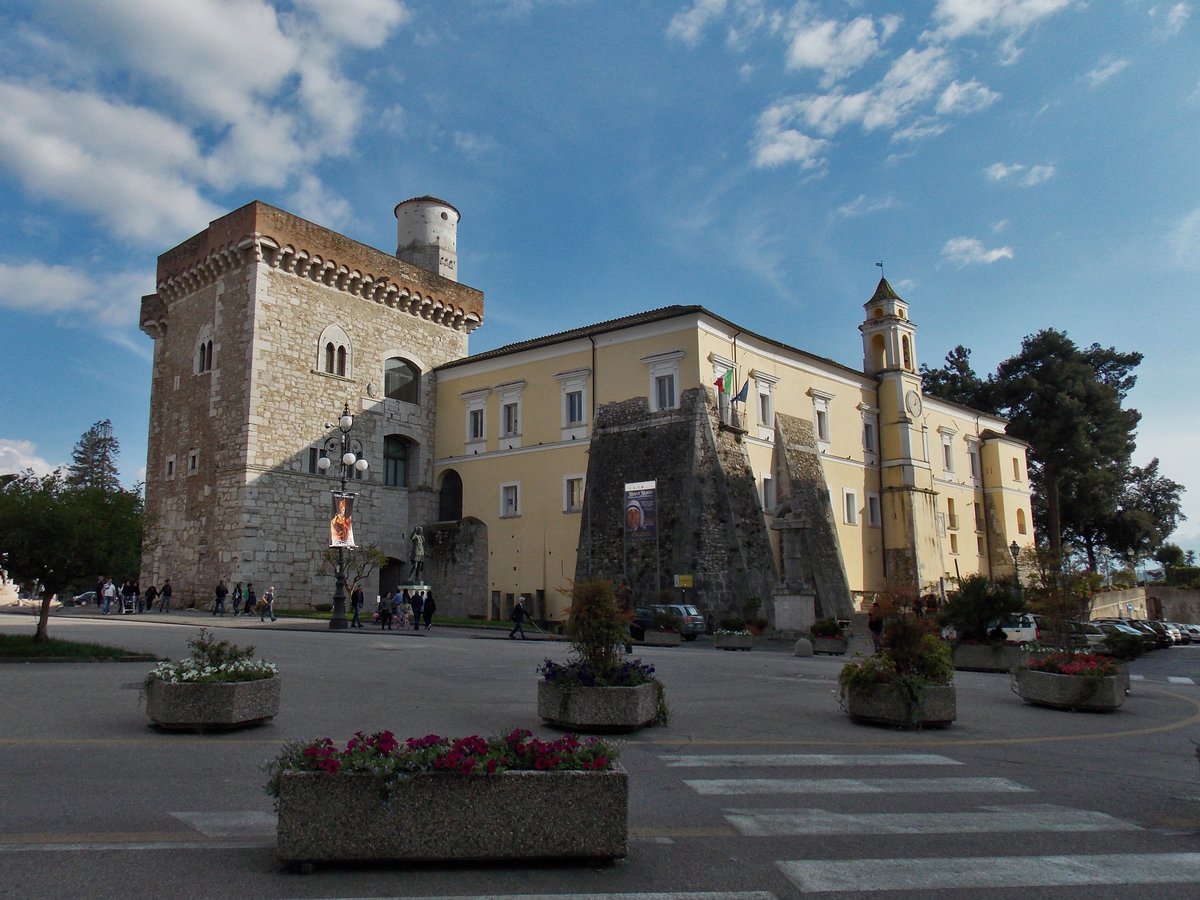 The Rocca dei Rettori stands imposingly in the heart of Benevento, a silent witness to centuries of history. Built in 1321 by order of Pope John XXII, this fortress represents one of the city's most recognizable symbols. Its strategic position at the highest point of the historic center makes it a privileged observatory overlooking the Sabato Valley and the entire town. Originally conceived as the seat of the papal rectors, the structure has undergone numerous transformations over the centuries, transitioning from a military fortress to a prison during the Bourbon period. Today it houses the Province of Benevento and temporary exhibition spaces. The architecture clearly shows the different construction phases: the lower part in local limestone dates back to the Angevin period, while the upper floor reflects later interventions. From the internal courtyard, you can access the Rettori Tower, which offers a breathtaking panoramic view embracing the Cathedral, Trajan's Arch, and the surrounding hills. The fortress still preserves traces of the ancient prisons, with graffiti left by inmates between the 18th and 19th centuries. The visit allows you to grasp the urban evolution of Benevento through the centuries, showing how this building has always represented the center of power in the city, first papal then administrative.
Bishop's Palace of Sant'Agata de' Goti
- Go to the page: Bishop's Palace of Sant'Agata: 18th-century frescoes and courtyard with well in the medieval village
- Piazza Umberto I, Sant'Agata de' Goti (BN)
- Open in Google Maps
- View on Google Images
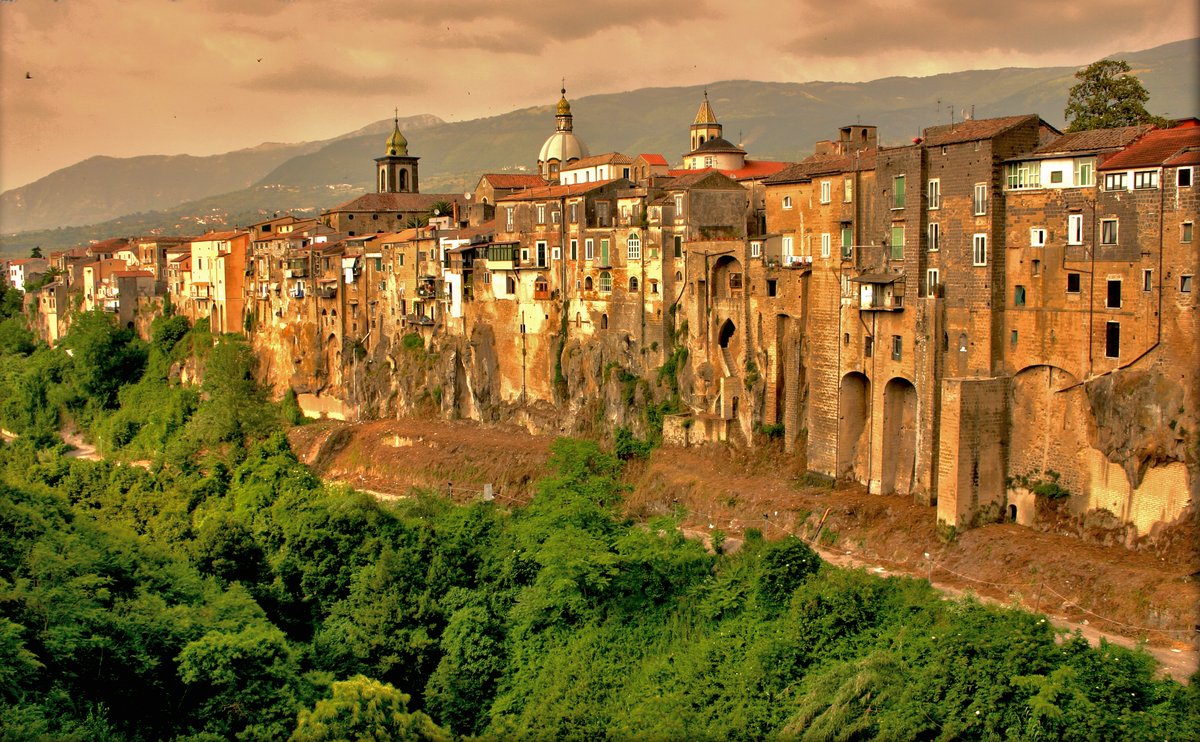 The Bishop's Palace of Sant'Agata de' Goti rises in the heart of the medieval village, overlooking the picturesque square where history can be felt at every corner. Built between the 12th and 13th centuries, this building represents an exceptional example of ecclesiastical architecture that has maintained its charm intact through the centuries. The facade made of local stone, with its Romanesque elements and subsequent Baroque additions, visually narrates the transformations of episcopal power in the Sannio region. Upon entering, visitors are struck by the internal porticoed courtyard, where round arches and stone columns create an atmosphere of contemplation. The interior halls preserve 18th-century frescoes and period furnishings that testify to the palace's central role in the religious and administrative life of the territory. Particularly significant is the private chapel, dedicated to local saints, with decorations that blend Christian symbols and references to Lombard tradition. Today, the palace also houses the Diocesan Museum, where sacred vestments, illuminated manuscripts, and archaeological artifacts documenting popular devotion through the centuries are displayed. Its strategic location, just steps from the Cathedral of Sant'Agata, makes it an ideal starting point for exploring the village and understanding its cultural roots.
Montesarchio Castle
- Strada Provinciale Vitulanese-Castello, Montesarchio (BN)
- Open in Google Maps
- View on Google Images
 The Montesarchio Castle stands majestically on the hill overlooking the entire Caudina Valley, a strategic point that has witnessed centuries of history. Built by the Lombards in the 9th century, it was later expanded by the Normans and transformed into a Bourbon prison in the 19th century. Today it houses the National Archaeological Museum of the Samnite Caudino, which tells the story of the territory through extraordinary finds. Among these stands out the Assteas crater, a 4th century BC Greek vase found intact after an international recovery. Climbing the towers, you can enjoy a breathtaking panoramic view of the valley and the Taburno mountains. The exhibition halls are organized by theme: prehistory, the Samnite age and the Roman era, with a focus on the Battle of the Caudine Forks. The castle also hosts temporary exhibitions and cultural events that animate the restored spaces. The structure preserves original elements such as the Bourbon prisons, where patriots of the Risorgimento were imprisoned. Visiting it means immersing yourself in a layered history, where every stone speaks of dominations and resistance. Access is convenient, with nearby parking and a well-marked visitor route. The museum is equipped with educational panels in Italian and English, ideal for families and archaeology enthusiasts.
Monte Mutria
- Cusano Mutri (BN)
- Open in Google Maps
- View on Google Images
 Climbing Monte Mutria means discovering one of the most spectacular panoramic viewpoints in Sannio. Standing at 1,823 meters, this mountain dominates the territory of Cusano Mutri, offering views stretching from the Matese to the Daunian Apennines. The ascent route begins from the characteristic medieval village of Cusano Mutri, first passing through ancient beech forests and then high-altitude meadows where rare wild orchids bloom in spring. The summit, recognizable by its characteristic donkey-back shape, offers a 360-degree panorama embracing all the surrounding valleys. Here, you can still breathe the atmosphere of the Samnite shepherds who for centuries used these pastures. During the climb, you can observe the remains of ancient stone shelters, evidence of millennia-old pastoral activity. In winter, the mountain transforms into a destination for snowshoe hikers, while in summer it becomes the realm of walkers seeking refreshment at higher altitudes. The geological uniqueness of Mutria, composed of limestone rocks rich in marine fossils, tells an ancient story of millions of years when these lands were submerged by the sea.
National Archaeological Museum of Samnium Caudino
- Via Castello, Montesarchio (BN)
- http://www.polomusealecampania.beniculturali.it/index.php/il-museo-montesarchio
- Open in Google Maps
- View on Google Images
- pm-cam.montesarchio@beniculturali.it
- +39 0824 834570
 The National Archaeological Museum of Samnium Caudino in Montesarchio is a hidden gem that takes you straight to the heart of Samnite civilization. Located within the Castle of Montesarchio, the museum offers a comprehensive overview of the ancient history of this strategic area. The collection spans three floors and covers a timeline from prehistory to the Roman age, with artifacts from the excavations of Caudium, the ancient Samnite city. The princely tombs from the Orientalizing period are among the highlights: funerary assemblages with bronze vessels and figured pottery demonstrate the Samnites' commercial contacts with Greek colonies. The locally produced red-figure vases stand out, testifying to a flourishing craft activity. The section dedicated to the Roman age features materials from the excavations of Forum Novum and the San Martino rural villa. Particularly significant are the artifacts related to the Via Appia, the ancient consular road that crossed the Caudine territory. The museum itinerary concludes with the room dedicated to the Middle Ages, where you can admire glazed ceramics and Renaissance majolica from the castle itself. The modern layout and clear labels make the visit accessible to everyone, while the panoramic location of the castle offers breathtaking views of the Caudina Valley.
Telesia Amphitheatre
- Via Anfiteatro Romano, San Salvatore Telesino (BN)
- Open in Google Maps
- View on Google Images
 The Telesia Amphitheatre in San Salvatore Telesino is an archaeological gem that surprises with its location: it stands at the foot of Mount Pugliano, surrounded by olive groves and cultivated fields. Built in the 1st century AD, this Roman amphitheatre served the nearby city of Telesia, an important Samnite centre later Romanised. Measuring approximately 80 by 60 metres, it could accommodate up to 10,000 spectators for gladiatorial games and animal hunts. Today, walking among the remains of the seating tiers and the arena, you immediately notice the blocks of local limestone and the traces of ancient vomitoria. The structure is partially carved into the hillside, a Roman technique that exploited the natural slope to reduce construction costs. Next to the amphitheatre, the Telesia Antiquarium displays artefacts such as coins, pottery, and agricultural tools found in the area, helping to reconstruct daily life from that period. The site is easily accessible and rarely crowded, ideal for a peaceful visit. Information panels explain the history of the place, while the view over the Samnite hills offers a striking panorama. Bring a bottle of water and comfortable shoes: the ground is grassy and in some areas the stones are uneven. The amphitheatre is an example of how Roman architecture blended with the landscape, a place where history still breathes.
Ceppaloni Castle
- Via Castello, Ceppaloni (BN)
- Open in Google Maps
- View on Google Images
 **Ceppaloni Castle** stands on a rocky spur at 368 meters above sea level, offering a breathtaking panoramic view over the Sabato River valley. Built between the 11th and 12th centuries as a Lombard fortress, the manor has undergone numerous transformations over the centuries, evolving from a defensive structure to a noble residence. Its strategic position made it a **fundamental control point** for the dominion of the Samnite territory. Today it appears as an articulated architectural complex, with the **quadrangular tower** representing the oldest and most characteristic element. The perimeter walls, still well-preserved, clearly show the different construction phases, from the limestone blocks of the Norman period to the subsequent Angevin interventions. Access is through an arched portal leading to the inner courtyard, where visitors can admire the remains of the ancient stables and service rooms. Particularly interesting is the **noble chapel**, dedicated to Saint Michael the Archangel, which preserves traces of 14th-century frescoes. The castle has recently undergone restoration work that has improved its accessibility while maintaining its ancient charm intact. During the visit, the medieval atmosphere is clearly perceptible, especially when climbing the tower from which the entire village of Ceppaloni and the surrounding countryside can be dominated. The complex is visitable by reservation and occasionally hosts cultural events and temporary exhibitions.
Ducal Castle of Faicchio
- Via Fabio Massimo, Faicchio (BN)
- https://www.castellodifaicchio.it/
- Open in Google Maps
- View on Google Images
 The Ducal Castle of Faicchio stands on a rocky spur that dominates the entire Titerno Valley, offering a breathtaking view from the moment you arrive. Built between the 11th and 12th centuries by the Normans, this fortress has witnessed centuries of history, passing through the hands of various noble families, from the Carafa to the Pignatelli. The structure retains its medieval features intact: the cylindrical towers that soar toward the sky, the crenellated walls that follow the natural contours of the rock, and the drawbridge that still welcomes visitors today. Inside, you'll discover spaces that tell the story of daily life in the past: the underground prisons with graffiti left by inmates, the representative halls with monumental fireplaces, and the private chapel dedicated to Saint Michael. Particularly evocative is the inner courtyard, where the atmosphere of centuries past still lingers. Today, the castle is open to visitors year-round and often hosts cultural events and weddings, maintaining its role as a hub for community gatherings. Its strategic location offers a panoramic view stretching from the Matese massif to the hills of Sannio, making the visit a complete experience blending history and nature.
Dolphin Fountain
- Piazza San Martino, Cerreto Sannita (BN)
- Open in Google Maps
- View on Google Images
 The Dolphin Fountain is located in Piazza Roma, in the historic center of Cerreto Sannita, and represents one of the most recognizable symbols of the city. Created in 1760 by the local sculptor Nicola Cacciapuoti, this fountain made of local limestone features two stylized dolphins elegantly intertwined, from which water flows in two jets. Its strategic position, right in front of Palazzo Sant'Antonio, makes it a gathering point for residents and visitors. Upon closer inspection, one can notice the dolphins' scales and sinuous shapes that recall the Baroque style, typical of the era. The fountain was built to supply water to the village after the 1688 earthquake, which destroyed the ancient Cerreto, and today it is an integral part of the historic center's visiting route, declared a National Monument in 1967. Its water still comes from the springs of Mount Camposauro, ensuring freshness even on summer days. During patronal festivals, such as that of Saint Anthony, the fountain is decorated with flowers and lights, becoming the focal point of the celebrations. For those visiting Cerreto, stopping here means immersing oneself in local history and art, with the opportunity to admire the traditional ceramics displayed in nearby workshops.
Carolino Aqueduct Natural Area
- Go to the page: Caroline Aqueduct: 22m Bourbon arches and nature trail in Samnium
- Contrada Longano, Sant'Agata de' Goti (BN)
- Open in Google Maps
- View on Google Images
 The Carolino Aqueduct Natural Area in Sant'Agata de' Goti represents one of the lesser-known yet most fascinating gems of the Benevento province. This section of the Vanvitelli aqueduct, built between 1753 and 1762 to supply the Royal Palace of Caserta, winds through the Isclero River valley with monumental arches reaching up to 60 meters in height. The route follows a well-marked trail that allows visitors to admire up close the majestic tuff arches, perfectly preserved despite the centuries. Spontaneous vegetation has colonized the structures, creating a unique balance between architecture and nature, with climbing ivy and Mediterranean plants enveloping the powerful arches. During the walk, you'll encounter extraordinary panoramic viewpoints overlooking the Isclero River gorge and the medieval village of Sant'Agata de' Goti dominating the valley from above. The main access is located at Ponte dei Cani, where convenient parking allows you to begin your exploration. The site offers breathtaking photography opportunities especially at sunset, when the grazing light enhances the stone textures and creates spectacular shadow plays among the arches. Constant maintenance ensures visitor safety, with informative signs explaining the history and construction techniques of this 18th-century engineering masterpiece.
Tower Clock Museum
- Via Rovagnera, San Marco dei Cavoti (BN)
- https://www.comune.sanmarcodeicavoti.bn.it/new/museo-degli-orologi/
- Open in Google Maps
- View on Google Images
- u.tecnico@comune.sanmarcodeicavoti.bn.it
- +390824984009;+393336875475
 The Tower Clock Museum of San Marco dei Cavoti represents a unique feature in the Italian museum landscape. Located in the heart of the Sannite village, this museum was born from the passion of Giuseppe Cusano, a local clockmaker who dedicated his life to the recovery and restoration of these ancient mechanisms. Housed in the premises of the former San Francesco convent, the museum preserves a collection of over twenty specimens from bell towers across Italy, dating from the 17th to the 20th century. Each clock tells a story: from the majestic 1850 specimen from the Basilica of San Bartolomeo Apostolo in Benevento, with its complex system of weights and counterweights, to the smallest 1700 mechanism that marked the hours in the Montevergine convent. The visit allows you to observe up close the ingenious mechanics of manually wound clocks, understand the functioning of escapement systems, and appreciate the craftsmanship of the wrought iron dials. Particularly interesting is the section dedicated to time measurement instruments predating mechanical clocks, with sundials and hourglasses that testify to the evolution of clockmaking technology. The museum periodically organizes practical demonstrations where you can witness the maintenance of these giants of time, an experience that fascinates both adults and children.
Sannio Museum
- Piazza Arechi II, Benevento (BN)
- Open in Google Maps
- View on Google Images
 The Sannio Museum represents the cultural heart of Benevento, housed within the monumental complex of Santa Sofia, a UNESCO World Heritage site. Imagine traversing centuries of history in a single place: here, Samnite archaeological finds coexist with Roman testimonies like the imposing Bull Apis from the Temple of Isis, and medieval artworks. The archaeological section immerses you in the world of the Samnites, with armor, pottery, and coins recounting the wars against Rome. Then, the leap to the Lombard period: the frescoes and artifacts of the Church of Santa Sofia showcase a unique fusion of cultures. Don't miss the Egyptian collection, with steles and amulets revealing the commercial ties of ancient Beneventum. The museum is organized into four distinct sections: archaeology, the Middle Ages, modern art, and a historical library. Each room offers clear explanations, with bilingual panels making the visit accessible. Check the opening hours, especially for access to the church, often subject to shifts. The combined ticket with other city sites like the Arch of Trajan saves you money, a practical detail you'll appreciate.
Roman Theatre
- Via Manfredi di Svevia, Benevento (BN)
- http://www.polomusealecampania.beniculturali.it/index.php/il-teatro
- Open in Google Maps
- View on Google Images
- pm-cam.teatrobenevento@beniculturali.it
- +39 0824 47213
 The Roman Theatre of Benevento stands as one of the most significant testimonies of the imperial era in Campania. Built under Emperor Hadrian in the 2nd century AD, this archaeological gem could accommodate up to 10,000 spectators, demonstrating the strategic importance of Beneventum along the Via Appia. The structure is distinguished by the perfect preservation of the cavea, divided into three sections with white marble steps, and the imposing stage over 25 meters high. Observing the architectural details, one can notice the holes for the velarium, the awning that protected the audience from the sun, and the acoustic conduits that amplified the actors' voices. The theatre was abandoned after the earthquake of 346 AD, but recent restorations have brought to light the polychrome mosaics of the proscenium and the statues of the Muses that adorned the niches. Today the site hosts summer performances of classical theatre and concerts, offering a unique experience between history and culture. Its location in the heart of the historic centre, just a few steps from the Arch of Trajan, makes it easily accessible. Visitors can also admire the exhibited artefacts in the adjacent museum area, including fragments of decorations and inscriptions that tell the story of daily life in the ancient Roman colony.
Leprous Bridge
- Via Ponte Leproso, Benevento (BN)
- Open in Google Maps
- View on Google Images
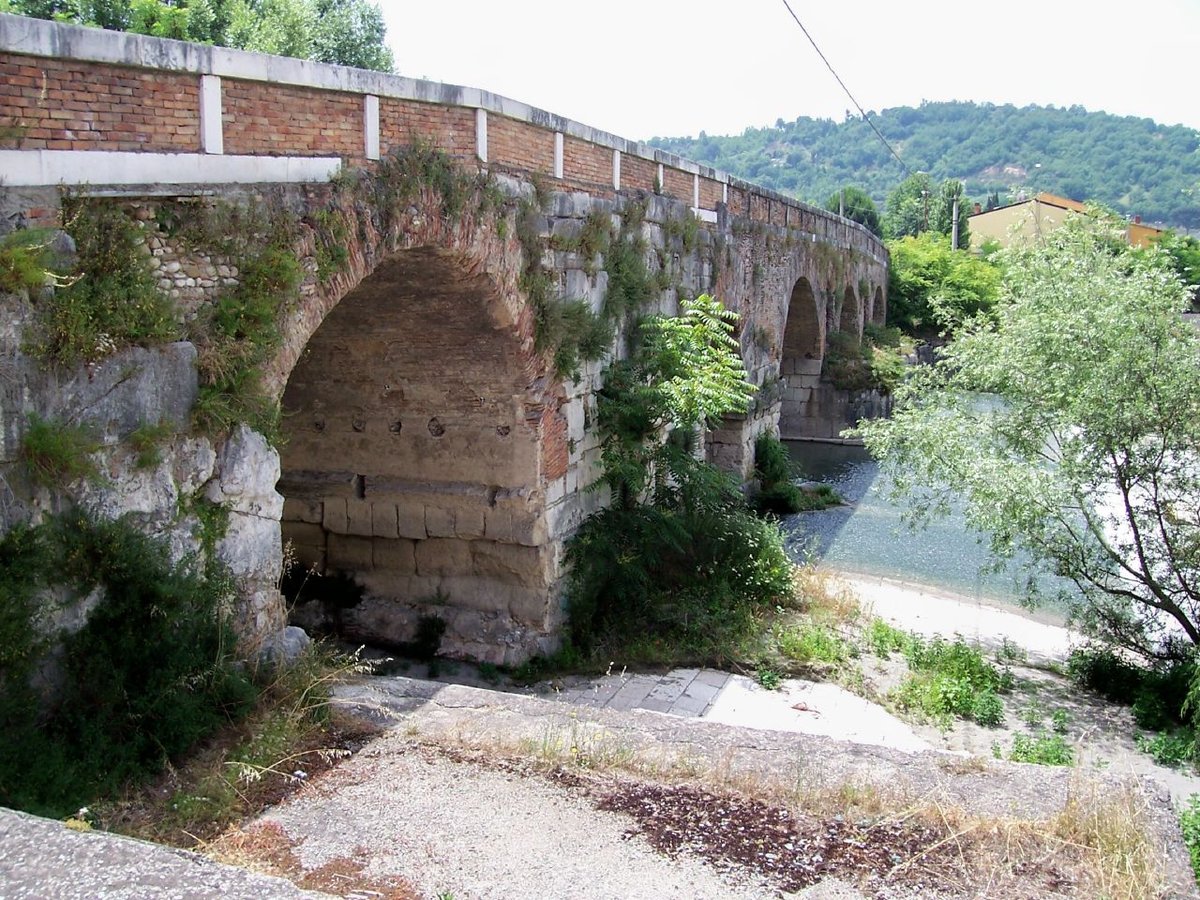 Leprous Bridge is one of the **best-preserved Roman monuments** in Benevento, built in the 2nd century BC along the Via Appia. The name comes from the nearby Church of San Lazzaro, protector of lepers, but its history is much older. It crosses the Sabato River with **three limestone arches** that have withstood earthquakes and floods. It measures approximately 60 meters in length and 6 meters in width, dimensions that highlight its strategic importance for Roman trade. Today it is perfectly integrated into the urban fabric, connecting the historic center to the modern area. The structure still shows the **original travertine blocks** and the marks of medieval restorations, when it was reinforced to withstand floods. Walking across it means following the same path as legionaries, pilgrims, and merchants. The bridge offers a **suggestive view of the river** and the surrounding hills, especially at sunset when the lights reflect on the water. It is easily reachable on foot from the center, right at the entrance to the ancient city. It doesn't take much time to visit, but its historical impact is tangible: here, history isn't read—it's walked.