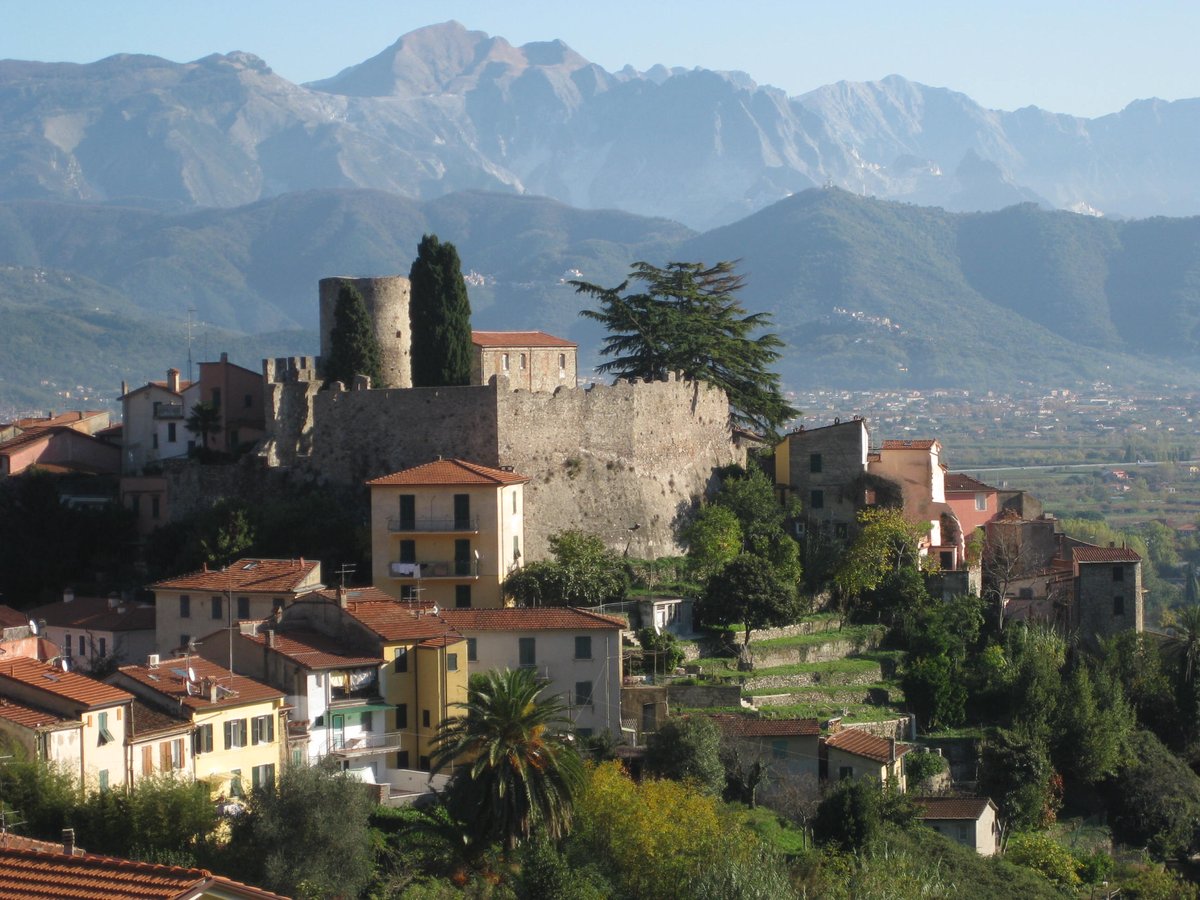
Ameglia Castle in Cafaggio, in the province of La Spezia, is a medieval village perched on a hill overlooking the Magra Valley. Of Lombard origin, it was a defensive fortress for the bishops of Luni and later the Malaspina family. Today, it retains its ancient charm intact with a tranquil atmosphere far from tourist crowds.
- Breathtaking panoramic views at 360° over the Gulf of Poets, Apuan Alps, and Magra Valley, especially at sunset
- Authentic medieval architecture with cobblestone streets, stone houses, ancient portals, and stone arches
- Crowd-free experience in a well-preserved village off the beaten tourist paths
- Scenic walks through narrow alleys, small squares, and remnants of the walls with historical glimpses
Introduction
The Castle of Ameglia in Cafaggio is not just a ruin; it’s a medieval village that transports you to another era. Perched on a hill among olive groves with views over the Gulf of La Spezia, it feels almost suspended in time. Arriving here is like discovering a well-kept secret: the cobblestone streets, the stone houses huddled together, that silence broken only by the wind. Don’t expect a fairytale castle with perfect towers, but an authentic place where history can be touched. Personally, I was struck by how it has remained so intact despite the centuries, a true gem off the beaten tourist track.
Historical Notes
Its origins date back to the 10th century, when it was built as a
defensive fortress for the bishops of Luni to control the Magra Valley. It later passed to the Malaspina, powerful lords of Lunigiana, who expanded it. In the 15th century, it became part of the Republic of Genoa, gradually losing military importance but remaining a residential settlement. Today, it appears as a fortified village with remains of the walls and the main tower. Its strategic position explains why it was contested for centuries.
- 10th century: construction as a bishopric outpost
- 12th-14th centuries: rule of the Malaspina
- 15th century: annexation to the Republic of Genoa
- Today: preserved medieval village
Wandering Through the Alleys
The true magic lies in getting lost among the narrow, irregular carrugi, where every corner tells a story. You’ll notice stone arches, ancient doorways with barely legible coats of arms, and staircases that seem to lead who knows where. Some houses are still inhabited, others show the marks of time. There’s a small square with a well that I imagine was the heart of the village. As you walk, you’ll catch the scent of Mediterranean scrub mixed with damp stone. There are no shops or bars, just the sound of your own footsteps. I recommend paying attention to the details: a crooked window, a wall with pebble inlays, those little touches that bring the place to life.
The View from the Hill
As you climb towards the tower ruins, the view opens up to a breathtaking 360-degree panorama. On one side, the Gulf of La Spezia with its ships and the mountains framing it; on the other, the Magra Valley and the inland hills dotted with olive groves. On clear days, you can even spot the Apuan Alps in the distance. It’s one of those places where you feel like stopping to look, without any rush. The sunset light here is special, golden and warm. Personally, I noticed how the village is perfectly integrated into the landscape, almost camouflaged among the vegetation. An ideal spot for some photos or simply to breathe in the scenery.
Why Visit
First, because it offers an authentic and crowd-free experience, far from the hustle of more popular destinations. Second, for its accessibility: it’s easily reached with a short detour from the main road, with parking available just below. Third, it provides that rare combination of history, medieval architecture, and nature that appeals to many. It’s perfect for those seeking an intimate atmosphere, photography enthusiasts, or a refreshing break during a trip through Liguria. Additionally, it doesn’t require extensive planning: half a day is enough to enjoy it at a leisurely pace.
When to go
I recommend visiting in late spring or early autumn, when the days are long, the air is clear, and the vegetation is lush. I would avoid the peak of summer due to the heat, unless you go early in the morning or around sunset. In winter, it can be atmospheric with fog enveloping the hills, but check the weather forecast. A quiet Sunday afternoon is ideal for enjoying the silence. Personally, I went there at the end of September, and the light was perfect for photos, with that warm sun that doesn’t burn.
In the Surroundings
If you enjoyed the medieval atmosphere, continue to Lerici, with its castle overlooking the sea and colorful alleys. Alternatively, for a contrast, explore the Cinque Terre, reachable with a short trip. Another idea is to visit the village of Tellaro, further south, with its houses perched over the water and that fishermen’s charm. All places that nicely round off a day in this area of Liguria, full of surprises.