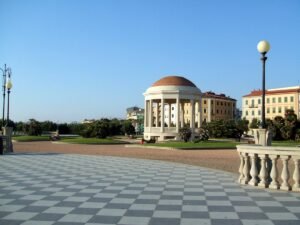
Welcome to Livorno, a maritime city with a great seafaring and commercial tradition. This one-day itinerary lets you discover the best of Livorno: the Fortezza Nuova, an imposing pentagonal structure overlooking the canals; the lively Mercato Ittico (Pescheria Nuova) where fresh fish takes center stage; and a stroll along the waterfront to the historic Lighthouse (Fanale). A route that combines history, flavors, and sea views, ideal for those short on time but eager to experience Livorno’s authenticity. Get ready to walk, taste, and photograph: the city will surprise you with its colors and energy. Follow us on this perfect day for a low-budget but experience-rich trip.
🗺️ Your trip at a glance
Start your morning at the Fortezza Nuova and immerse yourself in history. Then, take a break at the Mercato Ittico for a seafood street food lunch. In the afternoon, walk along the waterfront to the Lighthouse, a symbol of the city.
- Ideal for travelers who love history, food, and the sea in an authentic mix.
- Highlights: fortified architecture, fresh market, coastal walk.
- Why it’s different: a day in Livorno offers a unique urban and maritime experience.
Itinerary stops
Stop no. 1
Fortezza Nuova: A Dive into History Between Canals and Meadows
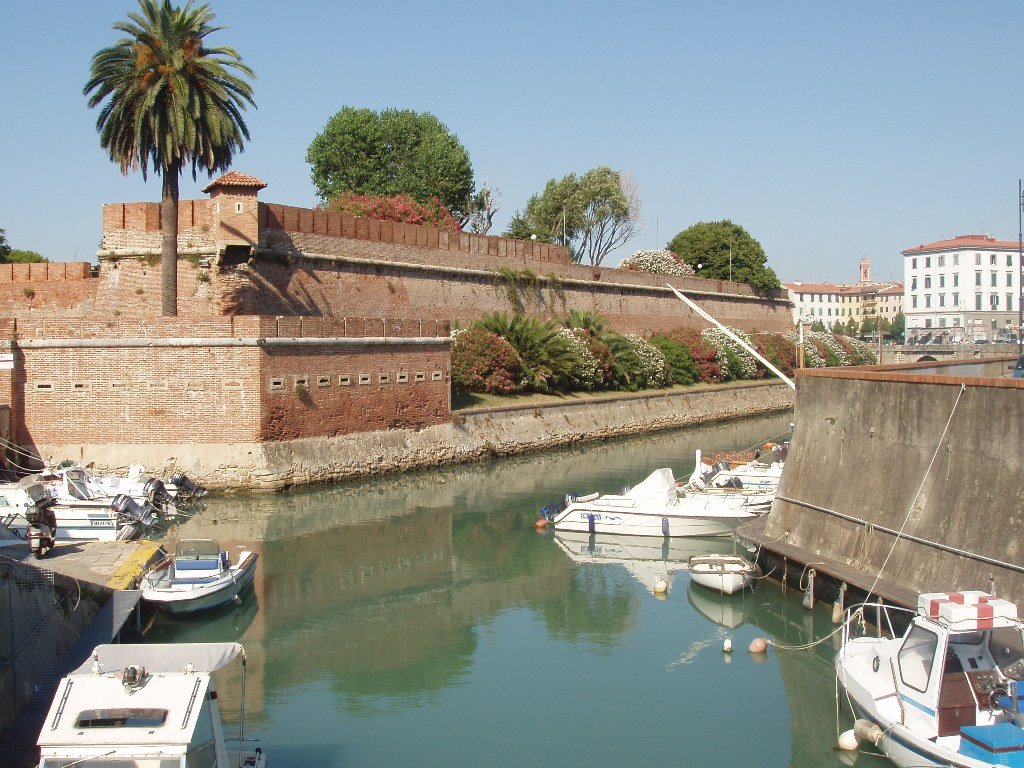 The first stop on our Livorno itinerary is the Fortezza Nuova, a 16th-century gem designed by Bernardo Buontalenti at the behest of the Medici. Picture a pentagonal fortress, completely surrounded by water, connected to the mainland by a three-arched bridge. Once, cannons defended the city; today, after the damage of World War II, it’s a vibrant public park. Stroll among the lawns and embrasures, enjoy the view over the canals of the Venice quarter and Piazza della Repubblica. In summer, the bastion comes alive with events, concerts, open-air cinema, and a food area under the pine forest. Open daily from 8:30 AM, it is also accessible to people with reduced mobility thanks to ramps and elevators. Children find playgrounds at the South Bastion, while adults explore the Hall of Arches or the bookshop. A perfect mix of history, nature, and social life.
- Scali del Teatro, Livorno (LI)
- Open in Google Maps
- View on Google Images

You should go if…
Stop no. 2
Pescheria Nuova
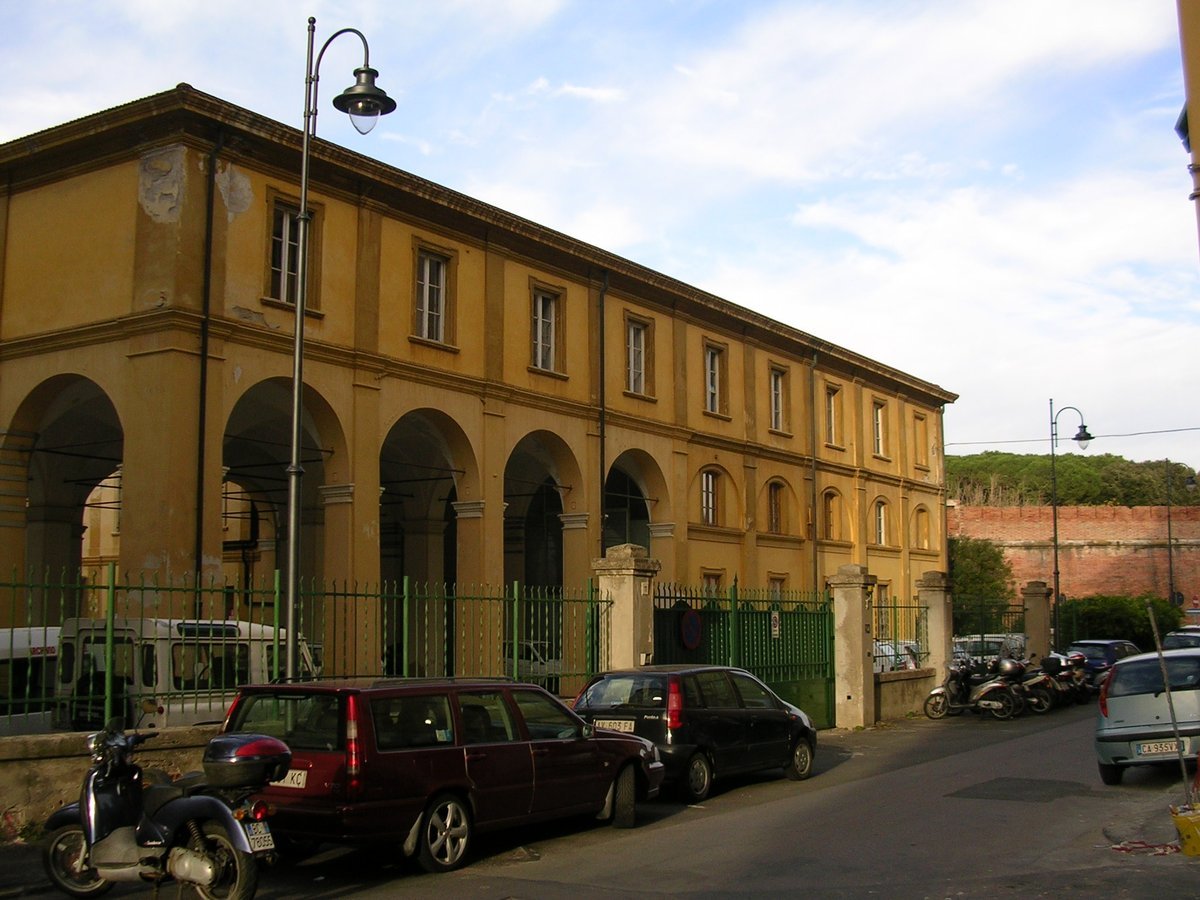 From Fortezza Nuova, just a few steps away is Pescheria Nuova, an 18th-century gem in the heart of Venezia Nuova. Here, since 1705, fishermen sold fresh fish under its vast loggias, using the Medici canals as a waterway. The architecture is captivating: three naves on the short side, four on the long side, with pillars and vaults creating a play of light and shadow. The attribution of the design is uncertain – some say Giovan Battista Foggini or Giuseppe Lorenzi – but the late Baroque style is unmistakable. Over time, it has changed its skin: first a fire station, then municipal offices. But the turning point came with the 2019-2020 restoration: removed fences, pedestrian space, benches, and a paving that restores dignity to the square. Today it is a livable and walkable place, where you can sit and admire the dialogue between Fortezza Nuova and the Palace of Justice. The original marble counters? Gone, but the ancient scent of the sea still lingers.
- Area pubblica Ugo Bassano, Livorno (LI)
- Open in Google Maps
- View on Google Images
You should go if…
Stop no. 3
Monument of the Four Moors: A Story in Marble and Bronze
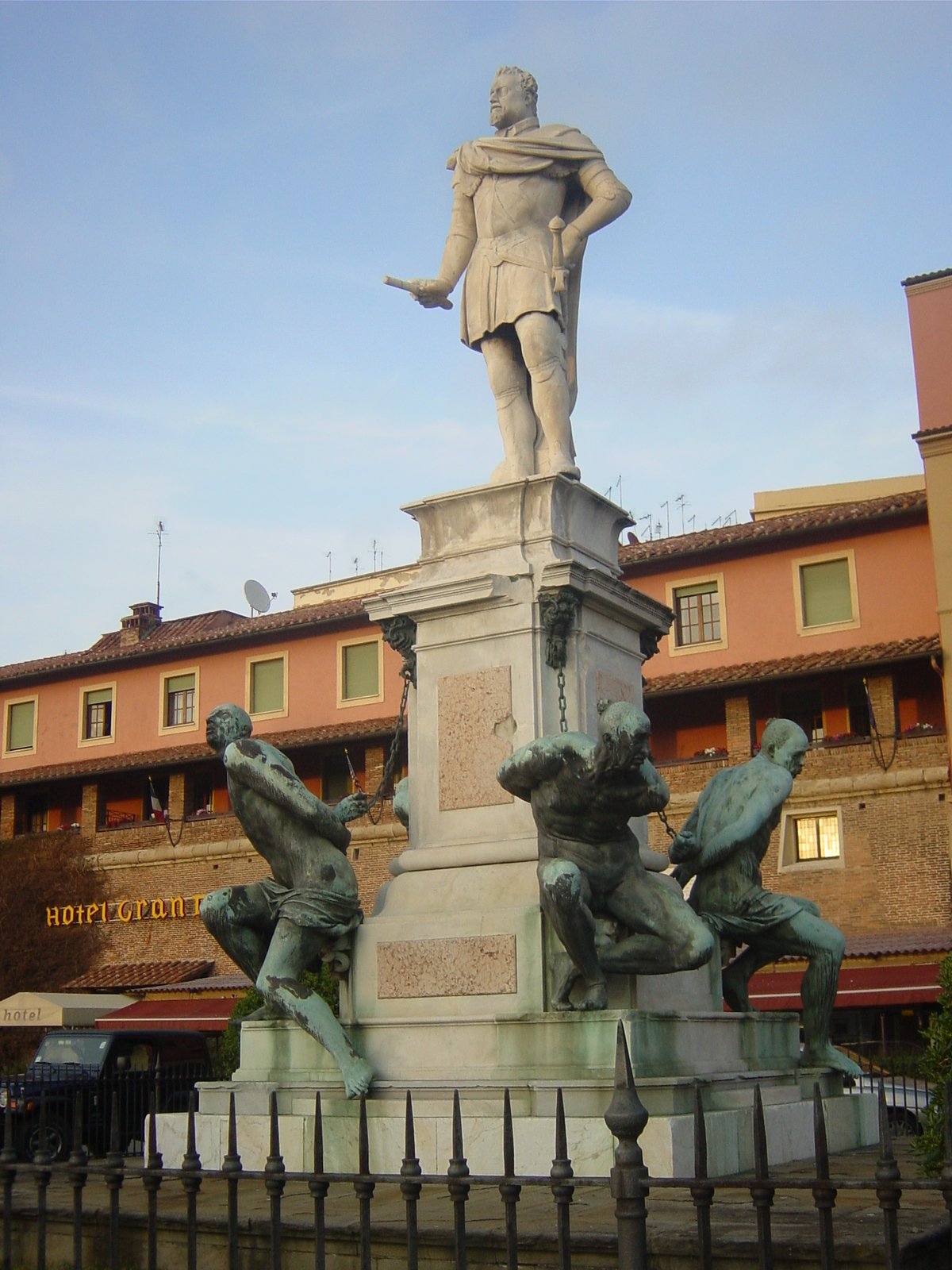 After leaving the lively fish market, you find yourself in Piazza Micheli, facing one of the city’s most powerful symbols. The Monument of the Four Moors celebrates Grand Duke Ferdinando I de’ Medici and the Order of the Knights of Santo Stefano, but it is the four bronze prisoners at his feet that steal the show. Pietro Tacca modeled them between 1623 and 1626, inspired by real slaves from the penal baths – one named Morgiano, another Alì – with an anatomical realism that still impresses today. The grand duke, in Carrara marble, looks out to sea, while the bodies of the Moors twist in suffering poses, chained to the base. Fun fact: if you stand on the white tile in the pavement, they say you can see all four noses at once – good luck. From 2025, a debated project will add four new statues of Moors free from chains, a sign that this monument continues to spark discussion. A dive into history that leaves no one indifferent.
- Piazza Giuseppe Micheli, Livorno (LI)
- Open in Google Maps
- View on Google Images
You should go if…
Stop no. 4
Lighthouse of Livorno: Italy’s Oldest Lighthouse
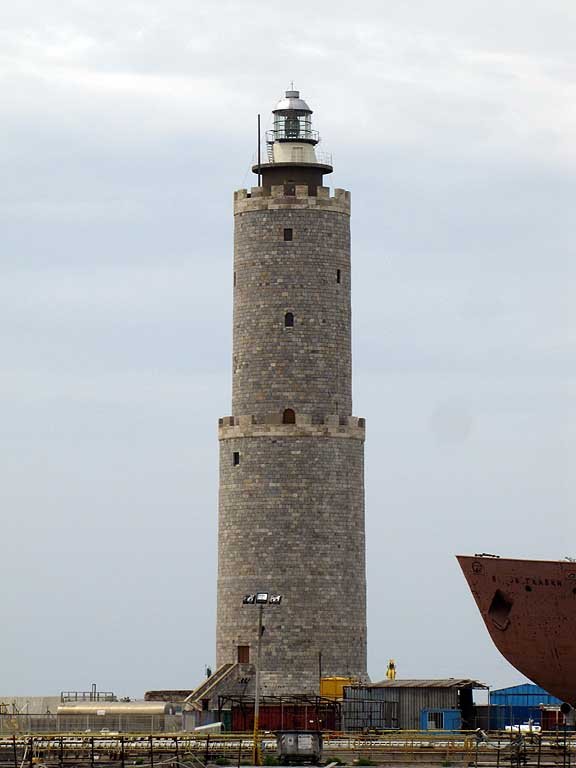 Continuing along the Molo Mediceo, you reach the Lighthouse of Livorno, Italy’s oldest lighthouse. Built by the Pisans between 1303 and 1305 on a design attributed to Giovanni Pisano, it rises 52 meters with its double crenellated tower. Destroyed by the Germans in 1944, it was faithfully rebuilt in 1956 thanks to a public subscription. When open – visits are occasional, organized by associations such as Il Mondo dei Fari – climbing the 297 steps rewards you with a spectacular view of the port and the city. Here Galileo Galilei conducted experiments, and Petrarch mentioned it in his Itinerary. Today the lantern is automated: four flashes every twenty seconds, visible up to 24 miles. An iconic symbol that encapsulates centuries of maritime history.
- Go to the page: Fanale di Livorno: Discovering Italy’s Oldest Lighthouse
- Via del Molo Mediceo, Livorno (LI)
- Open in Google Maps
- View on Google Images
You should go if…
Stop no. 4
Lighthouse of Livorno: Italy’s Oldest Lighthouse
Continuing along the Molo Mediceo, you reach the Lighthouse of Livorno, Italy’s oldest lighthouse. Built by the Pisans between 1303 and 1305 on a design attributed to Giovanni Pisano, it rises 52 meters with its double crenellated tower. Destroyed by the Germans in 1944, it was faithfully rebuilt in 1956 thanks to a public subscription. When open – visits are occasional, organized by associations such as Il Mondo dei Fari – climbing the 297 steps rewards you with a spectacular view of the port and the city. Here Galileo Galilei conducted experiments, and Petrarch mentioned it in his Itinerary. Today the lantern is automated: four flashes every twenty seconds, visible up to 24 miles. An iconic symbol that encapsulates centuries of maritime history.- Go to the page: Fanale di Livorno: The City’s Historic Lighthouse
- Via del Molo Mediceo, Livorno (LI)
- Open in Google Maps
- View on Google Images
You should go if…