Gropparello Castle: Fortress, Park and Legends

Gropparello Castle dominates the Vezzeno Valley from an ophiolitic rock peak, just minutes from Piacenza: it is a Guelph fortress with an 11th–12th-century keep, drawbridge, walkways and furnished halls. The guided tour crosses the historic residence, courtyard, panoramic terrace and ancient kitchens; in the 20-hectare park are the Museum of the Rising Rose and the Fairy Tale Park. It can be completed with the medieval tavern and a suite in the Tower of the Barn Owl.
• Guided tours in Italian, English and French.
• Fairy Tale Park for children aged 3 to 12.
• Museum of the Rising Rose with over 1,000 roses.
• Medieval tavern and overnight stay in a suite.


Events nearby
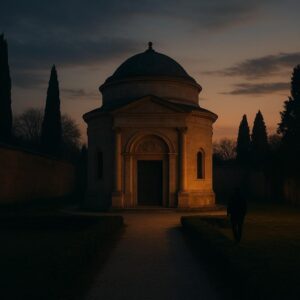

Copertina itinerario Gropparello Castle: Fortress, Park and Legends
Guelph fortress on an ophiolitic peak in the Vezzeno Valley: guided tours through the keep, drawbridge, furnished halls, Museum of the Rising Rose, Fairy Tale Park and medieval tavern in Gropparello (PC).

Good to know


Gropparello Castle: fortress, park and legends

The Gropparello Castle appears suddenly above the Vezzeno gorge, as if the ophiolitic rock had given birth to it. We are in the province of Piacenza, atop a peak overlooking the Val Vezzeno: below flows the stream, around it woods and badlands. It is a Guelph fortress with battlements, towers, a drawbridge and a central keep that can be visited only with a guide. Inside, furnished halls, monumental fireplaces and kitchens carved into the rock; outside, a park of about 20 hectares with the Museum of the Rising Rose and the Fairy Tale Park, Italy’s first emotional park. The atmosphere is suspended: here legends seem more believable than history. And the medieval Tavern, with its Piacenza-style dishes, completes the circle.

Historical background

Its origins are ancient and layered: it began as a Roman castrum defending the road to Veleia and as an early medieval fortification. In 810 Charlemagne assigned jurisdiction to Giuliano II, bishop of Piacenza. In the thirteenth century, the Guelph stronghold was attacked several times by the Ghibellines: in 1255 Oberto II Pallavicino captured it and had its walls demolished; in 1260 the battle of the 400 infantrymen ended in a Guelph victory. In 1599 Ranuccio I Farnese invested Marcantonio Anguissola with the title of Count of Gropparello; the line died out in 1848. In 1869 Count Ludovico Marazzani Visconti Terzi entrusted the restoration to Camillo Guidotti, who introduced Neo-Gothic elements. Since 1994 the Gibelli family has lived in it and opened it to the public.

  • 2nd-3rd century BC Roman castrum
  • 810 Carolingian donation
  • 1255-1260 Guelph-Ghibelline conflicts
  • 1599 Anguissola fief
  • 1869 Neo-Gothic restoration
  • 1994 opening by the Gibelli family

On the Brink of the Gorge: Architecture and Halls

The layout is irregular, adapted to the edge of the cliff. At its heart is the rectangular keep of the 11th–12th centuries, spread over three levels, with a lookout terrace. Beside it rises a square tower with Guelph-style battlements; the central block connects the main towers and the entrance tower. The guided tour follows the external walkways, protected by handrails, with views over the Vezzeno drop: here the landscape is part of the fortification. Inside, visitors move from the arms hall to the dining room, with a 16th-century fireplace decorated with the Abduction of Europa, then a small sitting room, the alcove bedroom and a study. On the lower floors, you can make out the kitchens carved into the rock and the icehouse. The staircase with two symmetrical flights leads to the noble wing, still furnished and inhabited.

Fairy Tale Park, Roses and Tavern

The park is a world apart: about 20 hectares of paths, clearings and centuries-old trees. The Museum of the Rising Rose houses more than a thousand rose plants, arranged in rose beds and terraced gardens: in spring it is a splash of color before the woods. This is also home to the Fairy Tale Park, Italy’s first Emotional Park: an animated trail with costumed actors, woodland challenges and a Knight’s certificate for children. It is not an amusement park, but a theatrical experience built around values such as courage, independence and teamwork. At the end, you can eat at the Medieval Tavern, open by reservation, with stuffed pasta, Piacenza cured meats and gnocco fritto, a chocolate menu and Slow Food ingredients. There is also a picnic area and a souvenir shop.

Rosania Fulgosio and the Ghost

The most famous legend concerns Rosania Fulgosio, wife of Pietrone da Cagnano. It is said that, during an attack on the castle, she reunited with her former lover Lancillotto Anguissola; upon his return, her husband discovered the betrayal, drugged her and walled her up alive in a room. Since then her spirit is said to wander through the halls and the park: some visitors speak of moans, sudden temperature changes, or diaphanous figures. The story is so deeply rooted that in 2008 it became the short film La fuga di Rosania, filmed right here. Other popular tales tell of knights’ footsteps in the fog and mysterious lights at night. Believe it or not, hearing it during the guided tour changes the way you look at the walls.

Why Visit It

First reason: it’s one of the few castles where the guided tour truly enters the daily life of a fortress. You won’t just see empty walls: there are furnished halls, weapons, musical instruments, fireplaces, and kitchens carved into the stone, with the owning family still present. Second: the Fairy Tale Park is designed for children aged 3 to 12, but it entertains adults too; it’s a smart way to combine history and play. Third: the Vezzeno Gorge and the nature park make the day varied, with architecture, woodland, and geology. Add the medieval tavern and the costumed events: it’s hard to find a castle in the Piacenza area this complete. If you’re looking for a trip unlike the usual, this is the place.

When to Go

The most evocative time is when the light is low and slanting and the woods change color: early autumn or mild spring. In autumn, the leaves turn the gorge almost golden and the Medieval Market with the Grand Court Festival fills the courtyard with costumed performers; in spring, the rose garden of the Museum of the Rising Rose bursts into bloom and the Fairy Tale Park is in its natural habitat. If you can, avoid the middle hours of a summer Sunday: the drawbridge and walkways are best enjoyed in soft light, perhaps in the late afternoon. In winter the castle has a mistier charm, but some areas and the Ancient Games Room open only during the Christmas period. Always check the events calendar before setting off.

In the Surroundings

Just outside the walls, the landscape continues into Val Vezzeno: the gorge and the stream’s ravines can be explored on a guided nature tour, among ophiolitic rocks and water-carved walls. It is the perfect complement to the architectural side, especially if you enjoy geology and short walks. In the surrounding area, you can stay within the Castles of the Duchy of Parma, Piacenza and Pontremoli circuit and pair it with other Piacenza manors, or stop in the villages of the Piacenza Hills for a food and wine break. If you have children, the Parco delle Fiabe experience is already a half-day outing; if you are seeking silence, the trails around the castle offer glimpses of the gorge. There is no need to rush: Val Vezzeno deserves a slow pace.

Itineraries nearby


💡 Did You Know…?

The strongest legend is that of Rosania Fulgosio: walled up alive for betrayal, her ghost is said to wander among the rooms and the park. In 2008 the castle inspired the short film The Escape of Rosania, presented at the Reggio Film Festival. Some visitors speak of temperature drops and footsteps in the fog; an underground cistern and a secret passage fuel the mystery.