
Roncevaux Tower in Castionetto is an ancient watchtower that dominates the village, offering breathtaking views. Perfect for a day trip, it takes you back in time among legends and nature. Here’s what you’ll find:
Incredible views of the surrounding mountains | Authentic medieval history | Scenic path suitable for everyone | A lesser-known corner of Valtellina.
Events nearby

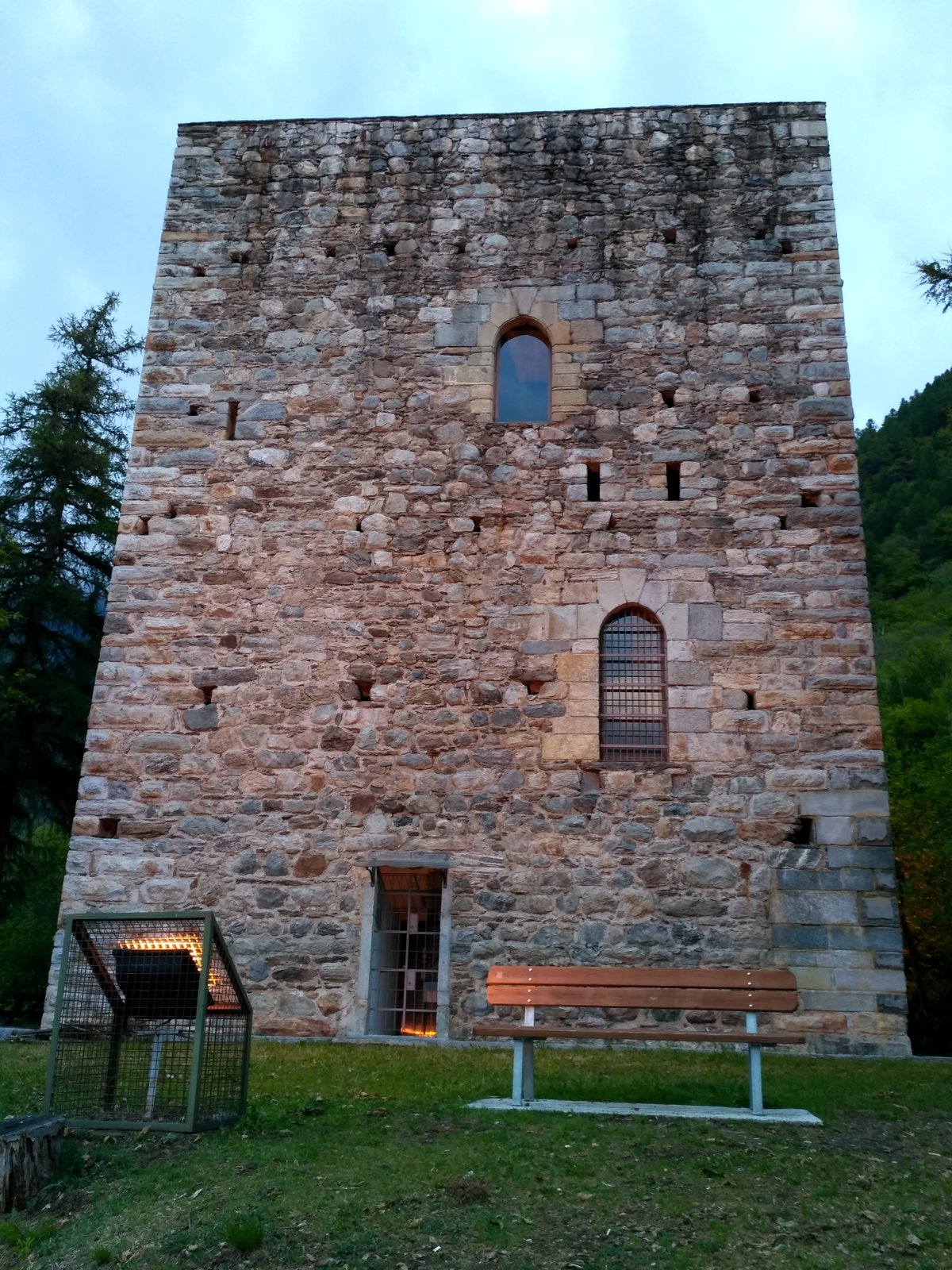
In Castionetto, in the heart of Valtellina, Roncevaux Tower offers a leap into the Middle Ages with spectacular views of the Alps and a fascinating history.
- Strada di Dalico, Sondrio (SO)
- Open in Google Maps
- View on Google Images Torre di Roncisvalle a Sondrio
Good to know
Evocative Introduction
Imagine walking along a dirt path that climbs between vineyards and chestnut trees, when suddenly a gray stone tower appears, dominating the valley: it’s the Torre di Roncisvalle in Castionetto. It’s not one of those perfectly restored monuments—on the contrary: it’s raw, authentic, and you can almost hear the clatter of medieval horses’ hooves. From up there, your gaze sweeps over the Orobie Alps and Valtellina, a breathtaking panorama. I stumbled upon it by chance, seeking a bit of peace, and instead found a piece of history that still breathes.
Historical Notes
The tower dates back to the 13th century, built by the powerful De Capitani family to control the road from Valtellina to Engadin. It was part of a defensive system that also included the nearby Chiuro castle. Over the centuries it passed to the Visconti and then to the Sforza, until it lost its military function in the 16th century. Today it is a fascinating ruin, declared a cultural heritage site. History at a glance:
- 1200: construction of the tower
- 1335: passes to the Visconti of Milan
- 1450: under the Sforza rule
- 17th century: abandonment and decay
- 2023: consolidation restoration
Architecture and Details
The tower stands about 15 meters tall, with a square base and local stone masonry typical of Valtellina fortifications. Loopholes open on all sides, and at the top you can see the remains of battlements. What struck me are the pointed arch windows on the second floor, a sign of the transition from military to residential use, perhaps when the De Capitani family decided to live in it. Inside it is empty, but you can see a niche that once housed a chapel. Wear comfortable shoes: the path is steep but manageable even for children, and every 100 meters there’s a different spot to photograph.
The View and the Atmosphere
Once at the top, Valtellina unfolds at your feet like a green carpet, with vineyards drawing perfect geometries and, in the background, the peaks of Pizzo Scalino and Monte Corno. It is the ideal spot for a sunset picnic, when the sun tinges the tower’s stones red and the air fills with the scent of linden trees. I once met a local man who told legends about secret passages: it seems a tunnel connected the tower to the church of San Giorgio down in Castionetto. I don’t know if it’s true, but it adds charm.
Why Visit It
1) It’s free and not crowded: unlike other tourist sites, you can enjoy history in solitude, maybe even with your dog on a leash. 2) Because it’s a dive into authentic Medieval times: no tickets or guides, just stone and wind. 3) Close to a great wine bar: after the visit, go down to Castionetto and taste the Sforzato di Valtellina, a wine that has been produced here for centuries. And yes, the combination of history and a glass of red is a winner.
When to Go
If you ask me, the best time is autumn, between late September and October. The vineyards turn red and yellow, the light is warm and golden, and the crisp air makes the climb pleasant. But spring, with cherry blossoms in bloom, is also spectacular. Avoid the midday hours in summer: the sun beats down hard and there’s no shade. My advice? Arrive around 5:00 PM, so you see the sunset and, if you’re lucky, hear the bells of the church below echoing through the valley.
In the Surroundings
Just a stone’s throw away, don’t miss Chiuro with its medieval village and the Church of San Giacomo, which houses a cycle of 16th-century frescoes. If you love wine, stop at one of the cellars along the Valtellina Wine Route, perhaps at Poggi dell’Adda in Chiuro: they offer tastings paired with local cheeses. And for the more active, from Castionetto the trail leads to Lake Livigno (yes, the real one) through the Foscagno Pass: a long but rewarding hike.
Itineraries nearby

💡 Did You Know…?
A local legend says the tower was connected by a secret passage to the castle of Castionetto, now vanished. During the restoration works in the 1990s, some elderly villagers recalled seeing, as children, nocturnal glimmers coming from the tower, maybe will-o’-the-wisps or who knows… a treasure never found. Even today, the most romantic leave a stone as an offering for good luck.