Tunnels of Claudius: The Roman Emissary at Avezzano

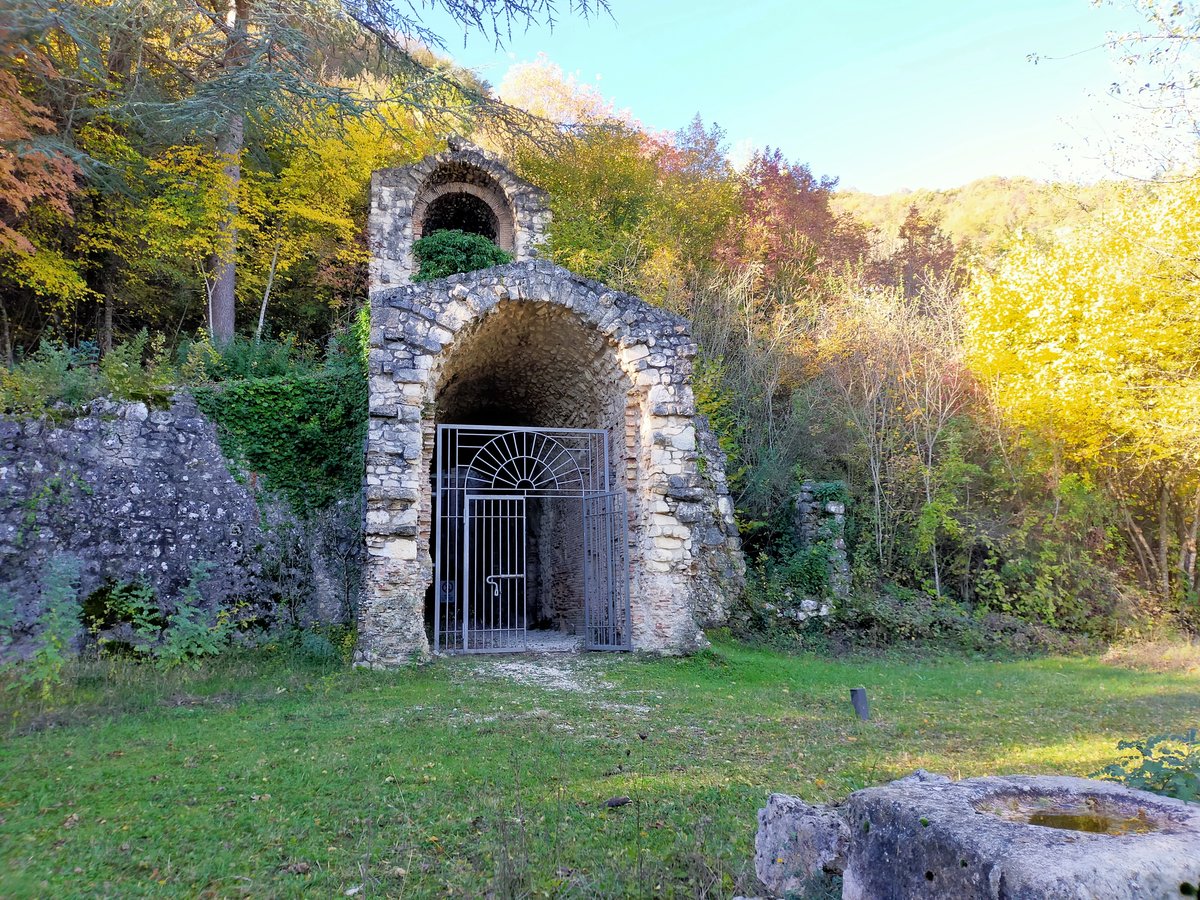
In Avezzano, the Tunnels of Claudius are the greatest hydraulic engineering work of ancient Rome: an emissary commissioned by Claudius between 41 and 52 AD to drain Lake Fucino. Today, with free guided tours you can visit the Ferraro Tunnel, about 200 metres still intact, and the three-arch entrance of the Major Tunnel. The area is part of the Archaeological Park of the Tunnels of Claudius, includes the Ciccio Felice Cave, and requires mandatory booking.
• Open only on Saturdays, 9:00–11:00, with departures at 9:15 and 11:15.
• Mandatory booking at 0863/455734, Monday to Friday, 9:00–13:00.
• Free guided tours by the Superintendency, groups of max 15 people.
• Address: via Alfredo Nobel, 67051 Avezzano (AQ).


Events nearby


Copertina itinerario Tunnels of Claudius: The Roman Emissary at Avezzano
Avezzano’s underground Roman tunnels: the Ferraro Tunnel, the Major Tunnel and the 32 shafts of the Fucino emissary, with free guided tours by reservation.

Good to know


Introduction: A World Beneath Your Feet

Beneath Avezzano, hidden underground, is one of the most ambitious works that ancient Rome has left us. The Tunnels of Claudius are not a postcard-perfect monument: they are tunnels, shafts, and passages carved into the rock to drain Lake Fucino. You enter and immediately understand that beneath the Piani Palentini there is a whole world. The entrance to the Main Tunnel, with its three arches, presents a monumental work, while the Ferraro Tunnel, paved and lit, leads you into a service tunnel about 200 metres long that has kept its original Roman appearance. The effect is strange, almost hypnotic: dampness, shadow, and the feeling of walking inside the engineering genius of an emperor. A place to recommend to history lovers, but also to those looking for something different from the usual outings.

Historical Background: From Claudius to Torlonia

The project originated from an idea by Julius Caesar, but it was Emperor Claudius who carried it out between AD 41 and 52. The goal was clear: drain Lake Fucino, Italy’s third-largest lake basin, protect nearby towns from flooding, and make the reclaimed land suitable for cultivation. Digging the emissary required around 25,000–30,000 men, including slaves, masons, and craftsmen, using wheelbarrows and winches. In AD 52, the work was inaugurated with a naumachia, a naval battle on the lake. The outlet functioned until the 6th century, then became blocked and Lake Fucino returned to its original levels. Attempts to restore it by Frederick II and Alfonso I of Aragon failed. In the 19th century, Alessandro Torlonia dug a new channel over 6 km long, and in 1878 the final drainage was completed.

  • AD 41–52 – Claudius builds the emissary
  • AD 52 – inauguration with the naumachia
  • 6th century – the tunnel is abandoned
  • 19th century – Torlonia follows the Claudian route
  • 1878 – final drainage of Lake Fucino
  • 1977 – opening of the archaeological park

Inside the Belly of Monte Salviano

The system is not a single tunnel. The emissary consists of three sections joined at obtuse angles and 32 vertical shafts about 400 meters apart. Their depth varies: from 80-120 meters beneath the Piani Palentini to just over 20 meters near the slopes of Monte Salviano. Here, where the mountain rises, the vertical shafts give way to inclined passages that form overlapping galleries. On the eastern side are the Cunicolo Maggiore, the Cunicolo del Ferraro, and the Cunicolo Imperiale; on the western side, the Cunicoli del Calderaro, della Macchina, and della Lucerna. The latter have a larger cross-section and feature recesses for directing the wheelbarrows used during construction. Other smaller passages provided ventilation. Walking through here means crossing a Roman construction site that has remained intact.

Record-breaking engineering: shafts, gradients and materials

What stands out is the precision. The floor of the main tunnel was raised at the centre by about 30 cm, so that any remaining water drained off to the sides and maintenance was easier. The walls are vertical with a barrel-vaulted roof, and in clayey areas the cross-section was reduced to counteract lateral pressure. The linings alternate between opus latericium, reticulatum and mixtum. After an initial lowering of 4.5 metres, the emissary was deepened to a capacity of almost 600,000 cubic metres of water per day. The overall emissary exceeds 6 km, with an average flow rate of 9.09 m³/s. The Fucino inlet, a Neoclassical-style structure, regulated the outflow. Figures that, seen from the bottom of a shaft, make quite an impression.

Why visit it

Three concrete reasons. First: it is free and guided by staff from the Superintendency, with group sizes capped at 15, so you can really enjoy the visit. Second: few places in Abruzzo let you experience Roman engineering so directly, among tunnels, shafts and wheelbarrow grooves. Third: the site is part of the Archaeological Park of Claudius’s Tunnels, which also includes the Ciccio Felice Cave, and is listed among FAI’s Places of the Heart. During the visits, they also explain the ongoing projects, funded by ministerial and European funds, to improve accessibility and enjoyment. In short, ancient history and present-day works in one place.

When to go

This isn’t a site that’s open every day: visits are concentrated on set dates, plus special openings linked to initiatives such as Spring Archaeology. In my opinion, the most atmospheric moment is early morning, when light filters down through the shafts and the air below is still fresh. In the warm season, with the surrounding countryside coming to life, emerging from the tunnel is even more pleasant, while in the hottest months the underground coolness becomes a relief. If humidity bothers you, avoid days of heavy rain: down there, water has always been present, and it’s part of the charm.

In the Surroundings

Add the Ciccio Felice Cave to your itinerary: it is part of the same archaeological park and pairs well with a visit to the tunnels. Then there is the Path of Peace, a trail that lets you explore the nearby caves and enjoy the landscape of Monte Salviano. If you still have time, the center of Avezzano is worth a stroll, given its deep connection with the history of Fucino. These are places that tell the same story: water, land, and ingenuity, from antiquity to the nineteenth-century draining by Torlonia.

Itineraries nearby


💡 Did You Know…?

The inauguration in 52 AD was celebrated with a naumachia on the lake, a spectacle of naval battles. The excavation employed around 25,000–30,000 men, including slaves, masons and craftsmen; the gallery remained in use until the 6th century. In the 19th century Alessandro Torlonia partially revived the Claudian route and completed the final drainage of Lake Fucino in 1878. Today the site is included by FAI among I Luoghi del Cuore (Places of the Heart).